Book Appointment Now

How Hot Weather Damages Car Batteries
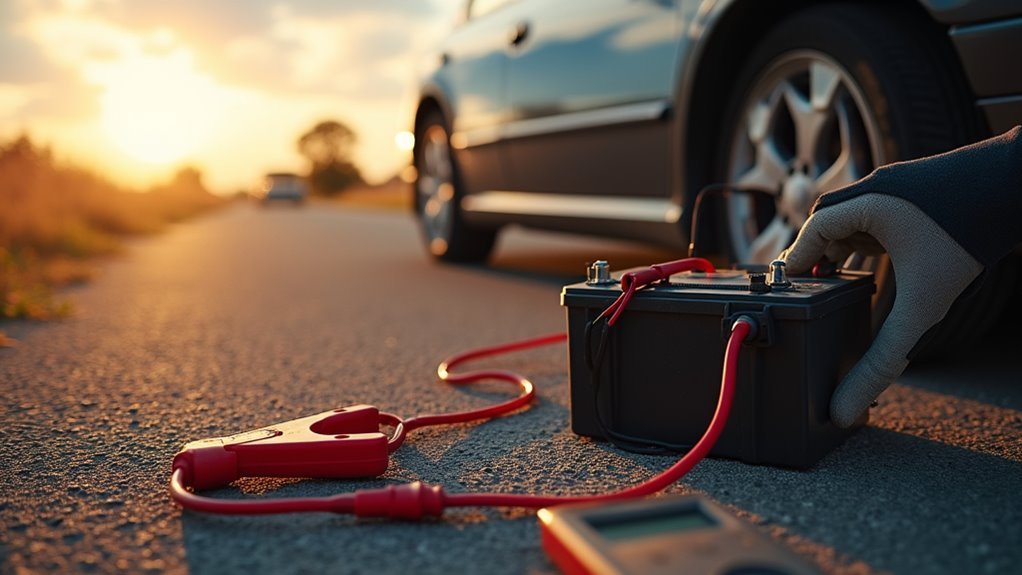
Hot weather speeds up chemical reactions inside a car battery and accelerates fluid loss. High temperatures increase corrosion on internal plates and wear down the separator material. This reduces battery capacity, causes weaker starts, and shortens overall lifespan. Parking in direct sun or making frequent short trips raises stress on the battery and cuts reserve power. Here’s a clear look at how heat quietly damages batteries and what happens inside as temperatures climb.
How Heat Damages Car Batteries
Assuming the temperature rises, your car battery starts working against the heat in ways you couldn’t notice right away. Warm air speeds up the chemical reactions inside, so the battery ages faster and loses strength.
At the same time, heat pushes the electrolyte to evaporate, which can lead to electrolyte stratification and weaker charge flow. As the fluid level drops, corrosion builds on the plates and terminals, and that damage chips away at performance.
In extreme cases, pressure can rise so much that thermal runaway becomes a real risk. You can’t always feel this stress, but your battery can.
Even once your car sits parked, trapped engine heat keeps wearing it down, and that slow damage accumulates quickly.
Why Car Batteries Fail Faster in Summer
Summer heat can wear down your car battery faster than you might expect. Whenever temperatures rise, the battery’s chemistry speeds up, and that extra activity ages it sooner. You could notice this most in summer because your engine bay traps heat, even after you park. So, your battery keeps working hard while the car sits still.
Warm air, ambient humidity, and stop-and-go driving all add stress. Should your vehicle also rely on solar charging, it can help a little, but it won’t cancel heat damage.
You belong on the road with a battery that starts strong, so keep it clean, charged, and checked. That simple care helps you avoid the surprise of a weak start on a hot day, whenever everyone’s plans are already moving fast.
How Heat Evaporates Battery Fluid
As heat builds up under your hood, it speeds up battery fluid loss faster than you’d reckon.
Whenever the electrolyte level drops, the plates can get exposed, and that makes it harder for your battery to hold a charge.
Over time, this extra wear can leave you with a weak battery at the moment you need it most.
Heat Accelerates Fluid Loss
Heat quietly speeds up one of the biggest problems inside your car battery: fluid loss. As temperatures rise, evaporation kinetics move faster, so the water in the electrolyte leaves sooner than it should.
That matters because your battery depends on steady fluid to stay balanced and ready. Even outside heat can build up inside the case, and weak thermal insulation lets more warmth reach the cells.
You mightn’t notice it initially, but the level slowly drops, especially after long hot drives or parking in direct sun. Should you keep up with checks and use distilled water in serviceable batteries, you help protect your ride and remain among the drivers who handle summer well.
Small care now can keep your battery feeling strong.
Low Fluid Harms Plates
Because the fluid keeps dropping, the battery’s plates can start paying the price fast. Whenever heat drives off that water-based electrolyte, you get plate exposure, and the lead plates lose the cushion they need.
That means hot spots can form, so the plates wear down quicker and can warp under stress. You might also see acid stratification, where the acid sits unevenly and weakens charging from top to bottom.
With less fluid, the battery can’t cool itself as well, so damage keeps building even after the car’s parked. Should you catch low fluid early, you give your battery a better shot at lasting longer.
Small checks matter, and you’re not alone in this, because a little care can save a lot of trouble later.
Why Corrosion Builds Up in Hot Weather
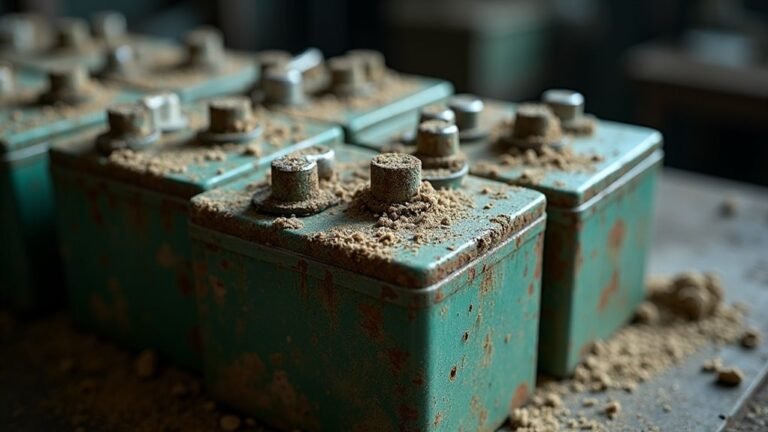
Corrosion builds up faster in hot weather once the battery starts losing fluid and getting stressed from high temperatures. Whenever heat pushes moisture out, salt-like residue can form around the posts. That’s where terminal oxidation starts, and it can block the clean contact you need. You might also see electrolyte crystallization, which leaves gritty buildup that spreads across the case and connectors.
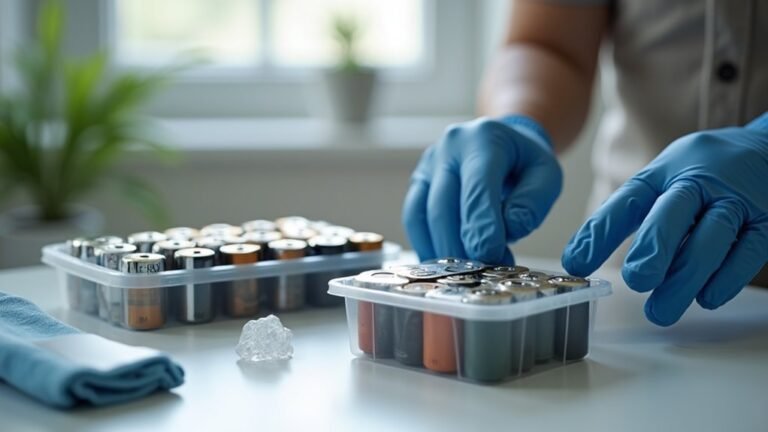
- Clean the posts before grime gets thick.
- Tighten loose clamps so air and vapor can’t sneak in.
- Check for white or green crust after hot drives.
- Wipe the top dry so acids don’t sit there.
You’re not alone provided this looks messy; hot weather does it to many batteries. A quick cleanup helps you keep your car ready and your group moving.
Why Batteries Wear Out Faster in Heat
Heat speeds up the chemical reactions inside your battery, so it wears out faster than it should.
At the same time, hot air makes the battery’s fluid evaporate more quickly, and that loss weakens its ability to hold a charge.
Over time, those two effects team up and shorten the battery’s life, even assuming your car still starts fine today.
Heat Speeds Chemical Aging
Your battery works hard every time you start the car, and hot weather makes that job even tougher. Heat speeds chemical aging inside the battery, so the parts deteriorate faster and lose strength sooner. You might suppose it just needs a pause, but the real issue is internal wear. Warm conditions enhance thermal diffusion, which lets reactions move faster through the cells. That speed can also push electrode passivation, so the plates struggle to deliver power whenever you need it most.
- You get weaker starts.
- You lose charge capacity.
- You face shorter battery life.
- You might need replacements sooner.
Whenever you know this, you can spot heat stress prematurely and feel more in control. Small care steps help you stay ahead of trouble and keep your ride ready.
Evaporation Lowers Battery Life
One hot afternoon can do more than make the cabin uncomfortable. It can also dry out your battery from the inside. Heat makes the water in the electrolyte evaporate faster, so the battery can’t store and release power as well.
As the fluid drops, parts inside might sit exposed, and that speeds wear. Even sealed batteries aren’t immune, because trapped heat still pushes pressure and ages the cells. In serviceable batteries, you could need distilled water to keep levels right, but fast loss still hurts life over time.
That’s why electrolyte recycling matters, since the battery depends on steady fluid movement to keep working. Whenever heat keeps stealing moisture, you’ll notice weaker starts, shorter life, and more stress on every drive.
Signs Your Car Battery Is Heat-Damaged
A failing battery usually gives you a few clear hints before it quits on you, and those clues matter as summer temps climb. You might see dashboard indicators glowing, notice a weak crank, or catch an interior smell that seems sharp or sour. Those signs can point to heat damage, not just age.
Look at the battery case too. Should it look swollen, cracked, or stained with white or green buildup, heat has likely stressed it. In serviceable batteries, dark fluid or low fluid levels also stand out.
- Check the terminals for corrosion.
- Compare the case for bulging or warping.
- Watch for warning lights on startup.
- Verify voltage once the battery feels cool.
Whenever you spot these clues ahead of time, you can act with confidence and keep your ride ready for the road.
Why Heat Causes Starting Problems
Whenever heat builds up under the hood, it can make starting your car feel much harder than it should. You turn the key, and the battery has to push harder while its internal resistance rises. That means less power reaches the starter motor, so you feel starter strain right away.
Heat also speeds up chemical wear inside the battery, and that weakens the charge you rely on each morning. As the battery loses strength, the engine could crank slowly, click, or hesitate before it turns over.
Even should your lights seem fine, hot-weather damage can leave you stuck whenever you need a quick start. Clean terminals and a healthy charge help, but once heat has done its work, starting can feel shaky and frustrating.
How Short Trips Hurt Battery Life
Short trips can wear out your battery faster than you could expect, especially after hot weather has already done some damage.
Whenever you keep making frequent cold starts, your battery gives power again and again, but it doesn’t get enough time to recharge. That leaves you stuck with weaker starts and more starter motor wear.
- The alternator needs longer drives to refill the battery.
- Heat already sped up fluid loss inside the case.
- Each stop and start adds more strain.
- A few longer trips help your battery feel less tired.
Which Cars Are Most Vulnerable to Heat
Hot weather can hit some cars much harder than others, especially whether your battery already works in tough conditions, sits under a hot hood, or has to power lots of electronics every day.
You’ll usually see the most heat stress in older vehicles, big SUVs, trucks, and luxury models with many power draws.
Should your engine bay traps heat, your battery ages faster. Rear wheelers susceptible designs can place extra heat near the battery, too. Hybrids and EVs depend on EV thermal management, so weak cooling can leave the pack under strain.
Stop-and-go commuters and cars parked outside all day also face more stress. Were you to drive one of these, you’re not alone. Your ride just needs more care because heat doesn’t play favorites.
How To Protect Your Car Battery in Summer
Whenever your car already faces extra heat stress, you can still protect the battery with a few smart summer habits.
- Park in shade or garage space whenever you can, so the engine bay stays cooler and your battery doesn’t bake alone.
- Use insulated covers to slow heat gain, especially during long sunny stretches.
- Keep terminals clean and snug, because corrosion can quietly weaken your battery’s grip on power.
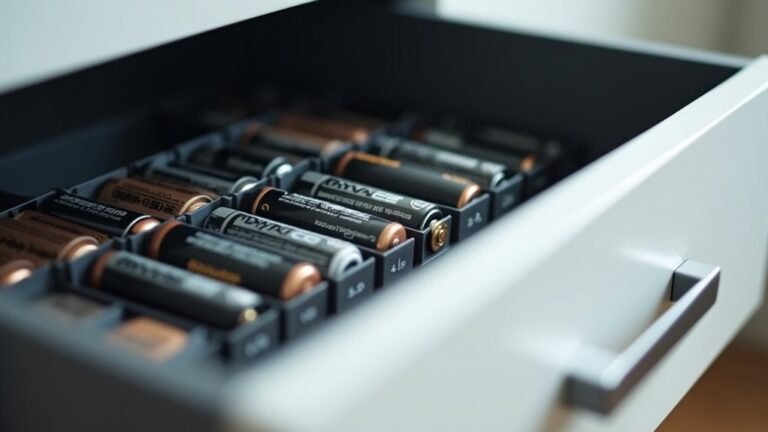
- Choose ventilated storage for parked vehicles, and start the car regularly so charge stays steady.
Also, limit running lights, fans, and charging devices whenever the engine is off.
Small choices like these help you protect your ride, feel prepared, and stay part of a crew that handles summer heat with confidence.
When To Test Or Replace Your Battery
A battery often gives you clues before it quits, so it’s smart to inspect it provided your car starts a little slower, the lights dim at idle, or the battery is more than a few years old.
In hot weather, heat speeds wear, so battery diagnostics can save you from a surprise tow and a bad day. Ask for a load check and a voltage check whenever you notice slow cranking, a swollen case, or crusty terminals.
In the event the battery reads below 12.4 volts when cool, or in case replacement timing is already near three to five years, plan on a new one. Warm climates can age batteries fast, so don’t wait for total failure.
A quick check helps you stay ready, stay confident, and keep your ride part of the crew.
Simple Habits That Help Batteries Last Longer
You can help your battery last longer via parking in the shade whenever you can, since cooler spots slow heat buildup under the hood.
Try to limit short trips, too, because quick drives often don’t give the battery enough time to fully recharge.
Whenever you stack up heat and repeated short runs, your battery works harder than it should, and that wear adds up fast.
Park in Shade
Parking in the shade is one of the easiest ways to give your car battery a little relief from hot weather. You help slow heat buildup, and that matters because heat ages batteries fast.
Should you can, choose a garage, a tree, or a covered spot. Whenever you need more cover, a reflective tarp can block harsh sun on the hood. A smart carport installation also gives your vehicle steady protection.
- Park ahead of schedule, before the cabin bakes.
- Face away from direct sun whenever possible.
- Use shade during long stops.
- Check the battery case for swelling or corrosion.
Small moves like these can make your car feel cared for, and you’ll feel that too.
Limit Short Trips
Frequent short trips can quietly wear your battery down, especially in hot weather. Whenever you drive only a few minutes at a time, your alternator mightn’t fully recharge it, so each start leaves you a little behind.
To protect yourself from surprise dead starts, combine errands into one longer run whenever possible. That gives your battery more battery conditioning time and helps it recover from heat stress. Also, avoid idling for long stretches, since it adds heat without giving much charge back.
Should you make lots of stop and go trips, take one steady drive each week to help balance things out. It’s a simple habit, but it can help you feel more prepared and keep your car ready for the next trip.
Frequently Asked Questions
Can Extreme Heat Permanently Deform a Car Battery Case?
Yes, extreme heat can permanently warp your battery case, like a soda can left in a sunbaked car. Thermal expansion builds pressure, causing case warping, swelling, and damage, so you will want shade and checks.
How Much Hotter Is a Parked Engine Bay Than Outside Air?
Your parked engine bay can run 40 to 60°F hotter than outside air because of radiant heating and material expansion, so heat soaks in fast. You’ll notice the temperature rise even after you’ve shut the car off.
Does Heat Damage Batteries Even When the Car Isn’T Running?
Yes, heat can damage your battery even while the car is not running. It speeds battery aging and causes electrolyte evaporation while the car sits, so parking in shade, a garage, or using a battery maintainer helps protect it.
Should Serviceable Batteries Be Topped off With Distilled Water in Summer?
Yes. If your serviceable battery is low you should top it off with distilled water. Distilled topping supports electrolyte maintenance especially in summer heat. You are not overdoing it; you are protecting charge, life, and reliable starts.
What Voltage Reading Suggests Heat Stress in a Car Battery?
You should worry if your cool battery reads below 12.4 V; that suggests heat stress. High voltage can signal cell imbalance, while swelling or corrosion means you will want testing and maintenance soon.