Book Appointment Now

How to Store Rechargeable Batteries Correctly
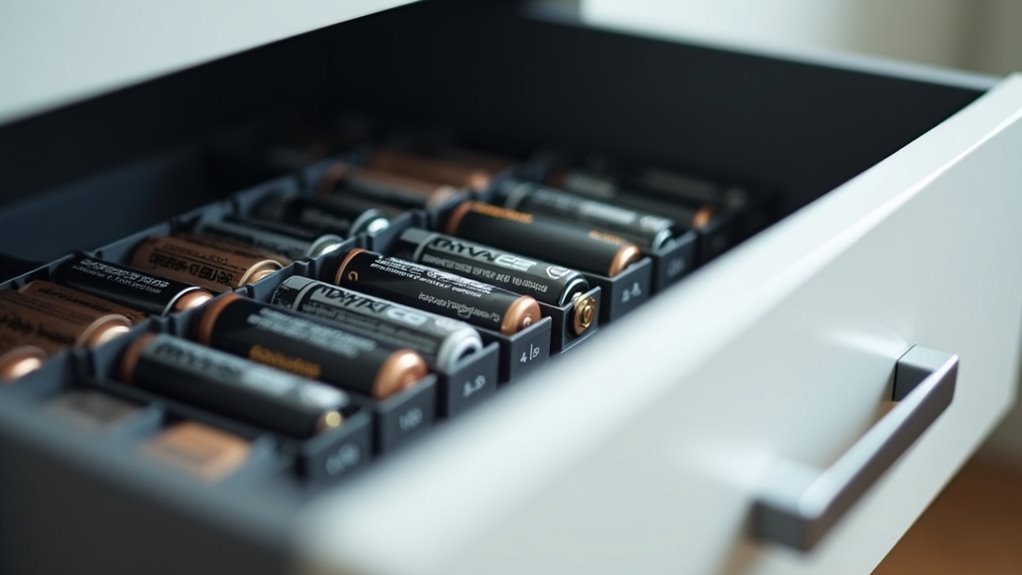
Store rechargeable batteries correctly to keep them safe and maintain capacity. Keep cells in a cool, dry place away from direct heat and sunlight. Store batteries separated in original packaging, plastic cases, or individual bags to prevent short circuits. Hold batteries at a partial charge (around 40–60%) rather than fully charged or fully depleted. Check stored cells every few months for swelling, leakage, or other damage and discard any compromised units safely.
Store Rechargeable Batteries the Right Way
Storing your rechargeable batteries the right way starts with giving each type what it needs, because a little care now can save you from dead batteries and surprise failures later.
You can keep NiCd cells fully discharged, while NiMH and lithium-ion batteries do better with a partial charge.
Next, build a simple labeling system so you know each battery’s type, age, and charge level at a glance. That makes your storage inventory easy to trust, and it helps you rotate packs before they sit too long.
Store them in original packaging or a plastic case, never loose alongside coins or tools. Keep terminals covered, separate alongside type, and check your inventory every few months so nothing gets forgotten on the shelf.
Keep Rechargeable Batteries at the Right Temperature
You should keep rechargeable batteries in a cool spot, because a steady room temperature helps them stay healthier for longer.
Aim for about 15°C to 25°C, and avoid hot places like a sunny windowsill or a warm garage.
You also want to prevent freezing, since extreme cold can stress the battery and make storage less safe.
Ideal Storage Temperature
Even though rechargeable batteries can seem tough, they last longer provided you keep them in a cool, steady place.
You want ambient stability, so pick a room that stays near 15°C, or about 68°F. That helps limit thermal gradients, which can stress cells and make them age unevenly.
A shelf in a closet or drawer usually works well. Keep the spot dry, shaded, and away from windows, heaters, and damp corners.
In case your home feels warm one day and chilly the next, your batteries feel that swing too. So, choose one calm place and stick with it.
Whenever you store them there, you give your batteries a more comfortable home, and you make it easier for your whole battery stash to stay ready.
Avoid Extreme Heat
Heat can wear rechargeable batteries down faster than most people realize, so it helps to treat temperature like a real storage rule, not just a nice idea.
You want to keep them in a cool, dry spot, away from sunny windows, hot cars, and warm shelves near appliances.
Should your room runs warm, try simple insulation strategies, like a shaded cabinet or a padded battery case, to soften temperature swings. Also, use thermal monitoring should you store batteries for months, because a quick check can catch risky heat before it builds up.
This matters because steady, moderate temperatures help your batteries stay ready for the next charge.
Whenever you protect them from extra heat, you’re looking out for your gear and the people who count on it.
Prevent Freezing Conditions
Cold storage can seem safe, but freezing conditions can be hard on rechargeable batteries, so it helps to keep their temperature steady and moderate. You’ll protect your batteries better whenever you store them in a cool room, not a garage or shed that turns icy overnight.
Should your space gets chilly, insulate containers with a soft wrap or foam sleeve, and keep them off cold floors. That small step helps the cells stay ready whenever you need them.
You can also add a humid barrier inside the storage box, which helps block damp air that often comes with cold spots. Together, these steps keep the battery area calm, dry, and reliable, so you and your batteries stay on the same team.
Store Rechargeable Batteries at Partial Charge
You should store most rechargeable batteries at a partial charge, not full or empty, because that helps protect their cells during storage.
For many lithium-ion batteries, about 30% to 50% charge is a safe target, and NiMH batteries often do well around 30%.
Don’t leave them fully drained for long periods, since deep discharge can wear them out faster and could even cause failure.
Optimal Charge Range
For most rechargeable batteries, a partial charge is the sweet spot before storage, and it can make a real difference in how long they stay healthy.
You don’t need to guess much here; self discharge rates and manufacturer recommendations usually point you toward about 30% to 50% for lithium-ion packs, and around 30% for many NiMH cells.
That level leaves room for natural drift without stressing the battery. Should you keep a battery near full, it can age faster.
In contrast, should you store it too low, it might suffer later. So, check the label, then set the charge with confidence.
Whenever you match the right range to the right chemistry, you help your batteries fit neatly into your care routine, and that feels good every time you reach for one.
Avoid Full Discharge
Partial charge helps, but leaving a rechargeable battery empty can hurt it fast. You protect your battery by storing it with some charge left, not at zero. That small reserve supports battery preservation and slows wear, especially with lithium-ion and NiMH cells.
For many packs, about 30 to 50 percent works well, though your maker’s guide should always win. Don’t believe discharge myths that say empty is safer for storage; deep discharge can shorten life and even cause failure.
Use a Nonconductive Storage Container
A nonconductive storage container gives your rechargeable batteries a much safer home, and it helps prevent one of the most common storage problems: accidental short circuits. You’ll fit in better whenever you choose a plastic box with insulating lids and separate slots. Add silica packets to help keep moisture down, especially provided that you live in a damp place.
| Container choice | Why it helps |
|---|---|
| Plastic case | Blocks contact |
| Divided tray | Keeps batteries apart |
| Original pack | Stays organized |
| Lid with seal | Cuts dust and damp |
| Soft pouch | Easy for travel |
That simple setup feels tidy, and it keeps your batteries easy to grab. Whenever you store them this way, you’re helping your gear stay ready for the next charge cycle.
Prevent Short Circuits and Physical Damage
Keep battery terminals from touching anything metal, and you’ll shut down the easiest path to a short circuit. You can protect loose cells by snapping on terminal covers or wrapping the ends with electrical tape. Then place each battery in its own pocket, so metal tools, coins, and spare screws can’t sneak in and cause trouble.
You also want to guard against bumps and scrapes. A cracked case can let a battery fail fast, and that’s never a good surprise. So pack batteries in a rigid box, not a soft bag that crushes them in a drawer. Provided you’re storing larger packs, give them enough room so they don’t rub together. A quick look for dents, swelling, or rough edges before storage helps you catch damage early on. Careful handling keeps your batteries safer and helps you feel confident about your stash.
Check Stored Batteries Every Few Months
Once you’ve tucked your batteries away safely, don’t forget about them for months on end.
Every few months, open the container and do a quick visual inspection. You’re looking for swelling, leaks, rust, or cracked shells, because catching trouble early helps your gear stay ready for the next use. Then check each battery’s charge level and refresh it when it’s drifting low. Should you keep record logs, jot the date, type, and charge so you can spot patterns without guessing.
This simple habit keeps you in control and makes storage feel less like a chore and more like team care. In the event a battery seems off, set it aside right away and follow the maker’s guidance. A little attention now can save you from a messy surprise later.
Recycle Rechargeable Batteries When They Wear Out
At the point your rechargeable batteries start to fade, it’s time to hand them off the right way rather than tossing them in the trash. You help your community stay safer whenever you choose a community collection site or a retailer take back program.
Initially, tape the terminals provided local rules ask for it, then place each battery in a separate bag or box. That keeps them from touching and causing trouble.
Next, drop them off at a trusted recycling point that accepts your battery type. Should you be unsure, ask the store clerk or check your town’s website.
You’re not alone in this step. Many neighbors recycle too, and together you keep old power sources out of landfills and into new use.
Frequently Asked Questions
Can I Store Rechargeable Batteries in the Refrigerator?
Usually you should not store rechargeable batteries in the refrigerator. Cold storage can add moisture and battery chemistry matters. You will do better keeping them cool, dry and at manufacturer recommended charge levels in a sealed container.
Should I Remove Batteries From Devices Before Storing Them?
Yes, remove batteries from devices before storing them, similar to freeing birds before a storm. This prevents corrosion and accidental drain, and keeps your gear and batteries safer. If possible, store batteries separately in a cool, dry place.
How Long Can Rechargeable Batteries Stay Stored Safely?
You can store rechargeable batteries for months or even years if you keep them cool, dry, and at the proper storage voltage; check them periodically because battery degradation still happens, especially with fully discharged packs.
Can Different Battery Brands Be Stored Together?
Yes, you can store different brands together provided you practice brand mixing carefully. Use shelf organization by separating types, ages, and chemistries, and keep terminals covered so you will protect batteries from shorts and confusion.
What Should I Do if a Stored Battery Leaks?
If a stored battery leaks, wear protective gloves, isolate the battery, and avoid touching the fluid. Clean the area carefully using appropriate cleaners and ventilation, follow proper disposal rules, and replace the battery safely.