Book Appointment Now

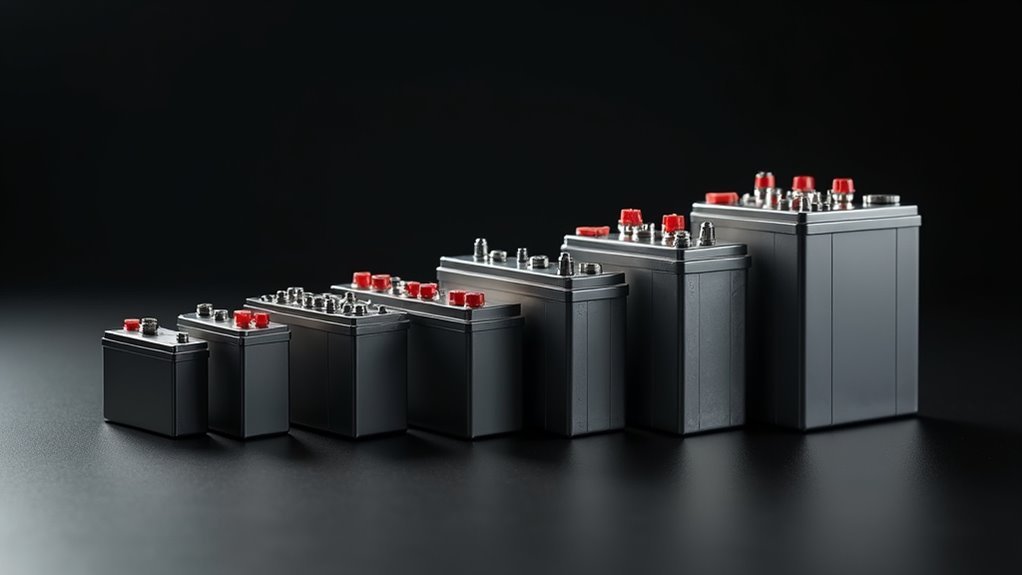
Battery Group Sizes and Their Differences
Battery group sizes don’t indicate how much power a battery holds; they indicate case size, terminal placement, and hold-down positions. That matters because a physically wrong battery can sit loose or have cables that won’t reach. A proper group size prevents fitment problems and electrical hassles. Choosing the correct group size keeps installation straightforward and helps the battery perform reliably. With this simple rule, avoiding costly mismatches becomes much easier.
What Battery Group Sizes Mean
Battery group sizes tell you the battery’s physical shape, not its brand or power level. You use these BCI codes to match a battery to your tray, whether you’re replacing one in a car, RV, or boat.
On battery labeling, you’ll often see numbers like 24, 27, 31, or 65, and sometimes an R that points to reversed posts. That helps you check terminal symmetry so your cables line up without stress.
Because the code focuses on fit, you can feel confident before you buy. Still, two batteries with the same group size can act differently, so you’ll want to compare the exact model too.
Whenever you understand the code, you make a smarter choice and keep your setup secure.
How Battery Group Sizes Are Measured
Measuring a battery group size starts with the case itself, because that’s what the BCI code is built to match. You check the battery’s length, width, and height against standard charted dimensions, so you know which group it fits.
Then you look at terminal mapping, because the post layout matters just as much as the shell. Measurement standards keep the process clear and fair, even if brands differ a little.
You might see codes like 24, 27, or 31, and each one points to a set size, not a power level. So whenever you measure, you’re really matching shape and connection points.
That helps you feel confident, because the right battery doesn’t just fit; it belongs where you place it.
How to Match the Right Battery Group for Your Vehicle
Start near checking what your vehicle actually needs, because the right battery group size is about fit, cable reach, and safe terminal placement, not just a number on a label.
Then compare your tray space with the battery’s length, width, and height.
Next, look at the terminal layout so the cables land naturally without strain. That simple step protects battery compatibility and helps you avoid a tight squeeze or a crooked setup.
Also, read your owner’s manual and match the manufacturer’s specs before you buy. Should you be unsure, take quick measurements and bring them with you.
Good installation tips can save time, reduce stress, and keep you from guessing. Whenever you choose a battery that fits your vehicle’s space and layout, you join the right match with confidence.
Common Battery Group Sizes and Uses
You’ll see battery group sizes like 24, 27, 31, 35, and 65 come up often, and each one fits a different kind of job.
For example, Group 24 works well in smaller vehicles, while Group 27 and Group 31 often handle RV, marine, and heavier-duty power needs.
Familiarity with these common sizes helps you match the battery to your space and your daily use without the guesswork.
Popular Battery Groups
You can start with groups like 24, 27, 31, 35, and 65, since they’re common and easy to compare. Group 24 fits compact spaces, while Group 27 gives you more room without feeling oversized. Group 31 adds even more length and height, so you get a sturdier fit whenever you need it.
As you compare options, check terminal placement so your cables land where they should. Also look at case materials, because they can affect durability and handling.
Once you know these basics, you’ll feel more confident and less stuck at the parts counter.
Typical Applications
Battery group sizes make more sense once you connect them to real jobs, because each size tends to show up in certain kinds of equipment. In case you’re packing camping power for lights, fans, or a small fridge, Group 24 often fits the bill.
Whenever you need more staying power for RV trips, boat systems, or backup setups, Group 27 gives you extra runtime without jumping too far in size.
For marine trolling and heavier off-grid loads, Group 31 usually steps in, since it can handle longer use and tougher demands.
You’ll also see Group 35 and 65 in many cars and trucks, where fit and terminal layout matter most. So, whenever you match the battery to your gear, you join the crowd that gets reliable power and fewer headaches.
How Group Size Affects Fit and Power
The right group size helps your battery fit the tray cleanly, so you don’t end up fighting loose cables or a cramped install.
It can also affect reserve capacity, since larger cases often hold more active material and give you more runtime.
And while a bigger group size might support stronger cold cranking power, you still need to match the exact battery design to your vehicle’s needs.
Physical Battery Fit
Right from the start, group size helps you know whether a battery will actually fit your tray, hold-downs, and cable reach without turning the install into a frustrating puzzle.
Whenever you check tray compatibility, you protect yourself from wobbles, loose clamps, and a battery that sits crooked. You also save time because you won’t need mounting adapters just to make a mismatch work.
A Group 24 battery could slide into a smaller space, while a Group 27 or 31 might need more room and better clearance. That size difference also affects terminal position, so your cables can reach cleanly and stay secure.
In the end, you get a cleaner fit, fewer headaches, and a setup that feels like it belongs in your vehicle from the start.
Reserve Capacity Differences
Once you look past fitment and size, reserve capacity is where group size starts to show its real-world value. You can regard it as the battery’s staying power when your system keeps asking for energy.
A Group 24 battery could fit neatly, but a Group 27 or 31 often gives you more reserve capacity, so your lights, accessories, and controls can keep running longer. That extra room inside the case usually helps, though the design still matters.
Cold Cranking Power
Whenever you choose a larger group size, you often get more room for stronger internal parts, which can improve cold cranking. That can help your engine start with less strain on frosty mornings.
Still, temperature effects can shrink performance in any battery, so you should compare the rating, not just the case size.
Suppose you belong to a crew that drives through winter, you want a battery that fits tightly and delivers enough starting power. Check the tray, the terminals, and the specs, then pick the setup that gives you confidence whenever the weather turns rough.
What Happens When Battery Sizes Don’t Match
Whenever a battery doesn’t match the tray or cable layout, the problem shows up fast, and it’s usually more than a small inconvenience. You might force the fit, but then terminal damage can happen, and the cables could strain or twist. That mismatch can also create electrical imbalance, which hurts performance and might trigger charging issues.
In case the case sits loose, vibration can wear parts down and shorten battery life. Should you use the wrong group size, you can also face warranty voidance should the maker see the fit was off. So you want a battery that belongs in the space, with the right length, height, and terminal position. That simple match helps your system stay safe, steady, and ready whenever you need it most.
Frequently Asked Questions
Can Battery Group Size Indicate Battery Chemistry?
No, you can’t tell chemistry from group size alone; it only shows fit and terminals. You’ll still need chemistry indicators and manufacturer specs, since manufacturing variations can hide similar looking batteries with different chemistries.
Do Same Group Sizes Always Have Identical Capacity?
No, you will not get identical capacity from every same size battery. You will see differences from manufacturing tolerances, cell configuration, temperature effects, and design choices, so you should compare specs, not just the group size.
What Does the “R” Suffix Mean in Battery Groups?
The “R” suffix means you’ll get reverse terminal placement, so you can replace the battery the right way and keep cable runs shorter, which helps reduce resistance and create a cleaner fit in your vehicle.
Are Battery Group Sizes Standardized by BCI?
Yes. BCI standards do standardize battery group sizes for fitment, though you will still notice regional variations. You are not alone in checking specs; they guide you to the right tray, terminals, and compatibility.
Does a Larger Group Size Always Mean Longer Runtime?
No, you cannot assume that. A larger group size often provides more capacity, but battery internal resistance, terminal layout variation and overall design also matter, so runtime can still differ between batteries.