Book Appointment Now

What Is Battery Internal Resistance
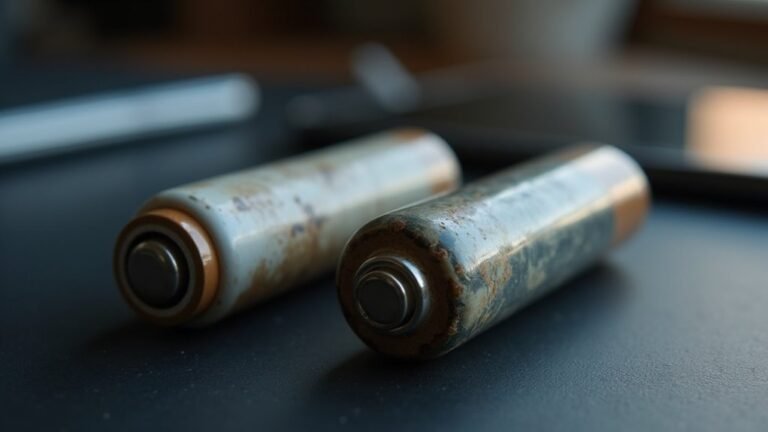
Battery internal resistance is the built-in opposition inside a cell that reduces available current and causes voltage to drop under load. It produces heat and slows response as the battery delivers power. Internal resistance rises with age, temperature shifts, and repeated use. Low internal resistance enables strong, steady performance; high resistance causes devices to feel weak and run hotter. Knowing how internal resistance behaves explains why some batteries start strong yet lose capability over time.
What Is Battery Internal Resistance?
Battery internal resistance is the concealed pushback inside a battery that slows current flow. You feel it as an invisible limit on how easily energy moves.
It isn’t one simple part; it’s a mix of losses inside the cell, including battery impedance from the electrolyte and the electrode interfaces. Whenever you envision a battery as a team, each piece has to work together, but some friction always shows up.
Because of that, the battery acts a bit like a voltage source with a built-in barrier. You’ll see this value in ohms, often milliohms for small cells.
Why Battery Internal Resistance Matters
A battery’s concealed resistance matters because it decides how much real power you can get once you actually use it. You feel the difference whenever a tool starts strong, then sags, or whenever your phone stays calm instead of heating up. Lower resistance gives you steadier voltage, better runtime, and less wasted energy as heat, which helps with thermal management.
It also supports safer grid integration, since battery systems can respond more smoothly during fast demand changes. Whenever resistance climbs, perhaps you still see a decent voltage at rest, but the battery can struggle under load. That makes performance less reliable and can shorten service life.
How Battery Internal Resistance Works
Whenever you use a battery, its internal resistance quietly pushes back against the current, so it acts less like a perfect power source and more like a source with built-in opposition.
As the load grows, you’ll see more voltage drop at the terminals because some of the battery’s energy gets used up inside the cell. That lost energy turns into heat, which can trim performance and make the battery work harder than you’d expect.
Internal Resistance Basics
Inside every real battery, a quiet fight is always happening between stored energy and the parts that slow it down. You can regard internal resistance as the battery’s built-in roadblocks. It comes from the materials inside, not from one single obscured resistor. Some loss happens as electrons move through metals, and some comes from ions pushing through the electrolyte. You’ll also see extra strain at the electrode surfaces. That’s why cells from the same batch can still differ a little, because manufacturing tolerances matter.
- Lower resistance helps current move more easily.
- Temperature changes can shift that resistance, so thermal management matters.
- Aging usually raises resistance over time.
When you understand this, you can feel more confident choosing and caring for batteries that fit your needs.
Voltage Drop Under Load
That built-in resistance shows up most clearly the moment your battery starts working, because the current creates a small voltage drop inside the cell.
You feel it as weaker voltage at the terminals, even whenever the battery looked full a second ago.
As your device draws more current, that drop grows, and the battery’s transient response slows a bit.
Then load induced polarization adds more sag, so the output can dip below what you expect.
In the same moment, thermal gradients and ion movement can make the effect uneven across the cell.
So the terminal impedance you measure under load isn’t just a number; it reflects how the battery handles real demand.
Once you understand this, you can judge why one pack powers smoothly while another seems to fade prematurely.
Heat And Energy Loss
Because of that concealed resistance, some of the battery’s energy never reaches your device as useful power. Instead, it turns into heat inside the cell, and you can feel that waste whenever a pack gets warm during heavy use. This loss comes from Joule heating, which grows as current rises. So, whenever you ask more from the battery, you also ask it to work harder against itself.
- More current means more heat.
- More heat means more energy lost.
- More stress can speed aging and, in extreme cases, raise Thermal runaway risk.
That’s why a healthy battery feels like a team player: it shares power cleanly and stays cooler. Whenever resistance climbs, you get less runtime, more voltage sag, and a hotter battery that works against your goals.
What Causes Battery Internal Resistance?
Battery internal resistance comes from several small losses working together, and each one chips away at the power your battery can deliver. You feel it whenever voltage sags under load.
Initially, electrode design can slow electrons and ions provided the paths inside the cell are cramped or uneven. Next, electrolyte formulation matters because it controls how easily ions move through the battery’s pores.
Then, resistance builds at the electrode and electrolyte interface, where reactions must happen smoothly for you to get steady current. Also, the separator, current collectors, and other materials add tiny ohmic losses.
Whenever these parts don’t work in harmony, your battery has to work harder, and you get less usable power. That’s why design details matter so much, particularly for your device.
How Resistance Changes as Batteries Age
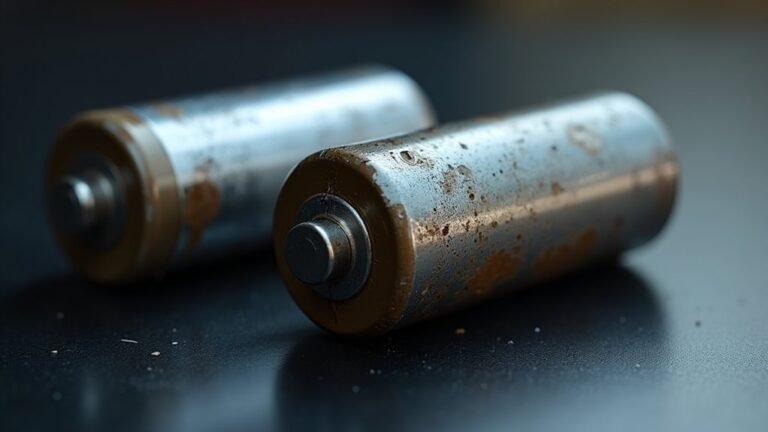
As a battery gets older, its internal resistance usually climbs, and you could notice the change long before the battery stops working completely. That rise comes from wear inside the cell, not from anything you did wrong. You’re part of a bigger group of users who see the same shift, so don’t worry.
- Capacity fade means less active material can move charge, so resistance grows.
- Electrode delamination breaks contact inside the battery, and current faces more opposition.
- Aging can thicken the electrolyte paths, which slows ion movement and adds more loss.
As this happens, the battery still might look fine on the outside. But inside, it works harder to move charge. That’s why older packs often feel less steady, even if they seem healthy at the outset.
How Internal Resistance Affects Battery Performance
Whenever internal resistance rises, it quietly changes how your battery behaves under real use. You notice less punch when you ask for power, and the voltage can dip sooner than you expect. That means your device might feel sluggish, even though the battery still looks charged.
More resistance also turns extra energy into heat, so thermal management matters more as the pack works harder. In shared tools, bikes, or backups, that heat can build trust issues fast.
With adaptive modeling, you can predict these shifts and choose settings that keep performance steady. So whenever you care for your battery, you’re really protecting the whole team of cells behind it, helping them deliver smoother current, less sag, and a more reliable ride through daily demands.
How to Measure Battery Internal Resistance
You can measure battery internal resistance in a few practical ways, and the best choice depends on how much accuracy you need.
A multimeter method gives you a quick estimate, while a load trial method shows how the battery behaves under real use.
Both can help you spot a weak battery before it lets you down at the worst possible moment.
Multimeter Method
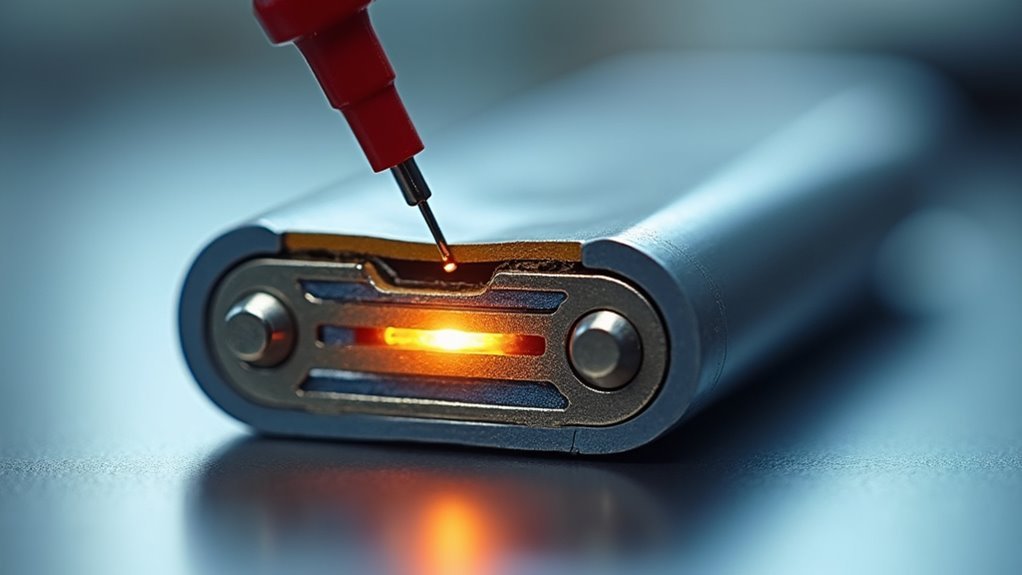
The multimeter method gives you a simple way to get a rough read on battery internal resistance without fancy lab gear. You’ll use it for battery diagnostics whenever you want a quick check, not a perfect lab result. Set your meter to volts, then watch probe placement carefully so you touch the right terminals.
- Measure the open-circuit voltage initially.
- Connect the probes, observe the new voltage, and keep the reading steady.
- Compare the drop and current change to estimate resistance.
This works best whenever you stay calm and consistent, because small touch errors can skew the numbers. You’re joining a practical crowd here, so keep your leads clean and your hands steady. A low reading usually means the cell’s doing well, while a higher one can hint at wear.
Load Test Method
A load trial gives you a more hands-on way to see battery internal resistance in action, because it shows how the battery behaves whenever real current starts flowing.
You connect a variable load or use pulse testing, then watch the voltage dip while the current rises. That drop helps you estimate resistance with DCIR, since the battery’s concealed losses show up under stress.
As you compare readings, keep the load steady and the temperature similar, because warm cells and cold cells don’t play by the same rules.
You’ll spot a healthy battery when the voltage stays strong and rebounds quickly after the load ends. Should the drop look large or slow to recover, the battery’s internal resistance is likely climbing, and that usually means less power for you.
What Is a Good Battery Internal Resistance?
Healthy battery resistance usually sits low enough that the battery can still push power without a big voltage drop. You want optimal ranges that match the cell type, because chemistry differences change what “good” looks like. For example, a healthy Li-ion cell often stays below 20 mΩ, while Ni-MH can sit under 50 mΩ and still feel solid in use.
- Check the battery’s chemistry initially.
- Compare readings under the same trial conditions.
- Trust steady, low values more than one random number.
When you stay in the right range, you keep power delivery smooth and your battery group feels dependable. Small cells might read higher than big ones, and that’s normal. So, focus on the pattern, not perfection.
Signs Your Battery Resistance Is Too High
Whenever your battery resistance gets too high, you could notice slow starting power initially, since the battery can’t deliver a strong burst whenever you need it most.
You may also get shorter runtime because more energy gets lost inside the battery instead of reaching your device.
On top of that, the battery can run hotter than usual, which is often a clear sign it’s working too hard.
Slow Starting Power
Struggling to crank the engine is often one of the initial clues that your battery’s internal resistance has climbed too high. You feel that cold cranking gets weaker, and starter lag shows up before the motor finally turns. That delay happens because the battery loses more voltage inside itself when you ask for a big burst of current.
- You might hear a slow, tired start.
- You might see dim lights while you turn the key.
- You might notice the engine catches after extra effort.
Whenever you face this, you’re not alone, and it’s not just bad luck. High resistance makes the battery work harder, so your vehicle needs more time to wake up. That’s why a healthy battery should answer fast, with steady power and less hesitation.
Reduced Runtime
That same weak battery can also cut your run time short, and that can feel just as frustrating as a slow start.
You could notice your battery runtime drops faster than usual, even whenever you use the device the same way. High internal resistance steals more energy inside the cell, so less power reaches your device.
Over time, capacity fade often shows up as shorter sessions, more charging breaks, and a battery that quits before you expect it to.
You might finish half a task, then need a charger again.
Should this sound familiar, you’re not alone. Many people see this change as the battery ages, and it’s a clear sign the cell can’t hold up under load like it once did.
Excess Heat
A hot battery can be one of the clearest signs that its internal resistance has climbed too high. You might notice warmth during charging, driving, or heavy use, and that heat often means energy is getting wasted inside the cell instead of reaching your device. Whenever resistance rises, the battery works harder, and you feel it.
- Watch for surface hotspots, especially near terminals or one side.
- Notice should the pack stay warm long after use.
- Treat swelling, odor, or sudden heat as urgent.
Should you keep using it, the extra heat can push the cell toward thermal runaway, which can damage nearby parts and raise risk fast. You’re not alone in seeing this; many worn batteries give the same warning.
How to Reduce the Effects of High Resistance
To ease the effects of high internal resistance, start lowering the load your battery has to carry and keeping it in the right conditions. You can help it through using the right charger, avoiding deep discharges, and storing it cool and partly charged.
Good thermal management matters because heat speeds wear, while cell balancing helps each cell share stress evenly. Whenever you keep connections clean and tight, you cut extra loss before it steals power.
Also, give the battery rest after heavy use so the chemistry can recover. Should a pack feel weak, don’t push it harder; that only makes the voltage sag more.
Instead, treat it like part of your team, and it’ll usually give you steadier support, longer.
In Everyday Devices
- You notice faster battery drop.
- You get less steady power.
- You might need healthier cells for reliable use.
When you understand this, those odd glitches make a lot more sense.
Frequently Asked Questions
Can Internal Resistance Be Predicted From Battery Chemistry Alone?
No. You cannot predict internal resistance from chemistry alone. You also need electrode microstructure and manufacturing variability, along with temperature and state of charge. The battery’s real performance depends on all those factors together.
Does Internal Resistance Differ Between Charging and Discharging?
Yes, you will often see different internal resistance during charging and during discharging because charge asymmetry and polarization behavior change the voltage response. You are not alone; battery behavior shifts with current direction, temperature, and state of charge.
How Does Internal Resistance Affect Battery Self-Heating?
It turns your battery into a little heater, and you will feel the heat build as resistance wastes power. More internal resistance means more self heating, which can trigger electrolyte decomposition and, in extreme cases, thermal runaway.
Why Do AC and DC Resistance Measurements Give Different Values?
You get different values because AC impedance samples quick, tiny signal behavior while DC measurements capture steady load response. Polarization effects and charge transfer losses show up differently so you will see another number.
Can Internal Resistance Recover After a Battery Rests?
Can it? Sometimes you will see a partial rebound after rest because state dependent relaxation eases polarization and ion gradients and minor electrode restructuring helps. You are not fully restoring aged chemistry but you might recover some load performance.