Book Appointment Now

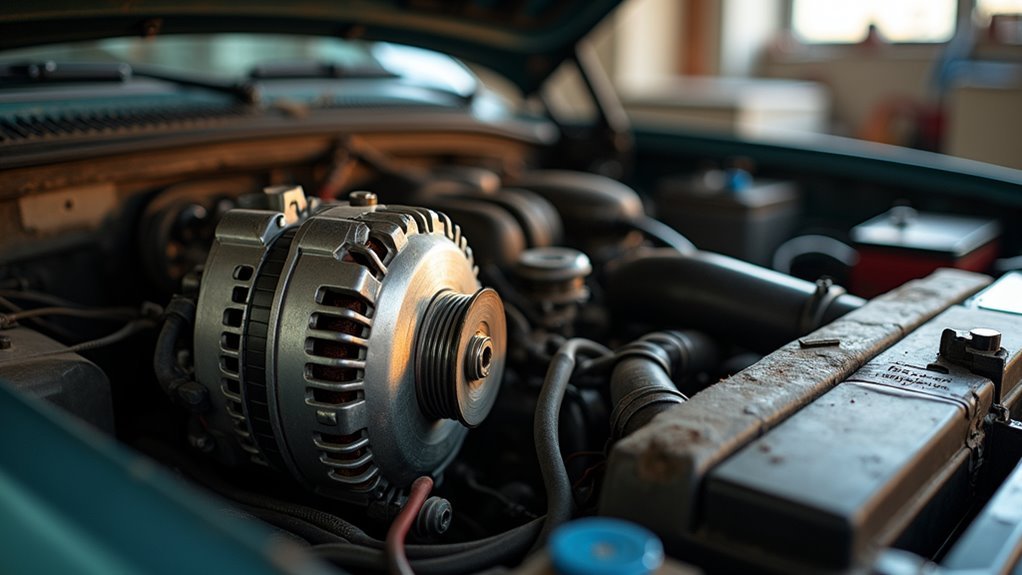
How Alternators and Batteries Work Together
The battery supplies the burst of power needed to crank the engine. Once running, the alternator powers lights, radio, and electronics while recharging the battery. Together they keep electrical systems functioning and the battery topped up. A weak battery or failing alternator causes slow starts, dim lights, and dashboard warnings. Spotting these signs early prevents being stranded and reduces repair costs.
How the Battery and Alternator Work Together
Consider your car’s battery and alternator as a smart team that shares the work. You help keep the state of charge steady by letting the battery store energy for later and the alternator refill it while the engine runs.
At the outset, the battery holds enough power to give a quick burst, and that burst gets the engine going. Then the alternator takes over, using engine motion to create electrical energy for your lights, radio, and other needs.
This smooth energy flow keeps your ride calm and reliable. The battery also acts like a buffer, so small voltage changes don’t shake up your system.
Together, they keep you confident on the road, with power ready whenever you need it.
What the Battery Does at Start-Up
As you turn the key or press the start button, the battery steps up initially. It sends the primary burst of power that wakes the starter motor and begins cranking the engine. That quick surge matters because starting takes a big cold cranking effort, and your battery delivers it fast.
While the engine is still off, it also supports dash lights, the radio, and other small electronics, so you don’t feel left in the dark. During this moment, the battery handles the heavy starter draw and acts like your vehicle’s trusted backup.
Then the engine catches, and the load starts shifting away. In that short, crucial moment, your battery gives your vehicle the strong push it needs to get going.
How the Alternator Powers Your Vehicle
Once the engine is running, the alternator takes over and starts pulling its weight. You stay powered because this belt driven generator turns engine motion into steady electricity. It feeds your lights, radio, blower, and other loads while you drive, so your battery can relax as a backup.
| Part | Job |
|---|---|
| Belt | Spins the unit |
| Rotor | Creates motion |
| Stator | Makes current |
| Rectifier | Changes AC to DC |
| Regulator | Handles electrical regulation |
That control keeps voltage steady, so your systems feel calm, not jumpy. As you’re cruising, the alternator keeps the whole team in sync. You get reliable power, and that shared support helps your vehicle feel ready for every mile.
Why the Alternator Recharges the Battery While You Drive
The alternator doesn’t just make power for your car, it also helps repay the battery for the energy it spent getting the engine started. Once you crank the engine, the alternator takes over and turns engine motion into electricity.
That steady flow keeps your lights, radio, and other systems running, while it sends extra charge back into the battery. It’s a smart energy reconciliation, because the battery gives initially and gets restored while you drive.
The voltage regulator keeps the charge calm and safe, so your car’s power stays balanced. You could regard it like a team effort, almost like regenerative braking in spirit, where lost energy gets put back to work.
That’s how your ride stays ready, mile after mile, without draining your battery.
Battery Warning Signs You Shouldn’t Ignore
Should your engine begins cranking slowly, your battery could be struggling to deliver the strong burst of power your car needs.
You could also notice your lights dimming inside or outside the vehicle, especially whenever you turn on the radio or AC.
These signs can feel small initially, but they frequently mean your charging system isn’t keeping up.
Slow Engine Cranking
Whenever you turn the key, you expect a quick start, not a drawn-out groan. That delay often means the battery can’t send enough current to the starter solenoid, so the engine turns over slowly. Corroded terminals can also block power, which makes the problem worse.
You could notice the engine finally starts after a few extra tries, but that isn’t something to brush off. Should you be seeing this happen, your battery perhaps be losing its strength, and the whole starting system might need a closer look before you get stuck somewhere inconvenient.
Dimming Lights Everywhere
Should your headlights begin to look weak or your dash lights seem to fade at idle, your battery warning signs could be showing up in plain sight.
You could notice the cabin feels less steady, and that can make every drive feel a little uneasy.
Once the charging system slips, you get a voltage drop that shows up fast in lights.
A weak battery can’t hold the load, and even a headlight retrofit won’t fix a failing power supply.
- Your headlights could pulse like they’re tired.
- Your dash could glow softer at stoplights.
- Your interior lights can dim whenever you brake.
- Your confidence can dip whenever the car feels off.
Because you belong on the road with peace of mind, check the battery soon and catch the problem before it spreads.
Alternator Failure Signs to Watch For
A failing alternator often gives you a few clues before it leaves you stranded, and those signs usually show up while you’re driving.
You might notice a dashboard flicker, weak headlights, or gauges that act jumpy.
Should the battery warning light stays on, pay attention, because your charging system could be slipping.
You may also catch a smell ozone near the hood, which can point to heat or electrical strain.
As the problem grows, accessories can slow down, the radio might cut out, and the engine could start to stumble.
These changes can feel stressful, but you’re not alone in spotting them promptly.
Whenever you notice more than one sign at once, your alternator could be struggling to keep up.
How to Test Battery and Alternator Health
You can start with a battery voltage evaluation to see whether your battery is holding the right charge whenever the engine is off.
Then, check alternator output with the engine running to make sure it’s sending enough power and recharging the battery.
Together, these two assessments help you spot whether the problem starts with the battery, the alternator, or both.
Battery Voltage Test
Checking battery voltage gives you a fast, calm way to see what’s going on under the hood before a small problem turns into a roadside headache. You can grab a multimeter, touch the leads to the battery posts, and read the state of charge without guessing.
A healthy battery usually shows about 12.4 to 12.6 volts when the engine’s off. Should the number be low, the battery might need a charge, or its internal resistance could be rising and slowing delivery. That check helps you feel more in control, especially whenever your car might need to start right away.
- You avoid that sinking “uh-oh” moment.
- You know your car’s ready for the day.
- You build trust with your own hands.
- You catch trouble before it spreads.
Alternator Output Check
Revving the engine and then looking at the alternator output gives you a clear depiction of how well your charging system is really working. You should see about 13.8 to 14.8 volts at the battery terminals while the engine idles.
Should the reading stays low, the alternator mightn’t be feeding your battery enough power. Next, raise the RPM a little and watch for steady voltage. A jumpy or weak reading can point to worn brushes, loose belts, or bad wiring.
You can also check voltage ripple with a meter set to AC. Too much ripple often indicates poor diode health inside the alternator.
Once the numbers stay steady, you know your battery and alternator are working as a team, and that brings real peace of mind.
What Happens When the Battery or Alternator Fails
Once the battery or alternator fails, the whole charging system starts to feel the strain fast. You might notice dim lights, a slow crank, or a car that slips into emergency limpmode.
Should the battery weakens, you lose the stored power that gets you going. Should the alternator quits, your battery has to carry the ride alone, and it can’t do that for long. That’s whenever stress grows, warning lights appear, and electrical arcing can damage connectors.
- You could feel stuck at the worst moment.
- You could worry your day just fell apart.
- You could feel alone on the roadside.
- You could miss the steady comfort your car usually gives.
How to Jump-Start a Car Safely
Lifting the hood can feel stressful once your car won’t start, but a safe jump-start doesn’t have to be confusing. Firstly, check your safety checklist: both cars in park, parking brakes set, and engines off. Then match the battery posts and inspect the cables for damage.
For cable placement, connect red to the dead battery’s positive terminal, then red to the good battery. Next, attach black to the good battery’s negative terminal, and clip the last black clamp to bare metal on the stalled car, not the battery. Start the working car, wait a few minutes, then try your car.
Should it start, remove the cables in reverse order. Stay calm, move slowly, and you’ll handle this like someone who belongs under the hood.
Why Your Battery Keeps Draining
Provided that your battery keeps draining, the problem is often bigger than just an old battery. You might feel stuck, but you’re not alone, and most issues have a fix. Look for corroded terminals, which block power flow and leave you frustrated at dawn. Also check for parasitic drain, where a small electrical load keeps sipping energy after you park. Together, these problems can make your battery feel weak fast.
- That sinking feeling whenever the car won’t start
- The worry of being late again
- The quiet stress of a dim dash light
- The relief once you find the real cause
If you spot loose cables, clean them and tighten them right away. Then you’ll give your battery a fair chance to hold the charge you need.
How Your Driving Habits Affect Battery Charging
Your driving habits can change how well your battery gets charged each day. Should you make a lot of short trips, the alternator mightn’t run long enough to refill the energy used at startup, so highway drives usually help more.
Whenever you sit and idle for too long, the battery often gets less recovery than it needs, even though the engine is on.
Short Trips Limit Charging
Short trips can quietly wear on your battery because the alternator needs time to replace the energy the engine used to start. Whenever you make a quick errand run, the battery gives a big burst initially, and the alternator only has a short window to catch up. In urban stop and go traffic, that gap can stay wide. Engine heat can also add stress, especially whenever you shut off before the system settles down.
- You might feel stuck whenever your car seems tired.
- You might worry after every key turn.
- Your battery can feel like it’s working alone.
- Your routine can leave the whole group short on support.
If this sounds familiar, you’re not the only one. Many drivers share this same pattern, so your car care habits matter.
Highway Drives Recharge Better
Hit the open road, and your battery finally gets the help it needs.
Whenever you drive at highway speed, your alternator spins steadily and keeps sending power back to the battery. That longer stretch gives you better long distance charging, because the system has time to replace what the starter used.
As you cruise, the engine stays close to steady state regeneration, so the alternator can work without constant stops and starts. You get smoother charging, and your lights, radio, and other systems stay supplied too.
That steady flow helps the battery recover after startup and stay ready for the next trip.
Idling Reduces Battery Recovery
Whenever you let the engine sit and idle, the alternator doesn’t get the strong, steady spin it gets on the road, and that can slow down battery recovery.
You might feel like the car is “doing something,” but excessive idling often gives you only a partial recharge.
That can leave you stranded in the same tired spot, especially after short trips and heavy accessory use.
- You want your battery to feel ready.
- You don’t want the dash lights to fade.
- You want your commute crew to count on you.
- You want less worry when plans change.
As you drive, the alternator works harder and faster to restore power.
How Winter Weather Affects Battery and Alternator Performance
Cold weather can make life harder for your car, and right between the battery and alternator, winter puts stress on both.
Whenever temperatures drop, your battery slows its chemical reaction, so cold cranking gets weaker and the engine needs more effort to start. At the same time, thick oil makes the starter work harder, which drains extra power before the alternator can help.
Winter also brings corrosion acceleration on battery posts and cable ends, and that can block the flow you need.
Once the engine runs, your alternator must replace that lost energy while also powering lights, heaters, and defrosters.
Because everyone on the road wants a dependable start, it helps to know that cold weather doesn’t just evaluate one part, it pushes the whole charging team together.
Maintenance Tips to Extend Battery Life
Now that winter has shown you how hard your battery and alternator can get pushed, the positive news is that a few steady habits can help your battery last longer.
With regular maintenance, you keep your ride ready for school runs, work, and weekend plans.
- Check terminals for corrosion so you don’t feel stuck.
- Keep trips long enough for smart charging to refill energy.
- Turn off lights and chargers before you leave.
- Ask for a battery evaluation during oil changes.
These small steps help you stay confident, not worried, whenever you turn the key.
They also support the alternator by easing extra strain, so your whole charging system works as a team.
Whenever you care for both parts, you join the drivers who keep things moving smoothly.
When to Replace the Battery or Alternator
You can spot battery trouble whenever your engine cranks slowly, your lights look dim, or you need frequent jump starts.
In case the engine starts fine but your dashboard lights flicker, your accessories act weak, or your car stalls while driving, the alternator could be the problem.
Evaluating helps you avoid guesswork, so you can replace the right part before you’re stuck with a dead car and a bad day.
Battery Warning Signs
Often, the initial warning signs of a weak battery or failing alternator show up long before the car stops starting, and it helps to catch them promptly. You might notice slow cranking, dim lights, or a click instead of a start. That’s when a quick battery healthcheck can save you stress and help you feel prepared.
- Watch for a rough morning start that leaves you worried.
- Check for terminal corrosion, which can steal power and confidence.
- Notice electronics that fade when you use them.
- Trust your gut in case the car feels less dependable.
Provided the battery is aging, you could need a replacement soon. Should these signs keep returning after a charge, the alternator could deserve a closer look too. For families and drivers who rely on one another, that steady start matters.
Alternator Failure Signs
A weak alternator can sneak up on you, and the signs often feel a lot like a bad battery at the outset. You might see dim headlights, slow power windows, or a battery light that stays on.
Next, your symptom timeline often shifts: the engine starts fine, then electrical parts act shaky once you drive a bit. You could also hear whining, notice a burning smell, or find wire corrosion near the battery or alternator connections.
Should jump-starts help only briefly, the alternator probably isn’t keeping up. Trust what you’re seeing, because you’re not alone in this.
Once these clues stack up, replace the battery assuming it’s old and weak, but lean toward the alternator whenever fresh battery power still fades fast.
Testing Replacement Need
When your car starts acting up, the next step is to assess the battery and alternator before you spend money on the wrong part. You can check the battery initially, then check charging voltage to see who’s falling behind. Should the battery rests near 12.6 volts but drops fast under load, it might need replacing. Should the engine runs and voltage stays below about 13.5 volts, the alternator mightn’t keep up with load balancing.
- You feel calmer once the real problem shows up sooner.
- You save cash instead of guessing.
- You avoid the sting of another dead morning.
- You join other drivers who fix the right part.
Also, look for connector corrosion, since a dirty connection can mimic a bad battery or alternator and leave you stranded with no warning.
Frequently Asked Questions
Why Does an Alternator Produce AC Before Converting It to DC?
You get AC initially because a rotating magnetic field naturally induces alternating current in the stator. Then slip rings help transfer it, and a rectifier converts it to DC; about 12 volts keeps your ride steady.
What Parts Inside the Alternator Create Electrical Current?
You generate current as the rotor field spins inside the stator windings, and you feel the magnetic change create electricity. The rectifier and voltage regulator then shape it into usable power for your vehicle.
How Does the Voltage Regulator Protect Vehicle Electronics?
The voltage regulator protects your vehicle electronics by preventing over voltage and smoothing output. It adjusts alternator charging and can trigger load shedding so you’ll keep lights, radios, and sensors safe while you drive together confidently.
Why Is the Battery Still Needed While the Engine Is Running?
You still need the battery while the engine is running because it is your car’s safety net: it supplies starting current, acts as a backup reserve, and steadies voltage so you stay on the road even when the alternator stumbles.
How Does a Belt-Driven Pulley Power the Alternator?
A belt driven pulley powers the alternator by letting your engine spin the pulley, which turns the alternator shaft. With proper pulley alignment and belt tension, you get steady rotation and reliable electrical output.