Book Appointment Now

How to Recycle Household Batteries Safely
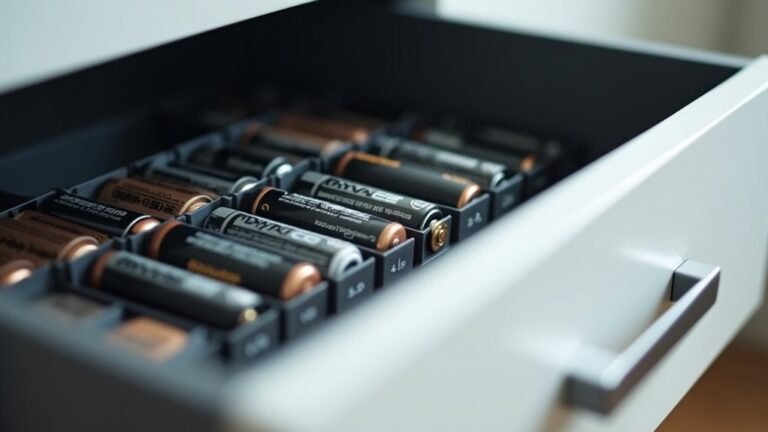
Used batteries need careful handling before leaving your home to prevent fires, leaks, and corrosion. Sort batteries by chemistry—alkaline, lithium, nickel-metal hydride, and button cells—so recycling centers can process them safely. Cover exposed terminals with tape and separate damaged or swollen batteries to reduce short circuits. Store batteries in a cool, dry place away from metal objects until drop-off or pickup. Local recycling programs, hazardous-waste events, and retailer take-back services accept household batteries for proper disposal.
Why Battery Recycling Matters
Battery recycling matters because every used battery still carries real risks and real value. Whenever you keep batteries out of the trash, you lower environmental impact and help protect the places you share with neighbors.
You also support resource recovery, which lets useful metals and materials live on instead of wasting away. That means less mining, less pollution, and fewer chances for harmful leaks to spread.
You’re not just tossing out a dead item; you’re making a choice that helps your home, your block, and the wider community. And since many batteries contain chemicals that can cause trouble, recycling gives them a safer next step.
Identify the Batteries You Have
Start upon checking the battery label, because it usually tells you the chemistry and helps you sort it correctly.
Then look at the size and shape, since a button cell, a 9-volt, and a cylindrical battery each need different handling.
Should the label be worn, check the manufacturer markings, so you can avoid mixing batteries that shouldn’t go together.
Battery Type Labels
The small label on a battery tells you more than you might suppose, and it can save you from a messy mistake. You belong to the group that checks initially, then sorts with confidence. Read the chemistry name, like alkaline, lithium-ion, or NiMH, and trust the print before you guess. Good label durability helps, but worn marks still need a careful eye. Color coding can guide you, too, yet it’s not the whole story.
- A faded silver cell still could say lithium.
- A blue wrapper perhaps hide a rechargeable pack.
- A tiny coin cell often requires special handling.
After you spot the type, set each battery aside with the matching group. That simple habit keeps you steady, protects your home, and makes drop-off day feel much easier.
Size And Shape
Sometimes the easiest clue is right in your hand, because size and shape can tell you a lot about a battery before you even read the label. You’ll start to notice patterns that make sorting feel less scary and more like joining the right team. Battery ergonomics and design aesthetics matter here, since the body of the battery often fits its job.
| Shape | Common Feel | What to Do |
|---|---|---|
| Cylindrical | Slim or chunky | Group with similar cells |
| Rectangular | Flat and boxy | Check for rechargeable use |
| Button | Tiny and round | Keep separate right away |
If a battery looks swollen, cracked, or oddly bent, set it aside. Short, wide cells and coin shapes need extra care because they can slip into pockets, bins, or drawers too easily. Whenever you match the form, you help your whole recycling routine feel safer and more organized.
Check Manufacturer Markings
Once you’ve noticed the shape of a battery, read the markings next, because the label usually tells you how to handle it safely.
You’re part of a community of careful recyclers, and that starts with the tiny print. Look for words like alkaline, lithium-ion, NiMH, or Ni-Cd. Those markings help you sort batteries fast and keep risky mixes apart.
In the event the label is faded, check the brand name and model number for brand authentication, then compare it with the maker’s site or a local guide. That can protect your manufacturer warranty too.
- A silver AAA battery in your hand
- A black 9-volt resting on cardboard
- A button cell glinting like a coin
When you know what you’ve got, you can pack it the right way and feel confident at drop-off.
How to Store Used Batteries Safely
For safe storage, start putting used batteries in a non-metal container, like a plastic tub or cardboard box, so they won’t contact metal and spark.
Next, keep that container in a cool, dry spot away from tools, foil, and heaters. You can also add clear ventilation tips by leaving a little space around the box so air moves freely.
Should you have kids or pets, choose childproof storage by setting the container on a high shelf or in a locked cabinet.
Then, keep damaged batteries apart in a second container, because leaks can spread fast. Also, tape the terminals on rechargeable and lithium batteries, and cover coin cells too.
This simple habit helps your group stay safe while you wait for drop-off.
Sort Batteries by Type
Initially, check each battery’s label so you can spot the chemistry, like alkaline, lithium-ion, or NiMH, before you sort anything.
Then keep different types in separate containers, because mixing them can make recycling harder and a lot riskier.
In case you’ve got a mixed pile, label it clearly so the drop-off staff can handle it fast and safely.
Identify Battery Chemistries
Start via checking the battery label, because the chemistry tells you how to handle it safely. You’ll often see chemical indicators like alkaline, lithium-ion, NiMH, or Ni-Cd, and those names guide your next move. In case the print’s faded, look for shape clues and voltage testing only whenever your local program allows it, since a quick meter check can confirm a rechargeable pack.
- A silver coin cell in your hand
- A slim phone battery on the table
- A familiar AA resting in a drawer
Whenever you sort batteries this way, you fit right in with safe recycling habits and help protect everyone nearby. Keep like types together in your temporary container, and don’t guess at mixed piles. Should one battery seem odd, set it aside until you know what it is.
Separate Before Collection
Once you’ve identified the battery type, sort the pile according to chemistry before anything goes to collection. You’ll keep your group in the same family, and that makes everyone’s job easier. Put alkaline and zinc-carbon together, then set lithium-ion, NiMH, Ni-Cd, and button cells in their own spots.
Use childproof containers or sturdy boxes, and keep each group separated during seasonal storage in a cool, dry place. That way, terminals won’t touch and surprise you with heat or sparks. Should a battery looks swollen, cracked, or leaky, move it aside right away.
You can tape small cells should local rules ask for it, but don’t mix them back in. Clear sorting helps your community drop-off stay safe, smooth, and welcoming for all.
Label Mixed Batteries
Label each battery group as you sort it, because a clear name now can save a lot of guesswork later. Whenever you set batteries into separate piles, add temporary labeling with tape or sticky notes so everyone knows what’s inside. Use color coding for quick scanning, like blue for alkaline and red for lithium-ion, so your family can help without confusion.
- a small box marked “button cells”
- a bag tagged “rechargeables”
- a tray labeled “mixed single-use”
Keep the labels easy to read, and leave chemistry names visible whenever possible. That way, you won’t mix safe-to-store batteries with ones that need special drop-off rules. Clear labels also help you hand off the right group at the recycling site, which makes the whole job feel calmer and more like teamwork.
Tape Battery Terminals Before Recycling
Taping battery terminals is a simple step that can save you from a scary surprise later, because exposed ends can spark, heat up, or short-circuit whenever batteries rub against metal or each other.
You give each battery a little terminal insulation with clear packing tape or electrical tape, and that small move helps with fire prevention.
Start with 9-volt, lithium-ion, button, and coin cells, since they’re the most likely to act up.
Then cover both ends fully, but keep the battery label visible should you can.
In case a battery looks swollen, cracked, or leaky, set it aside instead of taping it with the rest.
Whenever you do this, you protect your home, your storage box, and the people helping you recycle.
It’s a careful habit, and you’re part of the group doing it right.
Find a Battery Recycling Drop-Off
Now that your batteries are sorted and taped, it’s time to track down a drop-off spot that actually accepts them. Start with your town’s waste site, then check nearby libraries, schools, or neighborhood cleanup days. You’re not hunting alone; lots of people are doing the same thing, and that shared effort makes the job feel lighter.
- A county map with a pin near your street
- A community swap table with labeled bins
- A mail back programs envelope waiting by the door
Call ahead provided you can, because rules change per battery type. Should a site won’t take one kind, ask for the next closest option.
Upon arrival, keep bags closed and labels visible. Then you may hand them over with confidence and feel good about helping your block.
Use Store Battery Take-Back Programs
Store take-back programs make recycling easier because you can hand off old batteries while you’re already shopping.
You can usually find these drop-off spots at hardware stores, office supply stores, and some big retailers, so check the store’s battery policy prior to you go.
Then sort your batteries by type, tape any exposed terminals, and keep damaged ones separate so you’re ready for a safe return.
Finding Store Drop-Off Locations
You can track down a battery drop-off spot without much hassle provided you start with stores that already sell batteries. Check the service desk, then look for retail partnerships that connect shops with local recyclers. These programs often fit your routine, so you can drop off batteries while running errands. Should your area offers mobile collections, note those dates too, since they bring help closer to your neighborhood.
- A bright counter bin near the entrance
- A small sign beside the cashier
- A friendly clerk pointing you toward the box
When you call ahead, ask which battery types they accept and whether the store limits quantities. That quick check helps you feel prepared and welcome. Should one shop says no, another nearby location might still open its doors.
Preparing Batteries for Return
Before you hand batteries back at a store, sort them according to type and give each one a quick safety check. Put alkaline, lithium-ion, NiMH, Ni-Cd, and button cells in separate groups, because mixing them can confuse the store team. Then tape the terminals on 9-volt and rechargeable batteries, and cover coin cells too. Should you spot swelling, cracks, or leaks, move those batteries into their own bag and ask about hazardous waste rules. Keep your home inventory handy so you can match each battery to its label. That little check saves time and keeps everyone safer.
Once you’re ready, place the batteries in a plastic tub or small box, and bring them to the take-back counter. Provided you saved a battery from gift reuse, label it clearly before drop-off.
Use Work Battery Recycling Programs
Provided that your workplace has a battery recycling program, it can make disposal a lot easier and safer. You can join the effort instead of guessing what to do at home, and that helps you feel part of a team that cares. Ask where the collection box sits, then drop off your used cells during the week. Many offices also offer employee incentives, so you might get a small reward for participating. In the event your employer works with corporate partnerships, those shared services can keep bins stocked and pickups regular.
- A labeled box in the break room
- Your old batteries beside a coffee mug
- A pickup cart rolling past desks
You’ll still want to follow the posted rules, sort batteries as asked, and keep terminals covered. That simple habit helps everyone handle waste with confidence.
Which Batteries Never Belong in the Trash?
Some batteries need extra care, even should your workplace have a handy collection box, because the trash can turn a small mistake into a real hazard.
You should never toss lithium-ion, nickel-cadmium, nickel-metal hydride, button cells, or 9-volt batteries in household garbage. Their terminals can spark, and that fire risk grows whenever batteries rub against metal or each other.
Rechargeable types often fall under a household ban, so treat them as off-limits unless local rules state otherwise. Check the label before you act, because alkaline and zinc-carbon batteries might be allowed in some places, but not everywhere.
In case you’re unsure, set the battery aside, keep it away from kids and pets, and choose a drop-off site that welcomes your cleanup effort.
Handle Leaking or Damaged Batteries
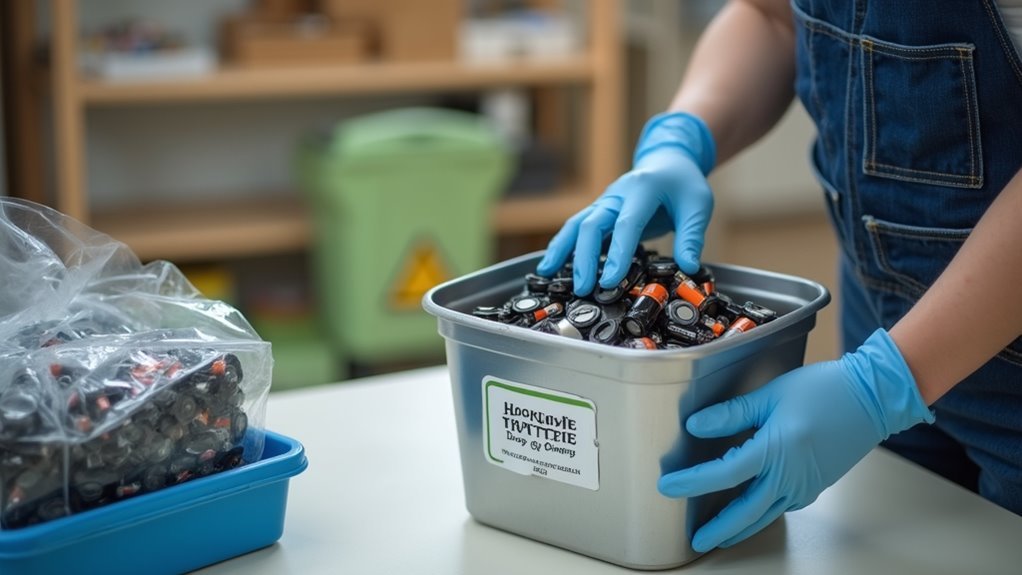
Whenever a battery is leaking, cracked, swollen, or looks burned, treat it like a small emergency and not a simple piece of trash. You don’t need to panic, but you do need to act fast and calmly. Put on gloves provided you have them, then move the battery into emergency containment with care.
- Set it in a non-metal container alone.
- Keep it away from kids, pets, and sunlight.
- Seal the area should powder or liquid have spread.
Next, avoid touching the leak directly, because residue can sting skin and ruin surfaces. Don’t tape a badly damaged battery shut unless a guide tells you to. Instead, keep it separate and arrange professional disposal through a local hazardous waste or battery drop-off service. Your careful steps help protect everyone nearby.
Check Local Battery Recycling Rules
Before you sort a single battery, check your local recycling rules, because the safest choice in one town can be the wrong choice in another. Your local ordinance could say where lithium-ion, button cells, or old alkalines go, and it can even change per block. This is why you should look up collection schedules before you head out.
| What to check | Why it matters |
|---|---|
| Battery type | Rules differ for each chemistry |
| Drop-off site | Not every site accepts every battery |
Then match your batteries to the approved option, and keep damaged ones apart. Should your town permit store drop-off, save the date and bring them in with clear labels. Whenever you follow the same local rules as your neighbors, you help everyone stay safe, and you make recycling feel a lot less confusing, too.
Frequently Asked Questions
How Do I Tell if a Battery Is Rechargeable?
You can usually tell by checking the label: if it says rechargeable, lithium chemistry, NiMH, NiCd, or includes smart charging, it’s rechargeable. If it looks like a tiny tax dodger, inspect the symbol too.
Can I Recycle Mixed Battery Types Together?
No, you shouldn’t mix and match battery types. Recycling myths say it’s fine, but you’ll need to sort them according to chemistry, tape terminals, and follow local drop off rules so you keep everyone’s collection safe and welcoming.
What if a Battery Has No Visible Label?
If it is unlabeled, treat it like a small mystery. Identify the battery chemistry by its shape, brand, or device manual, and use label restoration only when local guidance allows it before recycling.
Should I Remove Batteries From Old Devices First?
Yes, you should remove them initially if you can do safe device disassembly. That lets you sort according to chemistry, tape terminals, and contact recycling sites properly. If you cannot, follow local guidance before opening anything.
How Do I Transport Batteries Safely to a Drop-Off Site?
You’ll use secure packaging: tape terminals, separate types, and place batteries in a plastic tub or box. Keep them cool and dry, then choose vehicle placement on the floor away from passengers and metal.