Book Appointment Now

How to Dispose of Old Batteries Properly
Old batteries need proper disposal to protect people and the environment. Start by sorting cells by chemistry—alkaline, lithium, nickel-based, and lead-acid—so each type follows the right handling rules. Inspect batteries for leaks, bulges, or corrosion and keep damaged units isolated in a non-conductive container. Store batteries cool and dry with terminals taped if required, then take them to designated drop-off points or recycling programs that accept their specific type. Following these steps reduces fire risk and prevents toxic materials from entering landfills.
Why Battery Disposal Matters
Battery disposal matters more than most people realize, because a small battery can turn into a big problem fast.
Whenever you toss batteries the wrong way, you can harm the environmental impact around your home and community. Leaking chemicals can seep into soil and water, and that can touch the places you live, work, and play.
You also protect public health when you handle batteries with care, since damaged batteries can spark fires or release irritating materials.
In case you’re sorting old batteries with your family, neighbors, or coworkers, you’re helping everyone stay safer. That matters, because good habits build trust and make cleanups easier.
Identify the Battery Type
Initially, you need to know what kind of battery you’re holding, because alkaline, lithium-ion, rechargeable, 9V, and button-cell batteries all need different handling.
Check the label or the device manual for markings like AA, AAA, CR2032, or Li-ion, since those small clues can save you a lot of guesswork.
Suppose a battery looks damaged or the type isn’t clear, set it aside right away so you can keep the rest of your batteries safer.
Common Battery Types
As you sort through old batteries, it helps to know what you’re holding before you do anything else. You’ll usually see common battery chemistries like alkaline, lithium-ion, rechargeable packs, 9V blocks, and button-cell discs.
Alkaline cells often power remotes and toys, while lithium-ion batteries usually sit inside phones and laptops. Rechargeables show up in cameras, tools, and game gear, so they deserve extra care.
Should you spot terminal corrosion, swelling, or damage, set that battery aside right away. Unknown batteries can look harmless, but they still need their own space.
Whenever you separate types prematurely, you protect your home and make the next disposal step easier for everyone around you. A quick check now saves worry later and keeps your battery pile under control.
Check Label Symbols
Look closely at the label before you set any battery aside, because those small marks can save you a lot of guesswork.
You’re not alone provided the code feels confusing at outset. Start with the type name, like alkaline, lithium-ion, or rechargeable, then check for size marks such as AA, AAA, 9V, or CR2032.
Next, read any icon meanings, because a tiny recycle sign, warning triangle, or crossed-out bin can tell you how to handle it.
In case you see printer symbols on a label, treat them as part of the device info and not as the battery type itself.
Then separate unknown or damaged batteries right away. This simple check helps you sort safely and keeps your home team on the same page.
Sort Batteries by Type
Sorting batteries according to type makes the whole disposal process safer and much less confusing. After your household audit, gather every battery and use label segregation to separate alkaline, lithium-ion, rechargeable, 9V, button-cell, and unknown ones. You’ll feel more in control whenever each group has its own place.
Keep alkaline batteries apart from rechargeable and lithium batteries, because mixed chemistries can create short-circuit risks. Next, set damaged or leaking batteries aside so they never touch the rest of the pile.
In case a label is faded, check the device manual or the battery itself for clues like AA, AAA, CR2032, or Li-ion. This simple sorting step helps you protect your home, stay organized, and move forward with confidence.
Find a Battery Recycling Location
You can start by checking local recycling centers, since many accept common household batteries and can guide you on special drop-off hours.
Should that feels far away, look for retail drop-off bins at hardware, office supply, or electronics stores near you. A quick call ahead can save you a wasted trip and help you drop off your batteries with confidence.
Local Recycling Centers
- Ask about alkaline, lithium-ion, and button-cell acceptance.
- Check for community swaps that share safe collection dates.
- Look for mobile collection events near your home.
- Tape terminals before you drop off rechargeable batteries.
- Bring damaged batteries separately in a non-metal bag.
After that, call ahead so you don’t waste a trip. Many centers post rules online, and a quick check helps you feel prepared. Should you’re unsure, bring the label or device manual.
A calm visit can turn a messy task into something simple and shared.
Retail Drop-Off Sites
| Store type | What you bring | Why it helps |
|---|---|---|
| Hardware | Sorted batteries | Safer handling |
| Office | Small packs | Easy access |
| Grocery | Loose cells | Quick stop |
| Pharmacy | Button cells | Less buildup |
| Electronics | Rechargeables | Trusted recycling |
Look for collection incentives like coupons or points, but always tape terminals and separate damaged packs initially. Then you can drop them off with confidence, aware you’ve joined a cleaner routine.
Recycle Single-Use Batteries
Single-use batteries deserve a careful second step before they leave your home, because the right recycling move can keep harmful metals out of the trash and protect your space from leaks or short circuits.
To begin, check your local rules and look for consumer incentives that make drop-off feel worth the trip.
Then sort alkaline and lithium single-use cells so you can send them to the right place.
- Keep loose batteries in a bag or small box
- Tape any exposed ends before transport
- Use curbside collection only provided your city allows it
- Choose retailer bins or community events whenever available
- Ask neighbors or family to save theirs too
Whenever you recycle together, you cut clutter and help your whole group do the right thing with less effort.
Recycle Rechargeable Batteries
You can recycle rechargeable batteries safely once you initially spot the type, like lithium-ion, NiMH, or NiCad, so you know how to handle each one.
Check the label, tape exposed terminals, and keep damaged batteries apart to lower fire risk and protect your space.
Then, take them to a certified drop-off site or retailer take-back bin so you’re recycling them the right way.
Rechargeable Battery Types
Rechargeable batteries need a little extra care, because they store more energy than regular throwaway batteries and can become dangerous whether they’re mixed up or damaged. You can sort them according to battery chemistries and cell geometry, so you feel confident you’re helping your home or crew do the right thing. Lithium-ion packs, nickel-metal hydride cells, and sealed packs often look similar, yet their labels tell a different story.
- Check the label for Li-ion, NiMH, or NiCd.
- Match the battery size to the device manual.
- Keep rechargeable types away from alkaline cells.
- Set unknown packs aside until you identify them.
- Handle swollen units like they need their own space.
When you group the right type, you protect everyone and make the next recycling step smoother.
Safe Recycling Steps
Before you head to a drop-off site, make sure those batteries are ready for a safe trip, because a little prep can prevent a messy accident later.
To begin, check battery labeling so you can sort rechargeable packs from alkaline and damaged cells.
Next, tape the terminals on 9V, lithium-ion, and other rechargeable batteries.
Then place each group in separate bags or a sturdy, non-metal container.
Keep the load cool, dry, and away from keys, coins, and tools that can spark trouble.
Should you spot swelling, leaks, or cracks, set those batteries aside and handle them last.
Follow local transport protocols, and call the recycler in case you’re unsure about a weird battery.
After that, take your sorted pile to a certified drop-off site or take-back bin.
Handle Damaged or Leaking Batteries
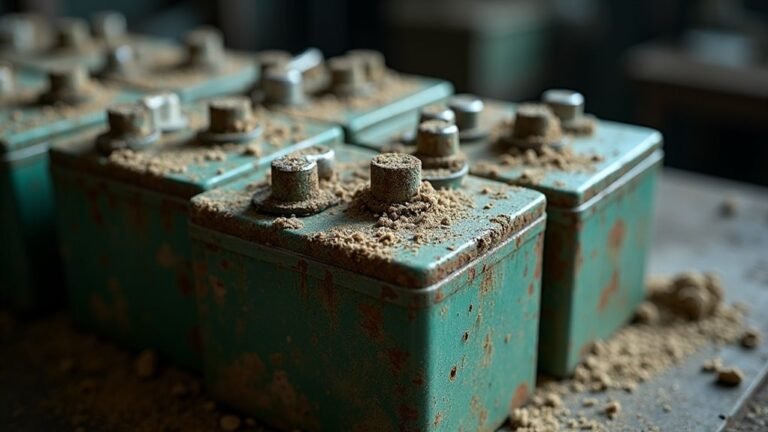
Once a battery starts to leak, swell, or look damaged, act fast and keep calm. You’re not alone here; these spills happen, and you can handle them safely.
To begin, move the battery away from people and pets without touching the leak. Then use emergency neutralization only provided your local guidance allows it, and wear gloves should you have them. Place the battery in a separate bag or rigid container for specialized transport, so it won’t spread residue or spark.
- Keep the area clear
- Avoid squeezing the case
- Wash skin right away
- Use tongs if needed
- Tell others to stay back
Store Used Batteries Safely
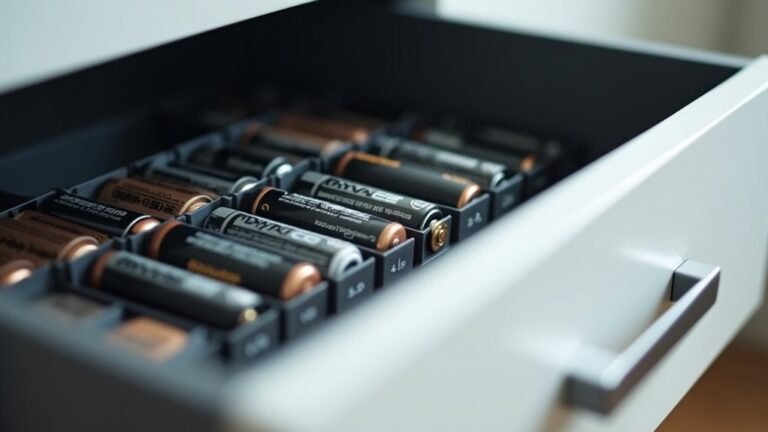
Now that you’ve kept damaged batteries apart, the next step is to store the rest in a way that keeps everyone safe. Sort them according to type, then place each group in a battery organizer so nothing rolls around or touches metal.
You can tape the ends of 9V, lithium-ion, and rechargeable batteries, and you can slip loose cells into small bags or their original cases. Keep the container non-metal, closed, and clearly labeled for your home team.
Next, choose a cool, dry spot with steady temperature control, far from sinks, heaters, and sunny windows. Also, keep batteries out of drawers with coins, keys, or tools. That small habit helps your space stay calm, tidy, and ready for the next step.
Prepare Batteries for Drop-Off
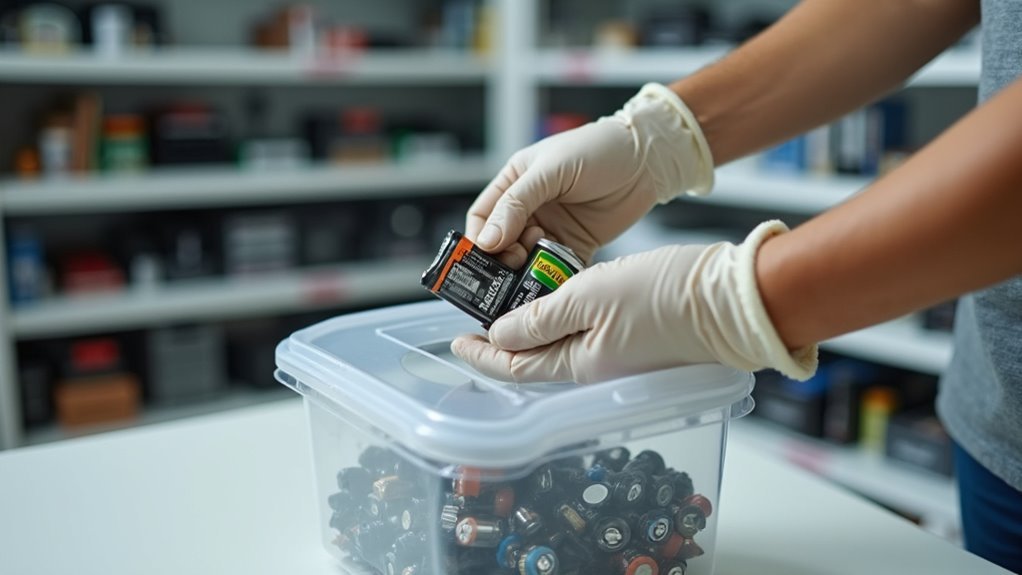
Tidy up your batteries so drop-off day feels simple, not stressful. Initially, sort each one according to type and use a clear labeling system on bags or containers. That way, you won’t mix lithium, rechargeable, and alkaline batteries by accident.
Next, tape the terminals on 9V, lithium-ion, and rechargeable cells so they stay safe in your box. Then, pack loose batteries in separate bags inside a rigid container, and keep damaged ones apart from the rest.
- Check names and symbols on each battery.
- Separate unknown ones right away.
- Keep everything dry and cool.
- Use a transport checklist before you leave.
- Confirm your drop-off site accepts your batch.
When you prep this way, you help everyone in your community handle batteries with confidence.
Dispose of Car Batteries
Dispose of a car battery with care, because this heavy part holds more than just power. You can keep your space safe by lifting it upright and moving it with both hands.
Initially, check for cracks, leaks, or swelling. Then place it in a rigid plastic container, away from tools and metal. Next, take it to an auto parts store, scrap yard, or local collection site that accepts battery recycling. These places often support lead recovery, which helps protect your community and cuts waste. Also, call ahead so you know their rules.
Should the battery leak, wear gloves and avoid skin contact. Through handling it this way, you help your neighborhood stay clean, safe, and ready for the road ahead.
Recycle Button Batteries
Button batteries may look tiny, but they can still cause big trouble should you toss them the wrong way. Whenever you recycle them, you protect your home and help your crew of careful neighbors keep waste out of the wrong place.
Start by sorting them with other button cell chemistry items, then keep them apart from loose metal objects. Use child safety precautions right away, since a swallowed cell can hurt fast.
- Tape each battery provided the label is worn.
- Put them in a small, nonmetal container.
- Keep them dry and out of reach.
- Bring them to a battery drop-off bin.
- Ask the store clerk whether the bin accepts button cells.
This simple routine helps you handle them with confidence and care.
Check State Disposal Rules
Because battery rules can change from one place to the next, you should check your state disposal rules before you carry anything to a drop-off site. Start with your state environmental agency or waste site, since state regulations often set the exact battery types they take and the days they accept them.
Then look for disposal timelines, because some places want quick drop-off after you sort and store batteries at home. You can also call your city hotline or visit a county website to confirm local hours, fees, and special collection events.
This small step helps you feel prepared, and it keeps your batteries moving to the right place without stress. Once you understand the rules, you can join your neighbors in doing the safe thing with confidence.
Avoid Common Battery Disposal Mistakes
Once you know your state’s rules, the next step is to avoid the slip-ups that can turn a simple cleanup into a messy or unsafe job.
You’re not alone here. Many people make the same errors, but you can skip them with a little care and calm.
Start by sorting batteries by kind, because incorrect sorting can cause leaks or sparks.
Then use proper taping on 9V, lithium, and rechargeable batteries so the terminals stay covered.
Don’t toss batteries into regular trash, and don’t mix damaged ones with good ones.
- Keep loose batteries apart in a plastic container.
- Read labels before you pack them.
- Move swollen cells aside right away.
- Check for retailer drop-off bins.
- Ask your household to follow the same routine.
Frequently Asked Questions
How Long Can Used Batteries Be Stored Safely Before Recycling?
You can store used batteries for a few months provided you keep them cool, dry, and sorted, but shorter is safer; act soon to avoid capacity loss, leaks, and hazards for everyone around you.
Can I Mail Batteries to a Recycling Program?
Yes, you can mail batteries to a recycling program, provided you follow shipping restrictions and packaging tips. You will belong with the responsible crowd once you tape terminals, sort types, and use approved carriers carefully.
What Should I Do if a Battery Leaks on My Skin?
Wash immediately with plenty of running water and soap, then remove contaminated clothing. Do not rub the area. If burning, redness, or pain continue, seek medical attention right away and contact poison control.
Are Battery Recycling Drop-Offs Free at Most Locations?
Usually, yes. Many sites offer free collection, but you’ll need to check each location’s drop off policies initially. You’ll feel more confident once you confirm accepted battery types, hours, and any fees prior to going.
Can I Bring Batteries to the Same Place as Electronics?
Yes. Often you can, but confirm first. Use the same electronics drop off only if it accepts batteries as well. Keep batteries sorted, tape exposed terminals, and prepare them for safe store transport or retail collection.