Book Appointment Now

What Happens When a Car Battery Dies Completely
A completely dead car battery will prevent the engine from cranking and stop most electrical systems from working. You might hear only a single click from the starter or get silence when turning the key. Interior and exterior lights will dim or go out, and electronic displays and memory settings can reset. Modern cars can lock doors or disable key fob functions when battery voltage drops very low. A drained battery can also interrupt fuel pumps and ignition systems, leaving the vehicle immobilized until power is restored.
What Happens When a Car Battery Dies?
Whenever a car battery dies, the whole starting system loses the steady power it needs, so the engine usually won’t crank and the ignition could seem completely unresponsive. You’re not doing anything wrong. Inside the battery, battery chemistry can’t deliver enough current, and even a small parasitic draw might drain what’s left.
That drop in voltage keeps the starter from pulling in, so you might hear silence or a weak click instead. Then the rest of the car can feel it too, because the computers, fuel system, and lights all rely on stable power. If that support fades, your vehicle can feel stuck and uncooperative.
In that moment, you just need a calm next step, not panic, because this problem often points to power loss, not a failed key or a bad mood.
Signs Your Car Battery Is Dying
A dying car battery usually gives you a few clear warning signs before it quits, so your car is rarely trying to surprise you. You might notice slow cranking, dim lights, or weird resets in your radio and windows. Those clues often come from aging battery chemistry, and sometimes from a parasitic draw that keeps draining power after you park.
| Sign | What you feel | Why it matters |
|---|---|---|
| Slow start | Longer crank | Less stored power |
| Dim lights | Weak glow | Voltage is dropping |
| Clicking | No turn over | Not enough current |
| Reset settings | Lost presets | Voltage dips often |
| Corrosion | White buildup | Poor flow at posts |
When you spot two or more of these, you’re not alone, and your battery could need attention soon.
Why a Dead Battery Won’t Start the Engine
Once your battery dies completely, it can’t send enough power to the starter motor, so the engine won’t crank.
It also cuts off the steady electrical supply your ignition, fuel system, and engine controls need to work.
In some cars, the dead battery can even lock out the immobilizer, which keeps the engine from starting at all.
Insufficient Starter Power
Because the battery can’t send enough current to the starter, your engine could stay silent or only give you a weak click instead of turning over. You might hear the starter solenoid try to engage, but voltage sag steals the punch it needs.
That’s why the starter motor can’t spin fast enough to wake the engine. If this occurs, you’re not doing anything wrong, and your car isn’t being stubborn on purpose. It’s just starving for power.
The result feels frustrating, especially when you’re ready to go. So you might sit in the driver’s seat, turn the key, and get only a faint response. In that moment, the battery has lost the strength to help the starter do its job.
Loss Of Electrical Supply
That weak click is only part of the problem, because the battery also has to feed the whole electrical system before the engine can wake up. Whenever voltage collapses, you lose the steady current your ignition, fuel pump, and engine controls need.
So your dash might stay dark, your lights could fade, and your accessories might reset like they’ve lost their place. You’re not doing anything wrong; the car simply can’t gather enough power to open the starting sequence.
During battery diagnostics, a technician checks whether the battery can still hold voltage or whether it’s fallen too low. In a parking lot, even emergency lighting can seem brighter than your dash.
Once supply drops this far, the engine can’t get the signal and energy it needs to come alive.
Immobilizer System Lockout
Even though the battery still has a little life left, a dead one can still lock you out of the start-up process. Your car’s security protocols need steady voltage to read the key fob, confirm the chip, and let the engine wake up. Whenever power drops too low, the immobilizer might stay armed, so the starter won’t respond at all.
| Symptom | What it means | Your next move |
|---|---|---|
| No crank | The system won’t authorize start | Check battery power |
| Flashing key light | Immobilizer still active | Try a battery boost |
| Clicking only | Voltage is too weak | Ask for a jump |
If a jump doesn’t help, you could need an immobilizer reset after charging. That little reset can help you get back on the road with confidence and less stress.
What Stops Working When the Battery Dies?
Whenever your car battery dies completely, the engine won’t start, and the key or start button might feel like it does nothing at all. You could also lose power to dashboard lights, headlights, and other accessories, so the car can feel strangely silent and dark.
In some cases, you’ll see weak flickers or warning lights initially, which is your car’s way of telling you the voltage has dropped too low.
Engine Start Failure
A dead battery can bring your engine start to a stop fast, and it usually shows up in a few clear ways. You turn the key or press the start button, but nothing happens. The ignition switch might send the signal, yet the starter solenoid won’t get enough power to engage. That’s why you could hear a single click, or no sound at all.
- The engine won’t crank.
- The starter might click once.
- The dash could stay dark.
When this happens, you’re not alone, and it doesn’t mean your car hates you. It usually means the battery can’t support the starting load. Should the charge be gone for good, you might need a jump or a replacement before your engine can fire again.
Power Accessory Loss
You might notice things start to fade out fast. Your radio could go silent, your phone charger could quit, and your cabin should feel strangely empty. That sudden audio blackout can hit hard, especially whenever you were counting on the drive to feel normal.
| Device | What You Feel | What It Means |
|---|---|---|
| Radio | Silence | No steady power |
| Lights | Weak glow | Voltage is dropping |
| Chargers | Stop working | Accessories lose support |
| Fans | Slow down | The system is fading |
Aftermarket converters can also shut off, so add-ons stop helping right whenever you need them. Then the whole car starts acting like it wants a nap. You’re not alone in that frustrating moment. Power seat movement could stall, windows could crawl, and small comforts can disappear one by one. It’s your car telling you the battery can’t keep the crew going anymore.
Dashboard Warning Lights
As the battery gives out, the dashboard can start to fade like a stage light with no backup power. You might see warning lights blink, then vanish, and that can make you feel uneasy fast. Your car’s dashboard diagnostics depend on steady voltage, so weak power can scramble the signals.
- Battery and charging lights could glow before everything drops out.
- Warning thresholds get crossed, and icons might flicker or stay dark.
- Gauges and alerts can reset, which makes the display seem confused.
When voltage falls too low, the panel might miss critical warnings, and that leaves you guessing. In case the lights act strange, trust that your car is asking for help, not drama. After that, the whole system could stop giving clear feedback at all.
How to Jump-Start a Dead Battery Safely
Whenever your battery dies, the safest jump-start begins with calm, careful steps, because rushing can turn a simple fix into a messy headache.
Initially, park close enough for the cables or portable jumpstarters to reach, then turn both cars off.
Next, connect the red battery clamps to the dead battery’s positive post and the helper battery’s positive post.
Then attach the black clamp to the helper battery’s negative post and place the last clamp on bare metal away from the battery.
Start the helper vehicle or turn on the jumpstarter, then try your car.
Once it starts, remove the clamps in reverse order.
Keep your hands clear, avoid sparks, and don’t lean over the battery.
Suppose it still won’t start, pause, breathe, and ask for help.
When You Need a New Car Battery
A dead battery doesn’t always mean the same thing, and that’s where things can get tricky. Should your car keeps dying after a jump, or it won’t hold a charge overnight, you might need a new battery. Look for slow cranking, dim lights, and repeated dashboard resets. These signs often mean the battery can’t stay strong enough for daily driving.
- Check your battery warranty before you buy
- Replace it whether it’s over 3 to 5 years old
- Ask about recycling options for the old one
In case the battery has sat dead for too long, damage can build up inside. At that point, more charging won’t fix it. You deserve a car that starts with you, not against you.
How Long a Dead Battery Takes to Recharge
Should your battery has already gone dead, the next question is usually how long it needs to recharge before you can trust it again. A full recharge with a good charger often takes four to 24 hours, and a weak battery might need even longer. In case you use solar chargers, expect a slower pace, since they feed power gently and depend on sunlight.
The time also changes with battery size, how empty it is, and how much battery sulfation has built up. Heavy sulfation can block the battery from soaking up charge, so it could never return to full strength. For that reason, you require patience, steady charging, and a little hope.
Should the battery was only partly drained, it can recover much faster than one that sat dead for days.
What to Check After the Car Starts
Once your car finally fires up, take a breath and check a few things right away. Look at the dashboard for warning lights, then notice whether the idle stays steady. Should the engine shake or stall, get help soon.
Next, examine your cabin electronics one at a time, like the radio, windows, and lights, so you can spot anything odd. After that, watch the battery health signs on the dash, since weak voltage can leave clues even after a restart.
- Turn on the headlights and see whether they stay bright.
- Try the climate controls and listen for smooth response.
- Check for strange clicks, resets, or flickers.
Should everything feel normal, you can relax a little. Otherwise, you’re not alone, and a shop can help you figure out what’s still off.
How to Prevent a Dead Battery
Provided your car is running normally again, that’s a good time to protect the battery before it leaves you stranded. Keep up regular maintenance by checking the terminals for corrosion, tightening loose connections, and watching for slow cranking or dim lights.
Drive often enough to let the alternator top off the charge, because short trips can leave the battery tired. Should you park for long stretches, use a battery maintainer, especially during seasonal storage.
Turn off lights, cabin power, and accessories before you shut the car off, so you don’t drain extra power overnight. In cold weather, ask for a battery assessment before winter hits. Also, replace an aging battery before it starts acting shy. A little attention now helps you stay part of the drivers who get moving with confidence.
When to Call Roadside Assistance
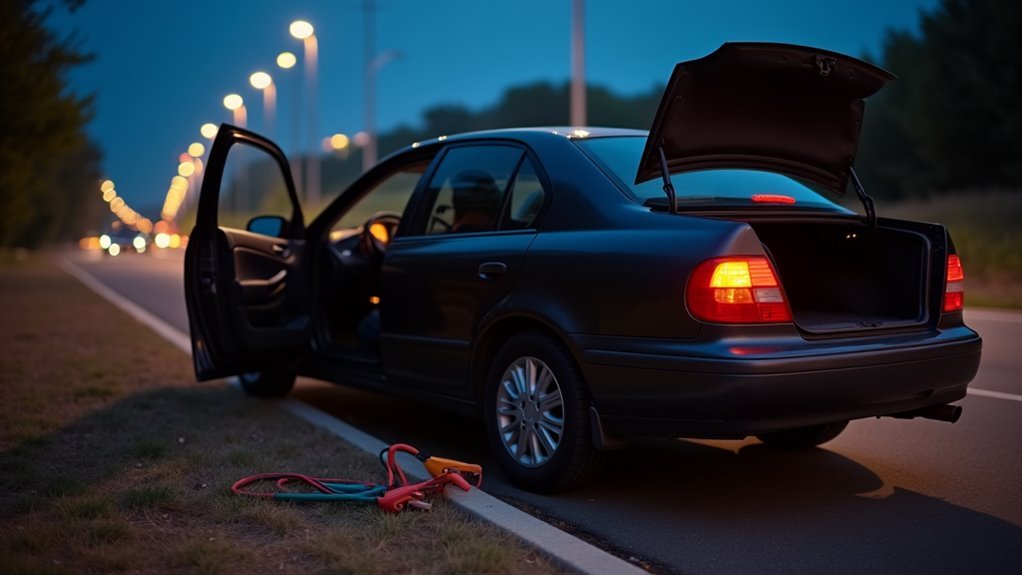
You should call roadside assistance once your car battery dies completely and the engine won’t crank at all, because that’s often the quickest way to get moving safely again.
In case you’re stuck in traffic, at night, or in a risky spot, don’t tough it out alone. A pro can examine the battery, jump it, or arrange towing etiquette so you know what happens next.
- Call when the lights stay dim and the dash goes blank.
- Call when a jump start fails or the car keeps clicking.
- Call when you need cellphone charging to reach help initially.
In case you smell burning, see corrosion, or the car stalls after starting, ask for service right away. That support can save your mood, your time, and your day.
Frequently Asked Questions
Can a Completely Dead Battery Damage the Alternator?
Not usually, but you can strain your alternator if you keep driving with it. Why risk it? Repeated starter strain and a charging surge make it work harder, and that extra load can shorten its life.
Will a Dead Battery Erase My Car’s Electronic Settings?
Usually no, your dead battery won’t erase everything. You could lose factory presets, clock settings, and radio memory, but security systems often stay intact. Reconnect power and you’ll usually reset things and feel back in control.
Can Extreme Cold Make a Battery Appear Completely Dead?
Yes. Extreme cold can make your battery seem completely dead. Cold-induced voltage drops can trigger a temporary shutdown, so don’t judge too fast; a jump or warm-up might help, and you’re not alone.
How Long Can a Car Sit Before the Battery Dies?
You can’t always predict it, but a car battery may die after about two to six weeks of sitting, depending on how long it is parked, standby drain, weather, and battery health. Older batteries often fail sooner.
Is It Safe to Keep Driving With a Failing Battery?
No, you shouldn’t keep driving it. You’re risking a sudden stall and letting doubt ride with you. Check battery maintenance now, and arrange emergency charging soon; you’ll protect yourself and keep your car reliable.