Book Appointment Now

Why Your Car Battery Keeps Dying Overnight
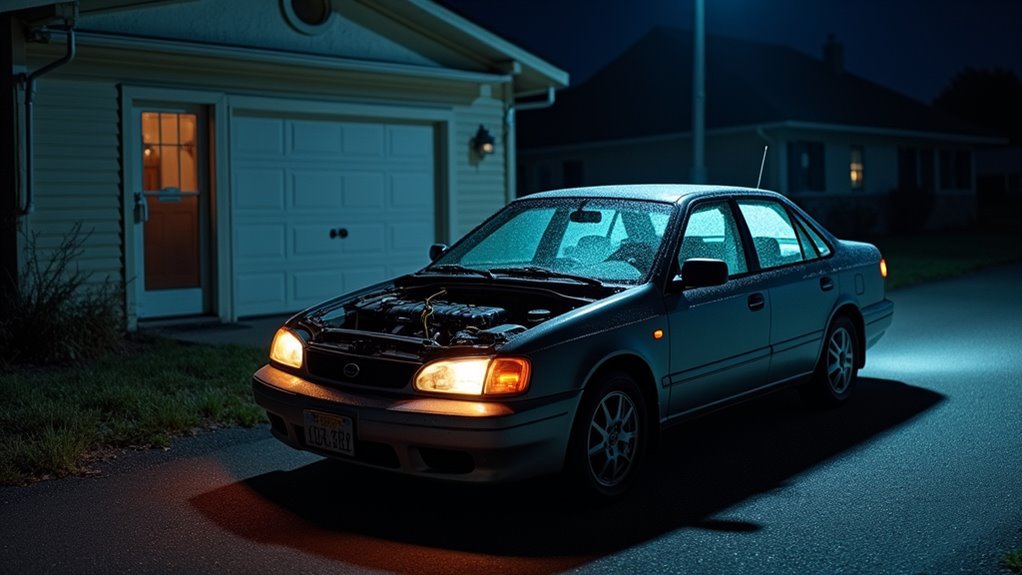
Car batteries die overnight because small electrical drains keep drawing power while the vehicle sits. Accessories like dash cams, interior lights, or faulty relays can slowly discharge the battery. A weakened battery or poor charging system reduces reserve capacity and speeds failure. Corroded connections and parasitic draws are common culprits that hide from casual inspection. A few quick checks—battery voltage, terminal condition, and accessory power draw—usually reveal the cause.
Why Your Car Battery Dies Overnight
Should your car battery die overnight, something is still drawing power after you turn the key off, or the battery can’t hold a full charge anymore. You’re not alone, and this headache usually has a clear reason. Sometimes standby electronics keep sipping power while the car rests, and that slow drain can empty a weak battery before morning.
Other times, battery chemistry has altered with age, so the battery still shows voltage but can’t deliver enough strength whenever you need it. Cold weather, short trips, and poor charging can make that weakness show up sooner.
At the moment this occurs, you deserve answers, not guesswork. A proper check can tell you whether the battery itself is tired or whether the car is asking too much after shutdown.
Common Causes of Overnight Battery Drain
If your car battery keeps dying overnight, the cause is often a concealed drain that keeps pulling power after you park. You could also be contending with a weak charging system that never fully recharges the battery, or something simple like an interior light that stays on without you noticing.
Through checking these common issues initially, you can narrow down the problem faster and save yourself a lot of stress.
Parasitic Electrical Draw
A concealed electrical drain can quietly pull your battery down while your car sits parked, and that can feel especially frustrating because everything could seem fine the night before. You might never notice it until morning.
| Clue | What it could mean |
|---|---|
| Dash cam stays warm | It’s still drawing power |
| Glovebox light glows | A switch could stick |
| Aftermarket alarm acts odd | Remote modules could wake up |
| Fuse drops draw | That circuit needs attention |
| Firmware bugs appear | A module could stay active |
A key-off draw check helps you spot the problem fast. Start with the car asleep, then check each fuse one by one. That way, you can find the circuit stealing power and fix the real issue before your battery gives up again.
Faulty Charging System
Next, let’s rule out the charging system, because a weak alternator can leave your battery tired before the car even sits overnight. You could feel stuck, but this check can bring real relief.
Once the engine runs, your voltage should stay near 13.8V to 14.4V. Should it drop below 13.5V, the battery might never fully recover. Good alternator diagnostics also look at amperage, idle output, and diode ripple, because regulator failure can quietly starve the battery.
- Watch for dim headlights after driving.
- Listen for a whining alternator.
- Check the belt for slip.
- Verify voltage with the engine on.
- Compare readings at idle and with load.
Were the charging system weak, you’re not alone, and fixing it can make tomorrow’s start feel easy again.
Interior Lights Left On
Often, the simplest cause is the sneakiest one: an interior light that stayed on all night can drain your battery fast, even in case the glow is small. You could miss a dome light, glovebox light, or courtesy lamps after you close the doors, especially if you’re rushing. LED bulbs can look harmless, but they still pull power when they’re on for hours.
Test Your Car Battery at Home
You can check a car battery at home with a few simple tools, and that can save you a lot of stress in case your car won’t start. Start with a multimeter, because it shows whether the battery has enough charge.
Then look for surface charge by turning the headlights on for a minute, then recheck the voltage. Should you want more detail, use a battery conductance tester to see how well the battery can hold up.
- Put the car in park and turn it off
- Clean the terminals in case they look crusty
- Check for 12.6 volts or close to it
- Verify again after the car has sat awhile
- Replace the battery in the event readings stay weak
This simple routine helps you feel ready, not stuck, once morning comes.
Find the Source of the Drain
Should your car battery keeps dying overnight, you need to check for a parasitic draw initially, because something perhaps still be pulling power while the car is off.
Start through inspecting electrical systems like lights, relays, dash cams, and aftermarket accessories, since even one small fault can drain the battery come morning.
A simple fuse-by-fuse examination can help you find the exact circuit so you can stop the drain for good.
Check Parasitic Draw
A parasitic draw can quietly drain your battery even while the car is parked, and that makes it one of the most frustrating causes to track down.
You can start with a key-off draw check, then wait for sleep timers to let modules shut down.
If the draw stays high, you can pull fuses one by one until the drain drops. That points you to the guilty circuit fast.
Pay close attention to dash cams, glovebox lights, aftermarket alarms, amplifiers, and module firmware that never fully powers down.
- Keep the hood closed so the car feels normal
- Watch the meter like a patient friend
- Note each fuse you remove
- Check for tiny lights that stay on
- Revisit the circuit before replacing parts
Inspect Electrical Systems
Now that you’ve ruled out a concealed draw, it’s time to inspect the car’s electrical system and find where that power is slipping away. Start with the battery cables, grounds, and wire looms. Look for green corrosion, loose bolts, frayed insulation, and pinched wires near doors, trunks, and aftermarket gear.
Next, check fuse labeling so you can match each fuse to its circuit without guessing. Pull one fuse at a time and watch for a drop in drain. That simple step often points to a stuck relay, glovebox light, alarm, or dash cam.
Also, verify the alternator and charging voltage, because a weak charge can leave you stranded in the morning. You’re not chasing ghosts here. You’re following the trail with steady hands and a clear plan.
Lights and Accessories Left On
Interior lights, glovebox lamps, and stray accessories can sneakily drain your battery while you sleep. Should your car keeps failing by morning, check every switch before you assume the battery is bad.
A dome light, map lighting, or vanity switch can stay on without you noticing. That tiny glow adds up overnight.
- Open each door and see that lights go off.
- Close the glovebox firmly.
- Turn off chargers and dash gadgets.
- Check aftermarket add-ons after you park.
- Lock the car and look for any glow.
You’re not alone should this happen. Many drivers miss one small light and wake up to a dead car. So, build a quick shutoff habit. It only takes a minute, and it can save you a frustrating jump start later.
Bad Battery Connections and Corrosion
Corroded or loose battery connections can stop your car from getting the power it needs, even though the battery itself is still good. You might feel stuck, but this fix is often simple.
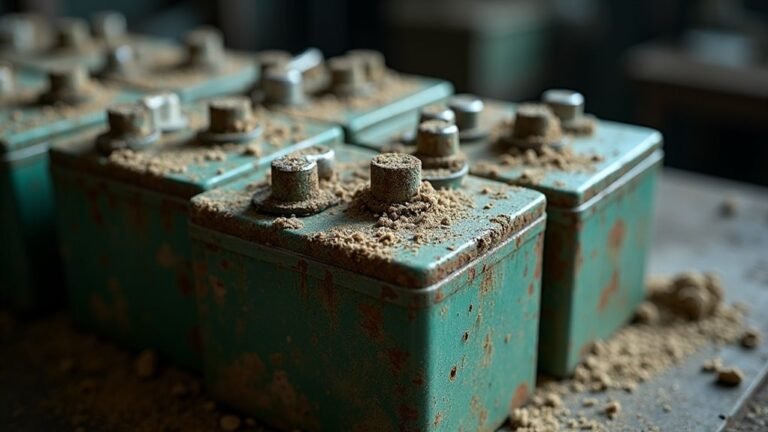
Initially, check both terminals and the cable clamps for white, green, or crusty buildup. Then do terminal cleaning with a wire brush and a safe cleaner. Tighten each clamp so it grips the post firmly, and make sure the cable doesn’t twist.
Also inspect the ground cable and the postive busbar for damage or rust. If the metal looks pitted, replace it. A clean, snug connection helps current flow fast, so your battery can start the car without drama.
Whenever you care for these parts, you give your whole ride a stronger, more reliable voice.
Parasitic Battery Drain
You may not notice it right away, but a dash cam, glovebox light, bad relay, or aftermarket alarm can quietly drain the battery overnight.
To find the concealed draw, a key-off trial and fuse-by-fuse check can show which circuit is stealing power.
Common Drain Sources
Most often, a car battery that dies overnight is being slowly drained through something that stays on after you turn the key off. You’re not alone whenever this occurs; it’s a common, frustrating surprise.
Small drains often come from dash cams, amps, glovebox lights, bad relays, or a sticky switch. Aftermarket gear can also keep pulling power, especially whenever battery timers or solar chargers are wired wrong.
- Dash cams that never sleep
- Amplifiers with concealed power draw
- Glovebox or trunk lights
- Faulty relays that stick closed
- Alarm or remote-start systems
Whenever you recognize these sources, you can check the right place initially. That saves time and helps you feel back in control, instead of guessing all night.
Testing For Hidden Draws
Once your car dies overnight, it helps to trace the concealed drain step by step, because a tiny current can keep pulling power long after you’ve locked the doors.
You can start with a key-off draw examination and watch the meter after the vehicle enters module sleep state. Should the reading stay above about 50 milliamps, you’ve likely found a secret draw.
Next, pull fuses one at a time and see which circuit drops the load. That process can expose obscured sensors, glovebox lights, relays, or aftermarket gear that never fully shuts down.
Also, check for a warm module or an active clicking sound, because both hint at a circuit that’s still awake. With patience, you can pin down the problem and feel back in control.
A Failing Alternator That Won’t Recharge
A weak alternator can quietly set you up for a dead battery via not putting enough power back into it while you drive. Whenever that happens, you might park with a battery that never fully recovers.
You can check for clues like dim lights, a battery warning lamp, or slow accessories. A bad voltage regulator can limit output, while an alternator diode can leak power and weaken charging. Should your running voltage stays below 13.5 volts, the system likely isn’t doing its job.
- You start the day with a tired battery.
- Your commute doesn’t refill it enough.
- Your dash lights could look a little sad.
- Your car can still drive, but not recharge.
- You deserve a charging system that pulls its weight.
How an Aging Car Battery Fails
As a car battery gets older, it can still seem okay at initially, yet it often starts to lose the strength it needs for a reliable start. You might notice slower cranking, dimmer lights, or a battery that feels fine one day and weak the next.
That happens because capacity fade reduces how much energy it can hold, so overnight use hits it harder. Then plate sulfation builds on the inside, coating the plates and blocking normal power flow. Even though the voltage looks decent, the battery could fail under load because it can’t deliver enough current.
Should yours be past three to four years, treat it like a trusted friend who’s getting tired and needs a careful check before it abandons you again.
Cold Weather and Short Trip Problems
Cold weather can make a weak battery feel even weaker, and short trips can keep it from recovering at all. Whenever you start the car on a freezing morning, the battery works harder for cold cranking, and that extra strain can drain its strength fast.
Then, should you only drive a few miles, your short trip charging could never replace what the start used up.
- Your heater and defroster also add stress.
- Stop-and-go errands use more power than you reckon.
- A chilly battery accepts charge more slowly.
- Quick drives can leave you stuck later.
- You’re not alone ought winter starts this fight.
Fix It Before It Happens Again
Even though your car starts fine today, you can keep the battery from dying again through tackling the weak spots now. Start with preventive maintenance: clean the terminals, tighten the cables, and examine the battery under load.
In case it’s older than three or four years, don’t wait for another surprise. Next, check the charging system so your alternator keeps the battery full after each drive.
Then look for parasitic drain from lights, relays, or aftermarket gear that stays awake after you lock up. Suppose you park for days, use smart battery storage or a maintainer so the charge doesn’t slide.
Also, fix short-trip habits by giving the battery a longer run sometimes. Whenever you handle these steps ahead of time, you join the drivers who stay ready, calm, and never get stuck.
Frequently Asked Questions
How Long Should a Car Battery Last Before Replacement?
You’ll usually replace your car battery every 3 to 4 years; that’s the battery lifespan and replacement interval many drivers trust. If you want your ride to stay reliable, check it yearly and stay safe on the road.
Can a Bad Relay Drain My Battery Overnight?
Yes, a bad relay can drain your battery overnight. You will often find a stuck relay or intermittent grounding keeping a circuit alive, so you should examine fuses, check draw, and repair the fault fast.
Should I Replace the Battery or Alternator First?
Check the battery first, then test the alternator. I once saw a weak battery mimic a bad alternator, like a tired runner. With battery testing and alternator diagnosis, you’ll know which repair your crew needs.
How Do I Know if My Dash Cam Is Draining Power?
You can tell whether your dash cam is draining power by checking its battery monitor after shutdown. If the voltage keeps falling, it is drawing current. Try firmware updates, then unplug it overnight and see whether your battery stays strong.
What Parasitic Draw Is Considered Normal After Shutdown?
You should see under 50 milliamps after shutdown; that is the normal standby current, like a quiet whisper in the background drain. If it is higher, check fuses and locate the circuit causing it.