Book Appointment Now

Why Battery Terminals Get Corroded So Quickly
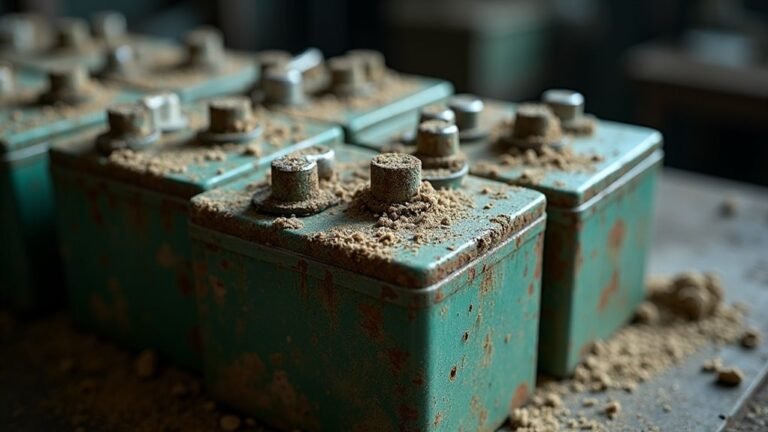
Battery terminals corrode quickly because charging, heat, moisture, and loose clamps combine to create acidic residue and salt crystals. Corrosion builds around the post and clamp, increasing electrical resistance and causing poor starts. Charging cycles and battery off-gassing accelerate chemical reactions that produce the crusty white or bluish deposits. Warm engine compartments speed evaporation and concentrate salts, while loose connections allow more air and electrolyte contact. Cleaning terminals, tightening clamps, and applying protective grease prevent rapid reformation of the residue.
Why Battery Terminals Corrode So Fast
At the time battery terminals corrode fast, it usually means the battery is pushing out gas, leaking acid, or running in a condition that keeps the mess coming back. You’re not doing anything wrong alone, and you can usually trace it to the battery itself.
Whenever charging runs too hard, hydrogen gas escapes and settles near the posts. In case the battery stays weak, rapid sulfation and electrolyte stratification can upset the charge balance and speed buildup.
Heat, vibration, and age make the problem grow faster. Also, small seal leaks can spread acid where you can’t easily see it.
Why Corrosion Looks White, Blue, Or Green
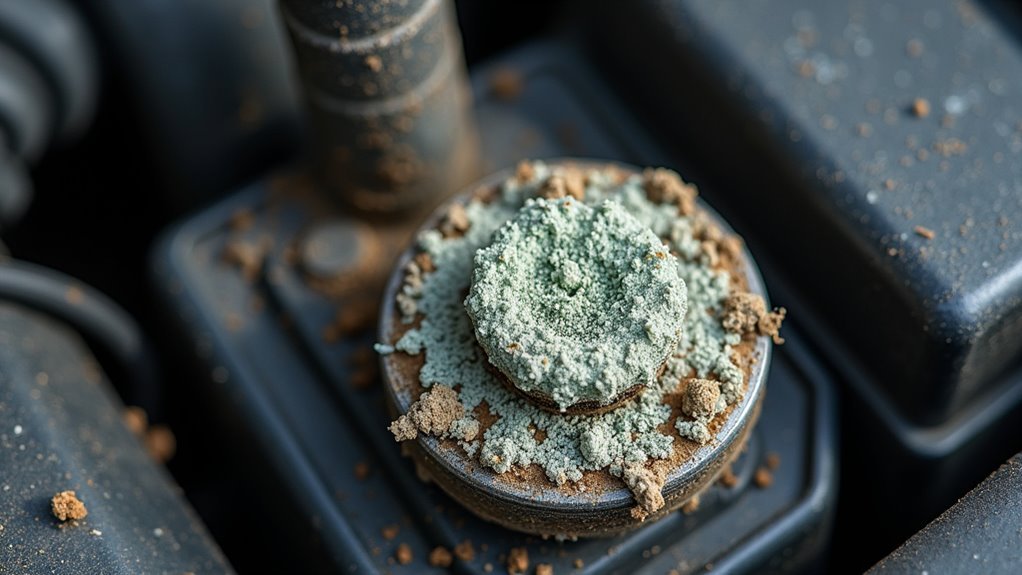
White, blue, and green battery corrosion usually tell you different things about what’s happening around the terminal, and that can be a relief because the color gives you a clue. White crust often comes from acid salts, while blue or green buildup points to metal ionization and copper reaction. Whenever your clamp and post don’t match well, tiny electrochemical pigments can form and stain the area.
- White: dry powder from acid residue
- Blue: copper sulfate from mixed metals
- Green: the same reaction aging further
- Mixed colors: more than one cause
Moisture And Road Salt On Battery Terminals
Moisture and road salt can turn a small battery mess into a much bigger headache, especially after you’ve already noticed white, blue, or green buildup on the terminals.
Whenever rain, snow, or puddles splash under the hood, they leave damp film on the posts and clamps. That moisture helps corrosion spread faster, and salt spray makes it worse through adding extra grit and chemical action. In case you drive on winter roads, you might see the damage return even after cleaning.
Cabin moisture can also raise humidity inside the car and around stored tools, which keeps the area damp longer. So, you should keep the battery dry, wipe away residue, and check the clamps often. A snug, clean connection helps you feel more confident every time you start the car.
How Heat Speeds Up Corrosion
Whenever the battery runs hot, corrosion can show up faster than you’d like, because heat pushes the chemical action inside the battery into overdrive. You’re not imagining it; higher temperatures speed up thermal activation and raise molecular kinetics, so gases and vapors build up more quickly around the terminals.
- Warmth makes the battery breathe out more hydrogen gas.
- That gas meets air and moisture, then forms crusty buildup.
- Heat also helps tiny acid traces spread and stick.
- Should the battery stay hot, the problem keeps returning.
How Vibration Loosens Battery Connections
Whenever your engine shakes, it can slowly work battery clamps loose and let the connection move a little with every bump.
That movement causes fretting wear, which scrapes away the metal surface and makes the joint less reliable.
In case the clamp keeps loosening, you might notice more heat, more corrosion, and a battery that acts up at the worst possible time.
Engine Movement Effects
As the engine shakes and settles during driving, that steady movement can loosen battery connections little bit by bit. You mightn’t notice it initially, but engine torque and mounting stress keep tugging on the cables, brackets, and posts. That slow pull can open tiny gaps, and those gaps let corrosion start faster.
- The battery shifts against its tray.
- The clamps lose their firm grip.
- Small gaps let moisture reach the metal.
- Weak contact lets buildup return sooner.
When you care for your ride, you help your whole crew on the road. Check the hold-downs, keep the battery snug, and watch for movement after rough drives. A stable battery stays connected better, and that gives you one less headache under the hood.
Connection Fretting Wear
Tiny shakes can rub your battery connections raw, and that slow rubbing is what fretting wear is all about.
Whenever your car vibrates, the clamp and post keep making tiny slips instead of staying still. That contact fretting scrapes away protective metal, so fresh surfaces show up and react faster with air and moisture.
In mixed metals, you can also get galvanic wear, which speeds damage at the touch point. Over time, this loose-feeling motion raises resistance and weakens the link your battery needs.
You mightn’t see big damage initially, but the concealed abrasion keeps working every mile. Should you drive rough roads often, your terminals need extra care because vibration can turn a solid connection into a tired one.
Loose Clamp Consequences
A loose battery clamp can turn a steady connection into a shaky one, and that extra movement brings trouble fast. Whenever your battery shifts, vibration scrubs the metal surfaces and raises electrical resistance. Then your car might crank slower, flicker, or stall at the worst time.
- The clamp loses grip.
- The terminal rocks and wears.
- Heat builds at the contact point.
- Corrosion forms sooner.
That’s why torque tightening matters. You want the clamp snug enough to stay put, but not so tight that you damage the post. Should the hold keep slipping, the gap lets moisture and acid vapor settle in. You’re not alone provided this has happened to you. It’s a common fix, and a careful check can help you feel confident again.
How Battery Gassing Causes Corrosion
Whenever your battery charges, it can release hydrogen gas through tiny vents, and that gas doesn’t just disappear.
It mixes with air and moisture around the terminals, then forms acidic vapor that starts eating away at the metal.
Over time, that reaction leaves crusty buildup and visible surface damage that can keep coming back whenever the gas release keeps happening.
Gas Release Process
Hydrogen gas plays a big part in battery terminal corrosion because it can escape during charging and collect right around the posts. Whenever you understand the gas release process, you can spot why buildup keeps coming back. As battery cells charge, pressure dynamics push gas outward, and hydrogen diffusion carries it into tiny spaces near the terminals.
- Gas rises fast during heavy charging.
- Warm batteries vent more.
- Tight spaces trap the gas.
- Moist air helps residue stick.
You’re not coping with bad luck here. You’re seeing a shared battery problem that many drivers face. Provided the venting keeps happening, cleaning the posts won’t last long. The gas keeps finding the same path, and the corrosion starts again on the metal.
Acid Vapor Reaction
That gas doesn’t just vanish after it leaves the cells. It drifts around your battery, mixes with moisture, and starts an acidic fume interaction with the metal on the posts and clamps.
You mightn’t see it right away, but this tiny cloud can trigger terminal oxide formation that builds into crusty corrosion. Whenever charging runs hard, more vapor escapes, so the reaction speeds up and keeps returning.
In case you’ve cleaned the terminals before, you know how annoying it feels when the mess comes back. That’s because the same fumes are still there, working on the surfaces again.
Terminal Surface Damage
Even a clean-looking battery terminal can start to wear down fast once gassing begins. You mightn’t see it initially, but tiny gas bubbles and acidic mist can chew into the metal surface and raise contact impedance. That’s why the damage feels sneaky, yet it’s common.
- Gas lifts moisture onto the terminal.
- Acidic residue attacks the outer layer.
- Surface pitting forms and traps more grime.
- The connection weakens, so your power path gets noisy.
When you spot this at the outset, you’re not alone, and you can act before the fit gets sloppy. A rough terminal doesn’t just look bad; it can make starts harder and heat the clamp. If gassing keeps going, the same wear returns after cleaning.
Acid Leaks And Damaged Battery Cases
As acid leaks from a battery case or seal, corrosion can spread fast and feel hard to stop, but there’s a clear reason it happens.
Whenever sulfuric acid escapes, it lands on the terminals and nearby cables, then starts eating away at the metal.
You can stay ahead of it with case inspection, checking for cracks, swelling, and wet spots around the posts.
Should you spot worn seals, seal replacement matters because a small gap can keep feeding the problem.
Old or damaged cases often leak again, so you might require a new battery instead of another cleanup.
Once you catch the leak promptly, you protect your battery, your vehicle, and your peace of mind.
Signs Corrosion Is Starting To Form
Often, battery corrosion gives you small warning signs before it turns into that crusty mess nobody wants to deal with. You can catch it sooner provided you know what to look for around the terminals and cable ends.
- Premature discoloration on the metal, like a dull white, green, or blue tint.
- Minor bubbling near the post after charging, which can point to gas release.
- A chalky film that wipes off but comes back fast.
- Loose, damp, or sticky-looking residue around the connection.
When you spot these changes, you’re not alone, and you’re not overthinking it. Those tiny signs often show up before bigger buildup forms, so checking your battery now can help you stay ahead of the problem and keep your ride in the group that starts clean and ready.
How Corrosion Affects Starting Power
Corrosion can quietly steal the power your battery needs to crank the engine, and that loss shows up just as you want the car to wake up fast.
You might hear slow clicks, then feel reduced cranking as the starter gets less current.
The crusty buildup adds resistance, so the battery sends power with a voltage drop before it reaches the starter.
That means your engine can turn over weakly, especially on cold mornings or after a short trip.
In a busy day, that can feel like your car’s letting you down.
But you’re not alone in this.
Whenever corrosion grows, it interrupts the clean path electricity needs, and your starting power slips away little by little.
Prevent Battery Terminal Corrosion
Keeping your battery terminals clean starts with stopping the buildup before it gets a chance to form. You can do that by limiting venting, moisture, and loose connections that invite grime. Whenever you care for your car this way, you help the whole crew on the road feel a little safer.
- Check charging voltage, because overcharging feeds corrosion.
- Use terminal protectors to block moisture and acidic film.
- Tighten clamps so vibration can’t open tiny leak paths.
- Make periodic inspections part of your routine, especially in heat or humidity.
If you spot white or blue-green residue again, don’t ignore it. That often means a deeper issue is still pushing acid or gas onto the posts. Stay ahead of it, and your battery will thank you with fewer surprises.
How To Clean Battery Terminals The Right Way
To clean your battery terminals the right way, you’ll want the right supplies, a simple step-by-step method, and a plan to keep corrosion from coming back.
Start disconnecting the battery safely, then clean away the buildup so the metal contacts can work like they should.
After that, dry everything well and protect the terminals so you’re not doing the same job again next week.
Safe Cleaning Supplies
Initially, grab the right cleaning supplies before you touch the terminals, because the wrong tools can spread acid, scratch metal, or make a small mess turn into a bigger headache. You’re not doing this alone; a few safe items keep you steady and confident.
Wear:
- nitrile gloves to shield your skin
- safety glasses to block splash back
- baking soda mixed with water to calm light residue
- a soft brush and clean cloth to lift buildup gently
Keep a small container nearby for the mix, plus plain water for rinsing tools. Then choose nonmetallic supplies, since they protect both you and the battery. Should you be careful here, the next cleaning step feels less stressful and a lot more manageable.
Step-By-Step Cleaning
Now that you’ve got your gloves, glasses, and cleaning mix ready, you can start the actual cleanup without feeling rushed or inundated. Put on protective eyewear, disconnect the battery, and lift off the cables one at a time. Then, dip an insulated brush into the mix and scrub the crusty spots until they loosen.
| Step | What you do |
|---|---|
| 1 | Remove the cable clamps |
| 2 | Brush on the cleaning mix |
| 3 | Wipe away the residue |
| 4 | Dry the posts and clamps |
After that, wipe each terminal with a clean cloth and check for concealed grime near the clamps. Should you see buildup in tight spots, brush it again with steady pressure. Keep the area calm and controlled, because you’re not just cleaning metal, you’re protecting your ride and your own peace of mind. Once everything looks clean, reconnect the cables snugly.
Preventing Future Corrosion
A clean battery only stays that way provided you tackle the causes behind the mess, not just the crust you can see.
Initially, wipe terminals dry after cleaning, then add battery coatings to slow air and moisture from reaching bare metal.
Next, check for leaks, loose clamps, or overcharging, because those keep feeding fresh corrosion.
In case you spot heat or trapped fumes, make ventilation upgrades so gas can escape instead of building up around the posts.
- Tighten connections gently.
- Keep the top case clean.
- Inspect cables for green dust.
- Replace tired batteries promptly.
You’ll fit right in with drivers who stay ahead of the problem whenever caring for the whole setup, not just the messy part.
Frequently Asked Questions
Can Corrosion Return After Cleaning the Terminals?
Yes, corrosion can return after you clean the terminals if you do not fix the underlying cause. Environmental factors and an electrical imbalance can continue causing gassing or leaks, so buildup can recur.
Does Overcharging Cause Corrosion on One Terminal More Than the Other?
Yes, overcharging usually hits your positive terminal harder, like a storm favoring one shore. You will see overcharge imbalance and positive focused degradation there because excess voltage drives more gassing, heat, and acidic buildup around that post.
Can a Battery Be Leaking Acid Without Visible Cracks?
Yes, you can have acid leaking without visible cracks because internal venting or weak seals can cause chemical seepage around posts. You will still notice buildup, and you are not alone; many batteries fail this way.
Do Copper Clamps Make Battery Corrosion Worse?
Yes, copper clamps can worsen corrosion in a way that is similar to a spark feeding a fire. You may see galvanic corrosion where copper meets lead, especially when there are no protective coatings. Clean connections and apply protective coatings to help reduce corrosion and prolong battery life.
Is Terminal Corrosion a Sign the Battery Needs Replacing?
Sometimes, yes. Terminal corrosion can mean your battery’s health is slipping. You should clean it, then do load testing. If corrosion keeps returning or the battery fails testing, you will probably need a replacement.