Book Appointment Now

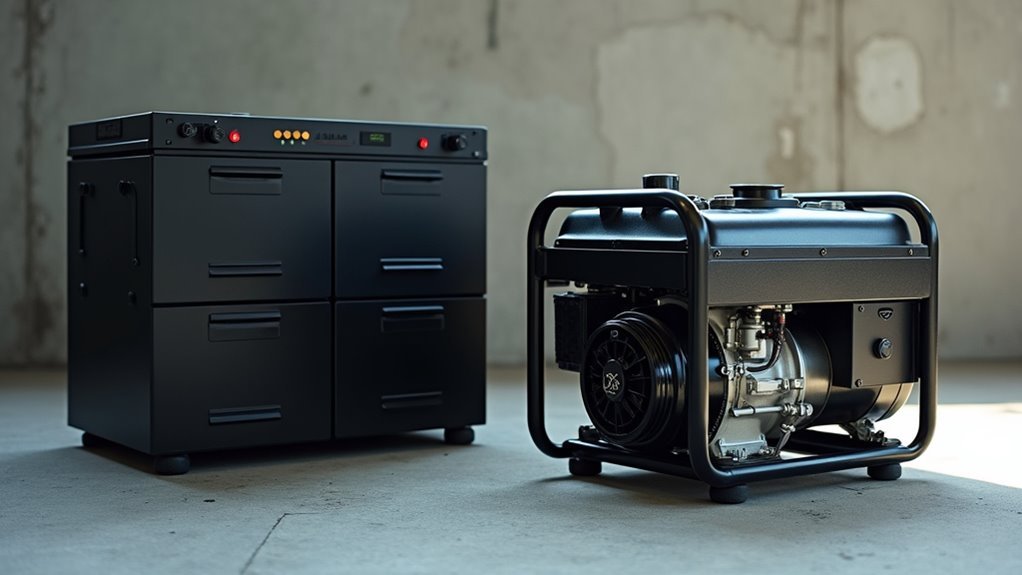
Solar Battery vs Generator Comparison
A solar battery delivers quiet, clean electricity for essential devices and short outages. A fuel generator supplies higher power for heavy appliances and extended outages. Choose based on what needs protection, outage frequency, and how much maintenance fits your routine. Batteries recharge silently from solar panels or the grid and require less daily attention. Generators require fuel storage and regular testing but provide strong, immediate power for larger loads.
What Solar Batteries and Generators Do Best
Whenever you compare solar batteries and generators, the biggest difference is what each one does best for your home.
You might want a battery should you care about quiet backup, lower bills, and residential resiliency during short outages. It fits nicely once you already have solar and want cleaner power with less upkeep.
A generator suits you better whenever you need strong output for heavy appliances or longer emergencies. It keeps running as long as fuel keeps coming, which can matter in rough weather.
Policy incentives can also make a battery more attractive, especially should you wish to stretch your savings over time.
How Solar Batteries and Generators Work
A solar battery stores extra power from your panels or the grid, then sends it to your home whenever you need it.
A generator makes electricity on the spot via burning fuel, so it can keep feeding high power as long as that fuel lasts. As you compare them, you’ll see that one relies on stored energy while the other depends on a steady fuel supply.
Solar Battery Storage
At the moment the lights go out, solar battery storage can feel like a calm backup plan because it stores power quietly and releases it only at the time you need it. You keep your home’s energy close, and that creates a steady, familiar feeling as the grid wobbles.
During the day, your panels refill the battery, so you can use less from the grid and even support energy arbitrage by saving cheaper power for later. In some setups, you can also join grid services and help balance demand.
Unlike a fuel-burning unit, the battery makes no smoke, no roar, and no refill trip. It fits into your daily routine, protects key rooms, and gives you control without stealing the peace of your home.
Generator Power Output
Step back, and the power difference becomes easy to see: generators are built to push out a lot of electricity fast, while solar batteries store a smaller amount of energy and release it more gently.
You get strong peak capability from a generator, so it can start heavy appliances and meet sudden demand without much strain. That quick transient response matters whenever your home needs a fast jolt of power.
A solar battery can still help you through an outage, but it usually serves lighter loads and keeps the pace steady. Should you want more of the neighborhood’s comfort and less worry about keeping up, a generator gives you that bigger power reserve.
In simple terms, it delivers more surge strength, while a battery gives you quieter support.
Energy Supply Process
At the moment the power goes out, the way each system sends electricity to your home feels very different.
| System | Energy path |
|---|---|
| Solar battery | Stores DC power from panels, then the inverter turns it into AC for your home. |
| Generator | Burns fuel, spins an engine, and makes AC power right away. |
| Battery behavior | It supports essential loads quietly, which helps with grid balancing and renewable integration. |
| Generator behavior | It keeps running while fuel lasts, so you get strong backup fast. |
With a battery, you draw from stored sunlight, so your home feels calm and steady. With a generator, you rely on fuel and moving parts, so the system starts like a small machine in your yard. That difference matters to you, because one path uses clean energy already saved, while the other makes power on demand.
Upfront Costs of Solar Batteries vs Generators
Once you line up solar batteries and generators side by side, the price tag can feel a little tricky initially. You’ll usually see solar batteries cost more upfront, often because they’re part of a full system with panels and a hybrid inverter. That can make installation financing feel significant, since spreading payments could fit your budget better.
Generators usually ask for less cash at the start, so they can seem easier to grab whenever money feels tight. Still, your choice isn’t only about today’s bill. A battery can add value through clean home backup and a better resale impact, especially if buyers want modern energy gear.
Fuel and Operating Costs Over Time
As you compare a solar battery with a generator over time, the biggest difference often shows up in fuel and charging costs.
A generator keeps needing fuel, and that can add up fast, whereas a battery charges from your solar power and usually keeps running costs very low.
You should also look at maintenance and replacements, because those extra costs can quietly change the real price you pay.
Fuel Expenses Over Time
Fuel expenses can change the whole story over time, and that’s where generators start to feel much heavier on your budget. You might pay less at checkout, but every refill keeps asking for more. Gas, propane, or diesel can stack up fast, and upkeep adds another layer. Over the years, those costs can outweigh the upfront savings.
A solar battery doesn’t need fuel, so your spending stays steadier after installation. That matters whenever you want predictable bills and less stress. It can also support lower lifecycle emissions, which many families value, and subsidy impacts could improve your math even more. Should you be planning for the long haul, you’ll often feel more at home with a system that protects both your wallet and your peace of mind.
Charging Costs Compared
Although a generator can look cheaper at initially, the money starts moving every time it runs, and that can wear on you fast. You pay for fuel, and that bill keeps coming, whether you use propane, gas, or diesel. You also face steady operating costs that can add up during long outages.
With a battery, your charging costs stay lower after setup because solar energy refills it for free. Should you pair it with panels, you can lean less on the grid and feel more in control. Your installation logistics might feel bigger to start, but the grid incentives overview can help soften that hit. Over time, that calmer cost path often feels like a better fit for your home and your wallet.
Maintenance And Replacements
Beyond the money you spend to charge a generator, its upkeep can keep showing up on your calendar and your budget. You’ll need oil changes, filter swaps, tune-ups, and sometimes part replacements, even provided the unit sits quietly for weeks. Fuel adds another steady cost, so every outage can feel like a small bill parade.
A solar battery asks much less from you. It usually runs with near-zero DIY maintenance, and it doesn’t need fuel deliveries or engine care. Still, you should plan for eventual battery recycling and a possible replacement after many years. That tradeoff matters because you’re not just buying backup power, you’re choosing which chores and costs join your household rhythm. Should you prefer simple routines, the battery often feels easier to live with.
Comparing Power Output and Runtime
Whenever you compare solar batteries and generators, the biggest difference is how they deliver power and how long they can keep doing it.
You’ll feel the split fast: batteries give steady power to your key rooms, while generators can surge harder for bigger loads.
With battery scalability, you can add storage, but runtime still depends on stored kilowatt-hours.
Should your home only needs lights, Wi-Fi, and a fridge, a battery can keep your circle comfortable for hours.
Generator throttling helps match output to demand, yet fuel keeps the engine going far longer.
So whenever storms linger or you need heavy tools, a generator gives you more muscle.
Whenever you want quiet backup for the essentials, a battery fits your day and your crew.
Maintenance Needs for Each Option
Solar batteries are usually the easier choice whenever you desire low-maintenance backup power, because they don’t have engines, oil changes, or fuel filters to worry about. You mostly check the app, keep the area clear, and let remote monitoring do the watching for you. That can feel like a relief during life is already busy.
- No fuel deliveries
- Fewer moving parts
- Simple software updates
- Quick visual checks
- Easy warranty considerations
Generators ask more from you. You’ll need to inspect the engine, change oil, replace filters, and evaluate fuel lines on a schedule. Because of that, many homeowners like batteries for the peace of mind and the team-like support they bring.
Should you desire backup power without extra chores, batteries fit that need well.
Noise, Emissions, and Safety
You’ll notice a big noise gap right away: solar batteries run quietly, while generators can sound like a lawnmower that won’t take a hint.
You should also consider air quality, because batteries don’t burn fuel, but generators can release exhaust that affects the space around your home.
For safety, you’ll want to weigh simple battery precautions against the stronger risks that come with fuel, heat, and carbon monoxide from a generator.
Noise Level Differences
Whenever the power goes out, noise can feel like more than a small detail, because it can shape how safe and calm your home feels. With a solar battery, you get quiet operation that blends into the background, so you can talk, sleep, or help kids relax without a loud hum.
In contrast, a generator usually runs louder, and that sound can stand out fast in a calm neighborhood.
- You’ll notice softer startup sounds.
- You can keep windows open more easily.
- You won’t need to raise your voice.
- You might feel less stressed at night.
- You can enjoy a friendlier space.
That difference matters in close homes and shared spaces. In this emission comparison, the battery also avoids the constant engine roar that can make backup power feel intrusive.
Emissions And Air Quality
Once the lights go out, safety is about more than keeping a room bright. You also want air that feels easy to breathe. A solar battery gives you clean backup power, so it doesn’t add fumes, smoke, or extra heat to your home. That matters in case you already deal with urban smog, or should someone in your home have asthma or allergies.
Because there’s no fuel burn, you skip the exhaust that can linger near windows and vents. Generators can still help whenever you need strong, steady power, but they release pollutants that can affect the air around them. With a battery, you can keep your space calm and pair it with indoor filtration ought you want even more comfort during an outage.
Safety Risks And Precautions
Whenever safety matters during an outage, the noise, fumes, and setup of your backup power source can make a real difference. Should you want peace of mind, a solar battery usually feels safer and calmer for your home team. It runs quietly, makes no exhaust, and lowers indoor air risks. A generator can still work well, but you need careful placement, ventilation, and fuel storage.
- Check clear space around any unit
- Keep kids and pets away
- Follow fire suppression steps near batteries
- Handle fuel with care during chemical handling
- Examine alarms and shutoffs often
You belong to a safer choice once you plan ahead. That means reading labels, wearing gloves, and calling a pro for wiring or hookup. Small habits protect your people, your home, and your backup power.
Which Backup Power Works Best in an Outage?
In an outage, the best backup power depends on what you need to keep running, and that choice can feel bigger than it should once the lights go out.
Should you want quiet, clean power for lights, Wi-Fi, and a fridge, a solar battery often fits better. You get no fuel runs, less noise, and support for community resilience when neighbors are all trying to stay steady.
Suppose you need to power heavy appliances or keep going for many hours, a generator usually works better because it can deliver more output and run as long as fuel holds out.
Your user preferences matter too. Perhaps you value peace, lower upkeep, or strong whole-home coverage more. In the end, you desire backup power that helps you feel ready, not stressed.
Which Option Fits Your Backup Needs?
Your backup needs shape the better choice, because not every home faces the same kind of outage stress. Should you want quiet support for lights, Wi-Fi, and a few essentials, a solar battery can fit well. Should you need strong power for long storms or heavy appliances, a generator might suit you better.
- Choose a battery for cleaner, calmer backup.
- Choose a generator for higher output and longer runtime.
- Check your budget, since startup costs differ.
- Look at fuel access and maintenance time.
- Ask about neighborhood resilience and insurance incentives.
You can also contemplate daily comfort. A battery feels like a steady teammate, while a generator brings louder muscle. Your best match is the one that keeps your home ready and your family at ease.
Solar Batteries vs Generators for Different Homes
For a small apartment, a modest house, or a cabin that only needs the basics, a solar battery can feel like the calm, easy choice; meanwhile, a larger home with big appliances could push you toward a generator.
Should you live off grid, your setup matters even more, because you need steady power and real resilience.
A battery works well for lights, phones, and quiet nights, while a generator fits homes that want stronger backup for longer outages.
Your considerations should also include space, noise, and how your family lives day to day.
Were you to share a home with kids, neighbors, or pets, the quieter option can feel kinder.
For insurance peace of mind, ask what your policy expects, then match the system to your home’s real needs.
Which Has Better Long-Term Value?
Once you look at long-term value, the answer isn’t just about the sticker price, because the cheaper option today can cost you more later. A solar battery usually wins when you want lower running costs, quiet use, and better grid resilience. A generator can feel easier on day one, but fuel and upkeep keep adding up.
- Batteries have no fuel bill.
- Batteries need little maintenance.
- Generators might cost less upfront.
- Generators need ongoing fuel.
- Batteries can help future resale.
Should you already have solar, a battery can pay back faster and keep saving you money.
In case you need heavy power for long outages, a generator still fits well.
Frequently Asked Questions
How Do Battery and Generator Warranties Compare?
You’ll usually get about a 10 year warranty on batteries, while generator warranties vary by brand and by part. Check warranty duration and transferability limits because many warranties remain with the original owner and are not fully transferable.
Can Solar Batteries Work During a Grid Outage Without Sunlight?
Yes, your solar battery can provide backup power during a grid outage without sunlight because it stores energy ahead of time. Some systems deliver 30 to 50 decibels of quiet support, keeping your home feeling secure.
Are Permits Needed for Installing a Standby Generator?
Yes, you will usually need permits for a standby generator. You must follow local codes, obtain approvals before work starts, and coordinate an inspection schedule with your installer so you can be confident and compliant.
How Long Do Solar Batteries Typically Last Before Replacement?
You’ll typically replace solar batteries after 10 to 15 years, as cycle life and capacity fade gradually reduce performance. You’re not alone; many homeowners plan around warranty timelines and enjoy reliable, quiet backup before then.
Can a Battery and Generator Be Used Together?
Yes, you can use them together: you will gain load sharing, fuel flexibility, and backup security. Your battery handles everyday essentials quietly, while the generator kicks in for heavy loads or longer outages.