Book Appointment Now

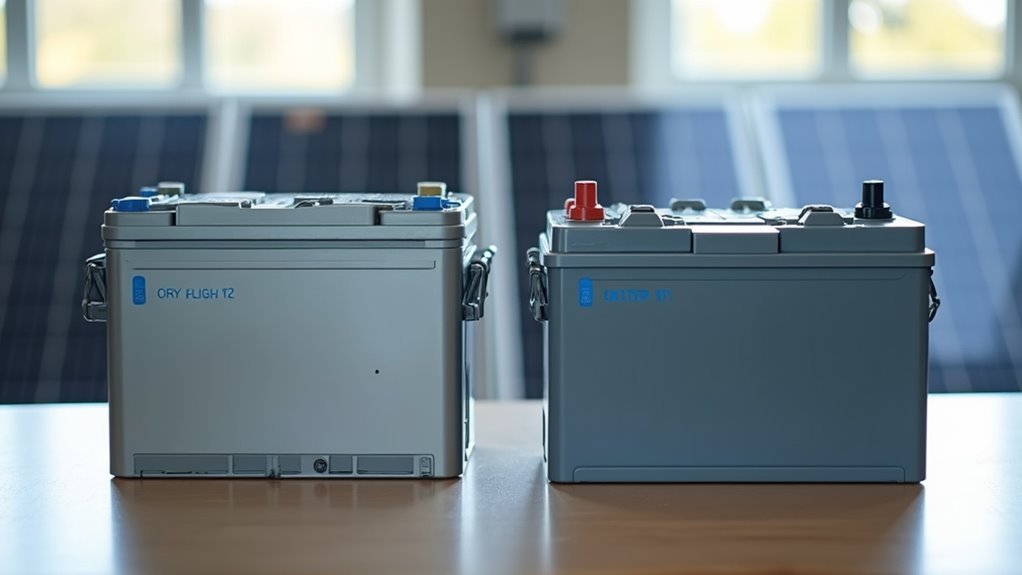
Lithium Solar Batteries vs Lead Acid Solar Batteries
Lithium solar batteries deliver more usable energy, charge faster, and last far longer than lead acid units. Lead acid batteries cost less up front and can work for basic, low-use systems. Over the battery lifetime lithium requires far fewer replacements and less maintenance. Daily performance differences include deeper discharge capacity and steadier voltage from lithium packs. For budget-limited setups with light loads, lead acid remains a practical choice; for reliable, long-term solar storage, lithium is the smarter investment.
What Are Lithium and Lead Acid Solar Batteries?
Lithium and lead-acid solar batteries both store the power your solar panels make, but they do it in different ways that affect cost, performance, and day-to-day use.
You’ll notice the difference in their battery chemistry right away. Lithium batteries use lighter materials that hold more energy in less space, while lead-acid batteries rely on older plate-and-acid cells. That difference shapes how you fit them into your home setup and how they feel to use.
You also get a different environmental impact, since each type needs different materials, care, and disposal steps. So, whenever you’re choosing a battery, you’re really choosing the kind of support you want for your solar life, from easy handling to a storage style that matches your needs.
Lithium Solar Batteries vs Lead Acid Solar Batteries
Should you compare solar batteries side by side, the difference becomes clear quickly: lead-acid batteries cost less upfront, yet lithium batteries often give you more power, better efficiency, and a much easier daily experience. You’ll usually pay more for lithium, but you also get less maintenance, lighter weight, and more usable storage. | Feature | Lead-Acid | Lithium | |—|—:|—:| | Upfront cost | Lower | Higher | | Usable energy | Lower | Higher | | Maintenance | Regular care | Mostly none | Lead-acid can still fit your budget, but it might bring extra safety concerns and shorter life. Lithium feels friendlier for busy households, though recycling challenges matter when you intend to plan for the future. Should you want a system that feels simpler and more dependable, lithium often gives you that quiet confidence.
Real-World Performance in Solar Systems
As your solar system has to work day after day, the battery choice starts to show in real life, not just on a spec sheet. You feel the difference once clouds roll in and your home still needs steady power. Lithium usually handles weather resilience better, so your lights stay calmer through heat and cold. Lead acid can still serve you, but it could ask more of you during rough stretches.
In everyday use, you’ll notice:
- Faster charging after a bright morning
- Less power loss at night
- Easier handling during install
- Smoother grid interaction whenever backup is needed
That’s why several people in your solar community trust lithium for comfort and confidence. It fits busy homes that want less worry and more consistent energy flow.
Lithium Battery Lifespan and Cycle Count
Because you want a battery that keeps showing up day after day, lifespan matters just as much as price. Lithium solar batteries usually give you 2,000 to 6,000 cycles, and some go even higher with the right chemistry. That means you can count on steady service for many years, not just a short run.
| Factor | What it means |
|---|---|
| Cycle count | More daily charging and use |
| Calendar degradation | Age slowly, even while resting |
| Temperature sensitivity | Heat can shorten life |
You also get less worry from calendar degradation, so your battery doesn’t age as fast on the shelf. And because lithium handles daily cycling well, you fit in with a system that feels reliable and calm. Still, temperature sensitivity matters, so keep it cool and well managed.
Lead Acid Battery Lifespan and Usable Capacity
Lead-acid batteries usually don’t last as long as lithium batteries, so you need to plan for earlier replacement.
You also can’t use all of their stored energy, because pushing them too deep can shorten their life fast.
In most solar setups, you’ll get about half of their rated capacity, which means careful sizing matters more than you may expect.
Cycle Life Limits
Even though lead-acid batteries cost less at the start, their cycle life puts a hard limit on how long they can really serve your solar setup.
Whenever you cycle them daily, cycle degradation shows up fast, and you start feeling like your system is working against you. That’s where warranty limitations matter too, because many warranties don’t protect you from normal wear.
- You might see fewer years before replacement.
- You might lose trust in your own backup power.
- You might face more upkeep and stress.
- You might feel pushed back into buying again.
Usable Capacity Range
A practical truth of lead-acid batteries is that you usually can’t employ the whole battery provided you want it to last. You’ll often work with only about 50% usable capacity, because deeper discharges speed up wear and shorten lifespan.
That means part of your stored solar power stays off-limits, like keeping some snacks for later so the whole stash doesn’t disappear too fast. As the battery ages, usable degradation becomes more noticeable, and you might get less real energy from the same bank.
Which Battery Charges Faster?
Whenever you compare charging speed, lithium batteries usually win via a clear margin, and that can make a big difference in daily solar use. You get fast charging, so your system can soak up sunlight and get back to work sooner. Lead acid batteries charge slower because they need gentler control, especially whenever temperature effects start to matter.
- You finish charging sooner.
- You waste less daylight.
- You keep power ready for evening use.
- You feel more confident every day.
That speed helps you feel in step with a smart solar crowd, not left waiting while others move ahead. Lithium also handles charge cycles more smoothly, which keeps your routine simple and steady. Lead acid can still work, but it asks for more patience from you.
Solar Battery Upfront Cost vs Long-Term Value
You’ll usually pay less upfront for a lead-acid solar battery, while lithium asks for more money at the start. But that initial price tag doesn’t tell the whole story, because battery life, efficiency, and maintenance can change what you really spend over time.
Upfront Purchase Price
At the moment you compare solar batteries, the sticker price can feel like the whole story, but it’s only the initial part. You might see lead-acid win on day one, especially whenever price volatility and market incentives shift local deals. Lithium usually asks for more cash upfront, sometimes 2 to 3 times more, and that can sting. Still, you’re not buying in a vacuum; you’re choosing what fits your home and your crew.
- Lead-acid can ease a tight budget.
- Lithium can feel less risky in busy homes.
- Your space could thank you for the smaller pack.
- Your group might value the cleaner, modern setup.
Lifetime Ownership Costs
Sticker price matters, but lifetime ownership cost tells the real story. You might save money today with lead acid, yet you’ll often face shorter replacement schedules, more upkeep, and more handling work over time.
Lithium batteries ask for more upfront, but they usually last longer, waste less power, and need little attention, so your system stays steadier with less stress. That matters whenever you want reliable energy that fits your everyday life.
You also avoid as many battery swaps, which can cut labor and reduce environmental disposal concerns. In case you’re building a solar setup for the long run, lithium often gives you better value because it supports your goals with fewer interruptions, less hassle, and a stronger sense of confidence in your home energy plan.
Payback Period Analysis
Once you look past the sticker price, the payback period tells you how long it takes for a solar battery to earn back what you spent on it. You want to know at what point you’ll break even, and lithium usually gets there through longer life, higher efficiency, and fewer replacements. Lead acid can feel friendlier initially, but it could need sooner swaps and more upkeep, which can slow your savings.
- You save more energy each day.
- You avoid extra labor and service calls.
- You replace the battery less often.
- You feel confident in your home energy circle.
A quick sensitivity analysis helps you see how usage, sunlight, and battery size alter the payback period. That way, you can choose the option that fits your budget and your people.
Solar Battery Maintenance Needs
Usually, solar battery maintenance feels easier whenever you choose lithium, because these batteries are built to need very little day-to-day care. You still do routine checks, but they’re simple and quick, so you can stay confident without extra hassle.
| Battery Type | Care Level | Main Task |
|---|---|---|
| Lithium | Low | Check connections |
| Lead acid | Higher | Watch water levels |
| Lithium | Simple | Review system alerts |
| Lead acid | Hands on | Track charging habits |
| Both | Needed | Inspect for damage |
With lead acid, you’ll spend more time on electrolyte management, cleaning terminals, and checking charge levels. That extra work can feel tiring, especially whenever you want peace of mind. Lithium gives you a lighter load, so you can focus on using your solar setup with less upkeep and more ease.
Best Battery for Off-Grid Homes
For an off-grid home, the right battery can feel like the difference between steady comfort and constant worry. You need a bank that supports remote resiliency, handles daily use, and fits your life without draining it.
- Lithium gives you more usable power, so your lights stay on longer.
- It charges faster, which helps whenever weather shifts.
- It lasts much longer, so you’re not replacing gear every few years.
- It’s lighter and smaller, so setup feels less like a chore.
Lead-acid can save money at outset, but it asks more from you and gives less back. Should you be planning seasonal scaling, lithium usually grows with you better. For most off-grid homes, that means less hassle, more trust, and a stronger sense that your place really works for you.
Best Battery for Backup Power Systems
Backup power systems need a battery you can trust the moment the grid goes down, and lithium often gives you that calm, ready feeling.
You get fast response, strong energy output, and better generator compatibility, so your backup setup feels steady whenever you need it most. It also pairs well with fuel integration, helping your system switch smoothly between stored power and a generator.
Because lithium works with less upkeep, you won’t spend weekends checking fluids or chasing weak starts. It also gives you more usable power in a smaller space, which helps whenever your home or business needs a neat, reliable setup.
Lead acid can still help if cost matters most, but for comfort, speed, and ease, lithium usually fits backup life better.
How to Choose Between Lithium and Lead Acid
Choosing between lithium and lead acid gets easier as you look at what matters most to you day to day. In case you want a tight budget, lead acid can help you feel included right away. Should you want less worry, lithium often fits better.
- Pick lead acid when upfront cost matters most.
- Pick lithium when you want longer life and less maintenance.
- Consider installation logistics, since lithium is lighter and easier to move.
- Keep in mind environmental impact, because fewer replacements can mean less waste.
You’re not choosing alone. Many solar owners face the same call, and your needs matter. Provided your system cycles daily, lithium usually brings stronger value.
In case you need a simple start, lead acid still has a place.
Frequently Asked Questions
Can Lithium and Lead-Acid Batteries Be Mixed in One Solar System?
No, you should not mix them; it is like pairing two different hearts in one chest. Their battery compatibility clashes, and charge algorithms differ, so you will risk poor performance, damage, and wasted energy in your solar family.
Which Battery Performs Better in Extreme Temperatures?
You’ll usually get better extreme temperature performance from lead acid batteries, since they often handle harsh heat and cold more forgivingly. Lithium batteries can lose temperature tolerance and struggle with cold starting unless you add protection.
Do Lithium Solar Batteries Need a Special Inverter or Charger?
Usually you do not need a special inverter, but you should have battery compatibility checked initially. Think of it like a key and lock: inverter differences matter and the right charger keeps your system in harmony.
How Does Battery Weight Affect Rooftop Solar Installation?
Heavier batteries increase your roof load, so you will need stronger mounting and structural checks. Lighter batteries simplify installation logistics, reduce handling risk, and allow you to fit more storage without stressing your rooftop system.
Are Lithium Solar Batteries Safer Than Lead-Acid Batteries?
Yes, you’ll usually find lithium batteries safer in normal use, though they can face thermal runaway if damaged or poorly managed. Lead acid systems release corrosive acid and fumes, and both bring recycling challenges, too.