Book Appointment Now

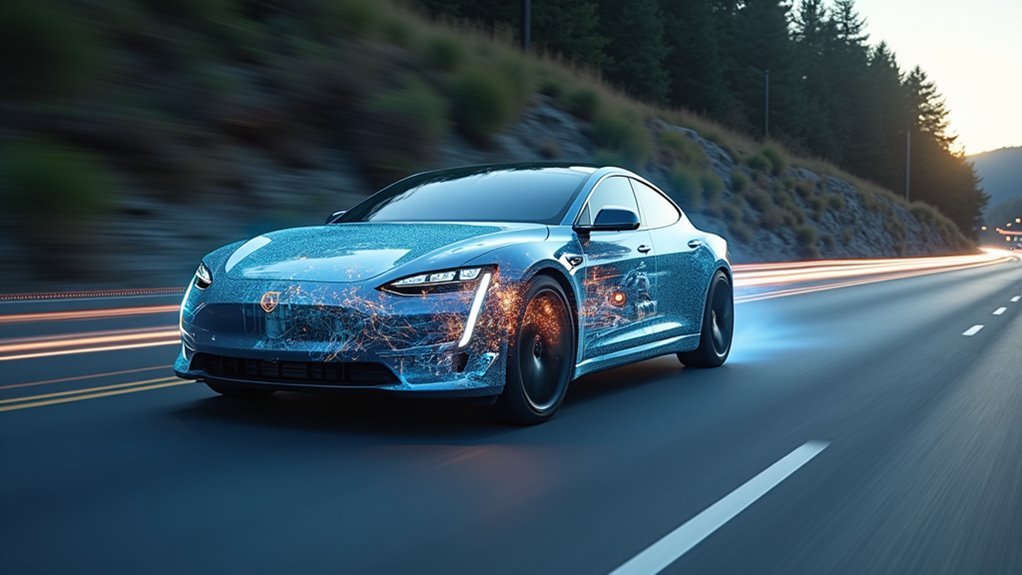
How Regenerative Braking Charges EV Batteries
Regenerative braking recaptures kinetic energy during deceleration and sends it back to the battery. The electric motor acts as a generator, slowing the wheels while converting motion into electrical power. The car’s control system monitors battery state, temperature, and charge level to regulate recovered energy. Recovery strength varies with driving conditions, pedal input, and battery limits. Different braking scenarios produce different amounts of recharge, so energy return is useful but variable.
What Is Regenerative Braking in EVs?
Regenerative braking in an EV works via turning slowing motion into useful electricity instead of letting that energy disappear as heat. You feel it whenever you lift off the pedal or press the brakes, and your car helps slow itself.
As the wheels keep spinning, the motor switches to generator mode and creates resistance. That resistance gives you smoother control, supports battery longevity, and cuts waste.
You still rely on friction brakes for hard stops, so you’re not giving up safety or confidence. With a little driver training, you can learn how to match the regen feel to your route and drive with ease.
In busy traffic or on hills, this feature makes your EV feel more connected, and you’ll fit right in with efficient drivers.
How Does Regenerative Braking Charge the Battery?
At the moment you slow down, your EV’s motor can switch roles and turn your wheels’ motion into electricity instead of wasting it as heat.
That current then flows through the car’s power system and into the high-voltage battery.
Kinetic To Electrical Energy
Your EV turns into a smart energy saver the moment you lift off the accelerator. As the wheels keep spinning, inertial conversion kicks in, and your motor flips into generator mode. That means your car starts electromagnetic harvesting, turning motion into useful current instead of wasted heat. You can feel the change because the car slows gently while the system works.
- The moving wheels feed energy back through the drive unit.
- The motor resists rotation and creates braking force.
- The electrical flow heads toward the battery for later use.
Because you belong to a growing group of EV drivers, this tech helps you drive smarter every day. It won’t catch every bit of motion, but it does save energy in the moments that matter most, especially whenever traffic or hills keep asking for more.
Battery Storage Process
That energy you just gave the wheels doesn’t vanish, and that’s where the battery storage process comes in.
Your EV routes the current through power electronics, which shape it for the high-voltage pack. Then the cells accept the charge in a controlled way, so you get useful recovery without stress.
Inside the pack, charge balancing keeps each cell group near the same level, and thermal management helps the battery stay cool and safe. Because of that, your battery can store energy from braking while protecting its health.
Whenever you slow down again, the system does this fast, almost like catching change before it falls. So you keep more range, and your ride feels smoother.
Why Do EV Motors Act Like Generators?
Because an EV motor can work both ways, it doesn’t just spin the wheels, it can also help slow them down and make electricity. As you lift off the pedal, the wheels keep turning the motor, and that motion flips the motor into generator mode. This torque inversion creates resistance, so you feel the car easing back instead of rushing ahead.
Then electromagnetic induction lets moving parts push current through the system, which is how energy starts to flow again.
- Wheel motion drives the motor.
- The motor resists turning.
- That resistance makes usable electricity.
Where Does Recovered Energy Go?
The recovered energy doesn’t just sit there and disappear. It travels through energy routing paths inside your EV, where power electronics guide it back toward the high-voltage battery. You’re not just slowing down; you’re helping the car save motion as usable electricity.
Then the battery accepts that charge and stores it for your next drive, which can feel pretty satisfying, like your car is pitching in with you. At the same time, thermal management keeps the battery within a safe temperature range, so the stored energy stays useful and the pack stays protected.
Provided conditions are right, the system captures more energy and sends it where it can do real work later. That’s how your EV turns a slowdown into extra miles.
What Happens When You Lift Off the Pedal?
Once you lift off the pedal, your EV can start capturing energy that would otherwise be lost.
The motor adds resistance, so the wheels slow down while the system turns that motion into electricity.
Then that current flows back into the battery, giving you a little increase in range without you doing much at all.
Lift-Off Energy Capture
Lift off the accelerator, and your EV can start turning motion into useful power right away. You feel it in the coasting behavior, where the car eases forward while the motor shifts into a generator. With smart throttle mapping, that handoff feels smooth, so you stay relaxed and in control.
Instead of wasting that motion, the system sends electricity back to the battery. That’s the quiet magic of lift-off energy capture, and you’re part of it every time you back off the pedal.
- You slow gently without a hard brake feel.
- Your battery gains energy during everyday driving.
- You keep a familiar, confident rhythm on the road.
Motor Resistance Begins
Right off the pedal, your EV starts to push back a little, and that pushback is motor resistance beginning to work. You feel a gentle drag, and you’re still in control. Inside the drive unit, the spinning wheels meet rotational damping, so the motor resists motion instead of just coasting. That resistance creates smooth torque modulation, which helps slow you without a jolt.
| What you feel | What’s happening |
|---|---|
| Light slowdown | Motor resistance builds |
| Steady pullback | Rotational damping increases |
| Softer response | Torque modulation adjusts |
| Calm control | You ease into regen |
That’s why many drivers feel a natural rhythm here. Your EV isn’t fighting you; it’s helping you settle into a shared pace.
Battery Charging Flow
As soon as you ease off the pedal, the EV starts to flip that moving energy into stored power. You feel the car slow, and the motor sends current back through the inverter into the battery pack. This flow isn’t random; it’s managed so your ride stays smooth and your pack stays healthy.
- The wheels keep spinning, so the motor acts like a generator.
- The battery accepts charge only within safe limits, with battery balancing helping each cell share the load.
- Thermal management watches heat, because warm cells can’t take power the same way.
How Much Range Can Regen Braking Add?
Regenerative braking can add a real amount of range, but the gain depends a lot on how and where you drive.
In your EV, you could notice small wins on calm roads and stronger urban gains whenever you slow often.
Should you drive in hills, hill recuperation can help even more because the car catches energy on the way down.
In favorable use, you might recover roughly 10% to 30% of range, though that won’t happen every trip.
You still need your charger, but regen can soften the worry between plug-ins.
It also saves brake wear, which feels like a quiet bonus for yourself and your ride.
Why Does Regenerative Braking Work Best in City Driving?
In city driving, you stop and start all the time, so your EV gets more chances to turn slowing motion into battery power.
At lower speeds, regen can still grab useful energy each time you lift off the pedal or tap the brakes. That means more of your everyday braking helps recharge the battery instead of wasting energy as heat.
Frequent Stop-And-Go
City driving is where regenerative braking really shines, because you’re slowing down again and again at traffic lights, crosswalks, and busy intersections.
In urban congestion, every lift off the pedal gives your EV a chance to catch energy that would’ve slipped away as heat. That means you’re helping the battery while easing brake wear, so your ride feels smarter and kinder to your wallet.
- You brake often, so the motor keeps turning into a generator.
- You recover more energy from each slowdown, even in short gaps.
- You lean on friction brakes less, which can help parts last longer.
That rhythm fits city life. You stop, roll, slow, and move on with less waste.
It’s a small win, but it adds up fast whenever your route feels like a shared dance with traffic.
Lower-Speed Energy Recovery
As your EV slows down, the system can scoop up more energy while the wheels are still turning with good momentum. In city traffic, that means you get better recovery at low speed than on open roads. Your motor keeps working as a generator, so torque harvesting turns gentle slowing into useful charge.
Then, during each pause at a light or crosswalk, micro regeneration adds a little more to the battery. This is why urban coasting feels so smart. You’re not just rolling forward; you’re helping your EV save energy for the next block.
Because speeds stay modest and stops happen often, the system can blend braking smoothly and catch more motion before it fades. That makes your daily drive feel more efficient, and you stay part of a city rhythm that rewards every careful slowdown.
What Limits Regenerative Braking Power?
Several limits shape how much power regenerative braking can send back to your EV battery. You can feel this most whenever heat builds up or whenever the car’s software strategy softens regen to protect the system.
Your EV must keep the motor, inverter, and battery inside thermal limits, so it won’t always pull in max power.
Traction also matters, because slippery roads can force the car to ease off regen so you stay steady and safe.
- Battery and motor heat can cut regen fast.
- Wheel grip can lower braking force.
- Control logic blends comfort, safety, and battery care.
How Does Battery Charge Level Affect Regen?
Your battery’s charge level can change regen more than most drivers expect, and it helps explain why your EV sometimes feels strong on the way down a hill and weak as the battery is nearly full.
When the pack has room, it welcomes more energy, so you feel firmer slowing and better battery acceptance. As charge rises, the system trims regen to protect the cells and keep charging safe. That’s why regen calibration shifts as your gauge climbs.
You might notice the car blending in more friction braking, especially near full charge. This isn’t a flaw. It’s your EV working with the battery’s needs.
Should you know this pattern, you can drive with less surprise and feel more connected to the car’s rhythm.
Why Does Cold Weather Reduce Regen Braking?
Cold weather can render regen braking feel weaker because the battery gets picky whenever it’s chilly, and that’s normal.
Whenever your pack is cold batteries, it can’t accept as much charge as easily, so the car softens regeneration to protect it.
You might also notice traction limits on slick roads, and that can reduce how hard the motor can slow you down.
- The battery warms up slowly, so it needs less regen initially.
- The car protects the pack from stress through lowering charge flow.
- Slippery tires can cut regen even more, because safe grip matters.
What Is One-Pedal Driving?
One-pedal driving lets you slow down and often stop the car upon lifting off the accelerator, while the EV uses regenerative braking to turn that motion into battery power. You feel more in control, and the car starts to feel like a teammate in traffic.
Whenever you plan ahead, traffic predictions help you ease off ahead of time and save more energy. In case you need a little more speed control, the heel tap technique can make the shift feel smoother.
Many drivers like this setup because it reduces foot work and fits calm city driving. It can also make stop and go trips easier, since you let the car do more of the slowing for you. Soon, the pedal feel becomes familiar, and driving starts to feel natural.
How Do Friction Brakes Work With Regen?
Whenever you slow down in an EV, regen does the initial job via turning some motion into electricity, but it doesn’t do everything.
Your friction brakes blend in smoothly whenever you press harder, so you still get a steady, familiar stop.
In case you need a sudden stop, the friction brakes take over fast and give you the extra stopping power you can trust.
Friction Brake Blending
Your EV doesn’t rely on regen alone, and that’s a good thing. Friction brake blending helps you keep steady brake feel while regen does most of the easy work. Whenever you press the pedal, the car can mix motor braking with pad braking, so you get smooth slowdown and better pedal modulation.
- At light braking, regen often leads and saves energy.
- As you press harder, friction brakes join in and add consistent force.
- At low speed, the system leans more on pads because regen fades.
This blend matters because you want the car to respond in a way that feels natural, not jumpy. You stay in control, and the system does the behind-the-scenes work. That teamwork also helps you fit right in with efficient driving, without having to consider every stop.
Emergency Stopping Power
Even in a sudden stop, friction brakes step in fast and give you the strong stopping power regen can’t always provide. You stay safe because your EV blends both systems.
Regenerative braking helps slow you down and sends energy back to the battery, but it loses strength at very low speed and in hard stops. That’s whenever the brake pads grip the rotors and finish the job.
In case the road is slick, the system still keeps you steady. Supposing regen ever drops too much, brake override lets your pedal request full braking without delay. This teamwork also helps prevent emergency fade, so you keep control when you need it most.
You’re not left guessing. Your car shifts support smoothly, and you get the confident stop you expect, even whenever the moment feels sudden.
Which EVs Recover the Most Energy?
Not all EVs recover the same amount of energy, and the difference can be pretty meaningful once you start looking at how the car is set up. You’ll usually see the best results in EVs with strong battery topology and smart software tuning, because they can accept more power during slowing. That’s why many city-focused models, and some performance EVs, feel more efficient in traffic and on hills.
- Larger battery packs can absorb regen better.
- Motors and inverters with higher output help capture more.
- Calibrated brake blending keeps recovery smooth and steady.
How Can You Use Regenerative Braking More Effectively?
Should you want to get more out of regen braking, the biggest win is learning whenever to let the car slow itself instead of rushing to the brake pedal. You’ll feel the difference right away. Ease off the accelerator sooner, especially before stops, hills, and traffic lights. That gives your EV more time to turn motion into useful power.
In case your car offers one-pedal driving, try it in calm traffic until it feels natural. Then you can use eco driving techniques to keep speed smooth and steady. Also, watch the road ahead and practice predictive braking, so you can lift sooner and brake less hard. This helps the battery recover more energy and can also ease wear on your brake pads.
Frequently Asked Questions
Can Regenerative Braking Work on Steep Downhill Roads?
Yes, you can use regenerative braking on steep downhill roads. Your EV can recapture energy while you descend, for example when driving on a mountain pass. However, terrain effects and energy storage limits reduce how much charge you will recover.
Does Regenerative Braking Reduce Brake Pad Replacement Frequency?
Yes, you’ll usually replace brake pads less often because regenerative braking handles much of the slowing, which reduces brake dust and rotor wear. You’ll still need pads for hard stops, but everyday driving can stretch service intervals.
Is Regenerative Braking Available When the Battery Is Full?
Not always. You’ll feel the pedal tug, but once your battery is full, battery saturation limits regenerative braking and charge diversion sends energy elsewhere, often to friction brakes. You still get smooth slowing, just with less electrical recovery.
Can Regenerative Braking Make EVS Stop Completely by Itself?
No, you cannot rely on regenerative braking alone to stop completely. Your EV uses brake blending, mixing energy harvesting with friction brakes, so you will still get safe, confident stopping whenever you need it most.
Does Regen Braking Feel Different in Different EV Models?
Yes, you’ll notice different pedal feedback across EVs because software tuning changes regen strength, blending, and lift off behavior. Some feel smooth and subtle; others feel strong and grabby, so you’ll prefer one that matches your style.