Book Appointment Now

How Battery Cells Work Inside Electric Vehicles
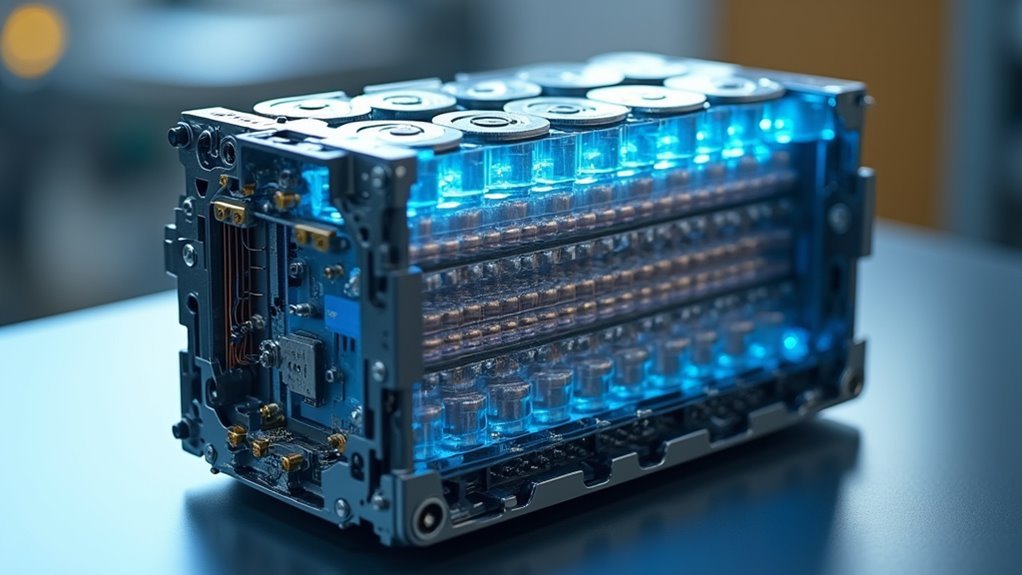
Battery cells in electric vehicles store and release electrical energy through controlled lithium-ion movement. Each cell contains a cathode, an anode, a separator, and an electrolyte that lets ions travel internally while electrons flow through the external circuit. Cells are monitored and balanced by a battery management system to maintain safety and performance. Individual cells are grouped into modules and packs to deliver the voltage and capacity an EV needs. These packed cells power charging, acceleration, and regenerative braking.
What Are EV Battery Cells?
At the heart of an electric vehicle, a battery cell is the small unit that stores and releases energy, and it’s the reason the car can move without burning fuel.
You’ll usually find lithium-ion cells inside the pack, and they work together like a team you can trust.
Each cell has a cathode, anode, electrolyte, and separator, and those parts stay in place so the car can stay ready for the road.
Whenever makers group cells into modules and packs, they build strength, better control, and more range for you.
That design also affects recycling infrastructure and the vehicle’s manufacturing footprint, so your choice can support cleaner systems.
As soon as each cell is added, you’re part of a smarter, shared energy future.
How EV Battery Cells Store Energy
Inside an EV battery cell, you store energy as chemical energy, not as simple electricity waiting in a jar.
The anode and cathode each play a different role, and lithium ions move between them to hold that energy safely.
As you charge the cell, those ions shift one way, and while you drive, they move back to release power.
Chemical Energy Storage
While you charge an EV, the battery cell stores energy through reshaping tiny particles, not via “filling up” like a gas tank. You’re really building a chemical reserve inside each cell. Lithium ions leave one side, cross the electrolyte, and settle on the other side, meanwhile electrons take the outside path. That split move locks energy in place until you drive.
This is why the cell feels calm on the outside but busy inside, almost like a tiny team working in sync. In newer designs, solid state electrolytes can guide ions more securely, and redox flow ideas show how chemistry can move energy through liquids too. Together, these approaches point to the same goal: helping you store more power, safely, so your EV stays ready whenever you are.
Anode Cathode Roles
The anode and cathode do the heavy lifting in an EV battery cell, and they work like a careful handoff team. You’re part of that rhythm every time you drive or charge. The anode holds energy, while the cathode welcomes it back. A solid electrolyte helps keep that exchange steady, and the separator keeps the two sides apart. | Part | Role |
| — | — |
|---|---|
| Anode | Stores energy in a ready state |
| Cathode | Receives energy during use |
| Anode coating | Helps the surface stay stable |
When you consider the cell, envision a trusted crew that knows its job. Your battery stays useful because each side supports the other without touching. That balance lets your EV feel calm, capable, and ready for the road.
Ion Movement Basics
Upon the moment you press the accelerator or plug in to charge, lithium ions start moving like a quiet relay team inside the cell. You can imagine the electrolyte as their hallway, while the separator keeps the two sides safely apart. During charging, ions drift through that liquid path toward the anode. During driving, they head back to the cathode. That back-and-forth trip stores and releases energy for you.
This motion depends on ion diffusion and electrolyte conduction, so the ions move in an orderly way instead of crashing around. At the same time, electrons take the outside route through the circuit, which helps power your EV or refill it. If the cell stays balanced, you get steady energy, and your battery team keeps working together.
How EV Battery Cells Power the Motor
Inside an EV, battery cells don’t just sit there quietly, they work together to send power where it’s needed most. Whenever you press the pedal, they release direct current that flows to the inverter, and that device turns it into the form the motor needs. This lets you feel smooth torque delivery right away, so the car responds like it’s reading your mind.
As you drive, the cells keep feeding energy through the circuit while staying safely separated by their internal layers. Then, whenever you slow down, regenerative braking sends some energy back into the cells instead of wasting it as heat. That’s the loop you’re part of every time you drive, and it’s what makes EV power feel both quick and steady.
How Battery Cells Fit Into EV Packs
As you consider about how an EV moves so smoothly, it helps to envision the battery as a whole team, not just a pile of cells. You fit those cells into modules, and module integration keeps each group organized, protected, and easy to connect.
Then the pack brings those modules together with wiring, sensors, cooling parts, and a strong outer case. This layout lets the system share space well and handle power safely. It also supports serviceability design, so a technician can check or replace one section without tearing apart the whole battery.
Whenever cells work in series and parallel inside the pack, you get the voltage and capacity the vehicle needs. That setup helps you feel confident every time you plug in and drive.
How Cell Chemistry Affects Performance
Your EV’s battery chemistry does a lot more than store power. It shapes how much energy you can use, how fast the pack can accept charge, and how long the cells stay reliable.
When you choose a chemistry with a sturdy cathode, you often get stronger cycle life and steadier output. With graphite anodes and better cathode coatings, the cell can handle more use without breaking down as quickly.
Some newer designs also use solid electrolytes, which can improve safety and help the cell stay stable inside the pack. So whenever you hear people talk about battery performance, consider chemistry as the team player behind the scenes. It quietly decides whether your EV feels lively, efficient, and ready for the road you want to own.
How Temperature Affects Battery Cells
Whenever temperatures swing too far up or down, battery cells have to work harder to keep your EV running smoothly. In the cold, ions move more slowly through the electrolyte, so you might feel weaker power and slower charging. That’s why cold cranking can seem sluggish on frosty mornings.
Heat brings a different challenge. It can speed reactions, but too much heat raises wear and steals comfort from the pack. Temperature gradients inside the battery matter too, because one section could run warmer than another and create uneven stress.
As soon as that happens, you don’t just lose efficiency, you also lose a little peace of mind. Through staying within a balanced range, your battery cells can deliver steady energy, protect their materials, and help you drive with confidence, mile after mile.
What the Battery Management System Does
You can regard the battery management system as the pack’s steady watchdog, checking each cell’s voltage, temperature, and health so nothing slips out of range.
It also steps in whenever heat starts building, using thermal controls to help keep the cells safe and calm.
Then it balances charging across the cells, so your battery works smoothly and stays ready for the road.
Cell Monitoring Functions
As the battery works, the Battery Management System, or BMS, keeps a close eye on each cell so the whole pack stays safe and steady.
You’re not left guessing because it checks voltage, current, and charge balance in real time.
That means you get real time diagnostics that spot trouble promptly and help guide predictive maintenance before small issues grow.
- It watches each cell’s voltage.
- It compares cell balance across the pack.
- It tracks current flow during use and charging.
- It flags weak cells so you can act fast.
With these checks, you stay connected to how your EV’s energy team works together.
The BMS helps the cells share the load fairly, so you feel confidence every time you drive.
Thermal Protection Controls
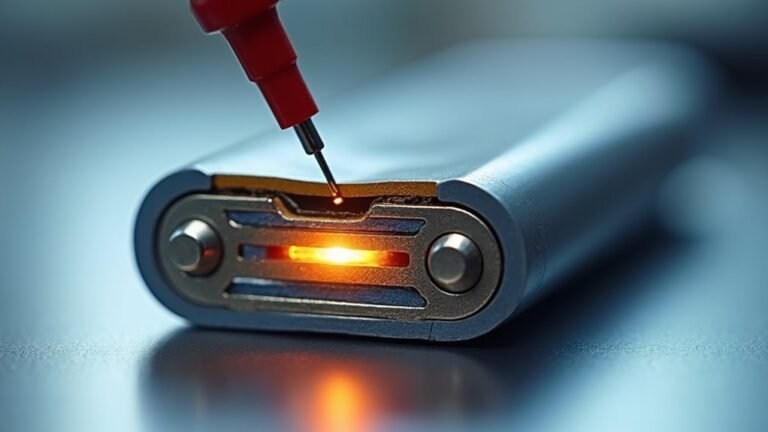
Because EV batteries work hard in tight spaces, heat control matters just as much as energy control. You stay safer whenever the battery management system watches temperatures and reacts fast. It can open active vents, send coolant through nearby plates, or slow power demand before heat climbs too high. That keeps you riding with confidence, not worry.
| Control | What it does | Why it helps |
|---|---|---|
| Sensors | Read cell heat | Spot trouble promptly |
| Active vents | Move hot air out | Lower buildup |
| Phase change materials | Absorb extra heat | Smooth spikes |
| Cooling limits | Trim battery stress | Protect your pack |
These controls work together, so you feel included in a system that’s always looking out for your pack. Whenever the battery stays in a safe range, it lasts longer and performs more smoothly on every drive.
Charge Balancing Logic
As soon as one cell fills up faster than the others, the battery management system steps in to keep the pack in balance, and that matters more than it sounds. You benefit because the pack stays safer, stronger, and closer to the same state of charge, so no single cell carries the stress alone.
- It watches each cell’s voltage.
- It uses passive balancing to bleed off extra energy from fuller cells.
- It uses predictive equalization to plan ahead before gaps grow wide.
- It keeps weaker cells from dragging the whole pack down.
That logic helps you charge with confidence, since the pack can share work better and age more evenly. You stay in the loop with a system that quietly protects your drive, your range, and your peace of mind.
How Cell Balancing Stabilizes Packs
Balancing the cells helps an EV battery stay steady, safe, and useful over time. Whenever one cell drifts higher or lower than the rest, you can lose harmony in the pack. So the battery system watches each cell and moves extra charge through passive balancing, letting weak cells catch up without drama.
Then predictive equalization steps in, using data to act before imbalance grows. That matters because you want your EV to feel dependable on every drive, not moody like a grumpy neighbor.
With balance, you protect the pack from stress, keep charging more even, and help the whole system work as one team. At that point, you get smoother performance and a battery that feels ready for the road.
How Cell Design Affects EV Range
As you look at an EV battery, the shape of each cell can change how tightly the pack fits together and how much space is left for stored energy.
Better packing lets you use more of the vehicle’s space for cells, which can help increase range without making the battery much bigger.
In simple terms, smarter cell design helps you go farther on each charge, and that’s a pretty nice trade for fewer stops.
Cell Geometry and Packing
Although battery cells all store energy the same basic way, their shape and packing can change how far an EV can go on a single charge. Whenever you look inside a pack, you’ll see how form shapes fit, comfort, and teamwork. Cylindrical tiling lines up round cells neatly, so you can use space with less waste.
Flat pouch cells stack well in tight spaces, while prismatic blocks create steady rows. Irregular packing happens whenever the case has odd corners, and then every gap matters.
- You fit more cells into a clean layout.
- You keep modules easier to cool and service.
- You reduce empty space that feels like missed opportunity.
- You build a pack that works with your vehicle, not against it.
Energy Density and Range
A battery’s energy density has a big say in how far your EV can go, and that can feel like the difference between a relaxed drive and a charger hunt you didn’t ask for.
Whenever you choose a pack with higher energy density, you fit more stored energy into the same space and weight. That helps your car travel farther on one charge, and it can ease range anxiety on busy days.
Cell design matters here because the cathode, anode, and electrolyte all affect how much energy each cell can hold. So, better materials and smart layouts let you get more miles without making the battery huge.
In your EV, thousands of cells work together, and their combined design shapes your real-world range every day.
What Degrades EV Battery Cells Over Time
EV battery cells wear down over time because their chemistry slowly changes with use, heat, and age. You’re not alone in seeing that happen; every pack faces stress from charging, driving, and sitting parked. Here’s what usually matters most:
- Calendar aging slowly trims capacity, even while you’re not driving.
- Fast charging effects can raise cell stress and speed up wear.
- High heat pushes side reactions that eat away at performance.
- Deep cycling and heavy loads strain the cell’s materials.
Inside each lithium-ion cell, ions move between the cathode and anode, and that process gets less smooth as parts age. So your range can dip a little, and charging can feel slower. Still, with smart habits, you can keep your EV feeling like part of the crew for years.
How EV Battery Cells Stay Safe
Whenever an electric vehicle stays safe, it’s because the battery pack keeps a tight grip on heat, pressure, and electrical flow. You’re protected by cell cases, a separator, and sensors that spot trouble fast. Inside each cell, ions move through the electrolyte, while electrons stay on the outside path. That split keeps shortcuts from forming. A solid electrolyte can add another layer of defense, and robust cooling helps the pack handle stress.
| Safety feature | What it does |
|---|---|
| Separator | Blocks direct contact |
| Cooling system | Limits overheating |
| Sensors | Detects faults promptly |
| Case | Shields from impact |
| Controls | Cuts power quickly |
If the pack faces mechanical shock, these layers work together, so you can drive with more trust and less worry.
Frequently Asked Questions
How Long Do EV Battery Cells Typically Last?
You’ll typically get 8 to 15 years from EV battery cells, like a marathon runner pacing well. Their cycle life depends on use and heat, and capacity fade slowly trims range, not belonging or reliability.
Can Damaged Battery Cells Be Repaired Individually?
Usually, you cannot repair damaged cells individually; you will often need cell refurbishment or module replacement instead. You are not stuck, though. Qualified technicians can diagnose the pack, replace failed parts, and help you stay on the road.
Why Do EV Batteries Lose Range in Cold Weather?
Cold weather cuts your EV’s range because the electrolyte’s viscosity rises and thermal resistance increases, which slows ion movement and reduces power. You will feel it more, but preconditioning and gentle driving help you stay connected and confident.
How Are Battery Cells Recycled After Vehicle Use?
You recycle battery cells at end of life through collecting, discharging, dismantling, and sorting them for metals and materials. You help urban mining recover precious lithium, nickel, and cobalt for new batteries.
What Makes One EV Battery Pack Charge Faster Than Another?
You charge faster whenever your pack uses battery chemistry and thermal management that can safely accept more current. As they say, the prompt bird gets the worm — better cooling and cell design help you belong to the fast charge crowd.