Book Appointment Now

How Often Should You Replace a Car Battery
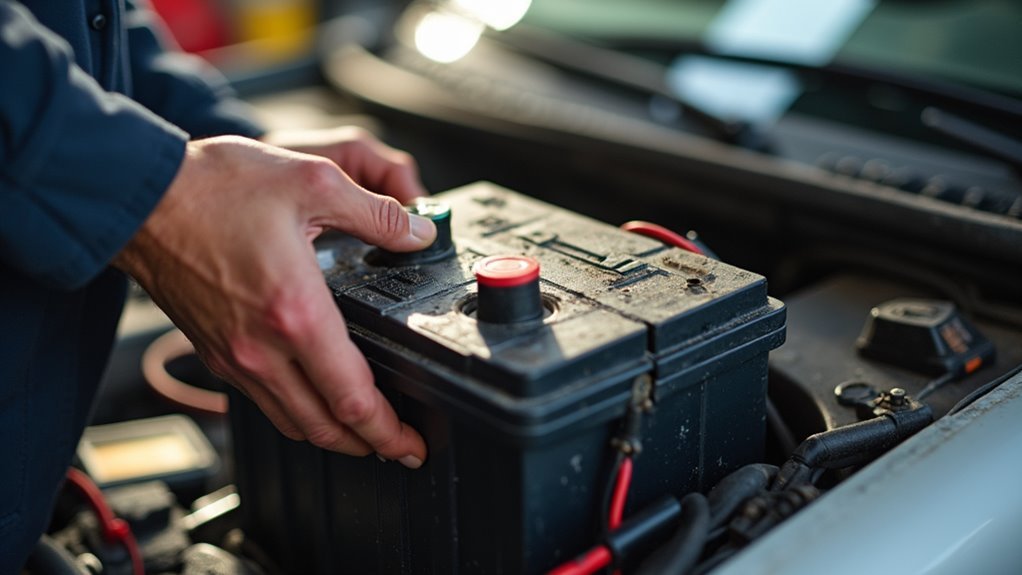
Most car batteries last about three to five years. Driving habits, climate, and short daily trips can shorten that lifespan. Slower engine cranks, dim headlights, or repeated jump starts signal declining battery health. Simple tests with a voltmeter or at a service center can confirm charge and condition. Regular checks and keeping terminals clean help avoid being stranded.
How Often Should You Replace a Car Battery?
Most car batteries don’t fail out of nowhere, so it helps to know the usual timing before you’re stuck with a car that won’t start. You’ll usually want to plan for replacement around 3 to 5 years, though some batteries last longer with good care. Should yours be past year three, start paying closer attention.
Slow cranking, dim lights, or extra jump-starts can mean it’s time to act. Because weather, short trips, and sitting too long can wear a battery down, your routine matters too.
Check your owner’s manual, ask about warranty options, and compare ratings before you buy. In case you replace it prematurely, look into battery recycling so you can handle the old one the right way and keep things moving smoothly.
How Long Car Batteries Usually Last
Most car batteries last about 3 to 5 years, though you could get a little more time with good care.
Heat, cold, short trips, and lots of power use can wear yours down faster than you’d expect.
In case your engine cranks slowly, your lights dim, or you need jump-starts more often, it’s probably time to pay attention.
Average Battery Lifespan
Should you’ve ever questioned at what point a car battery really starts to age, the usual answer is about 3 to 5 years under normal driving conditions. You can regard that span as the battery’s social life with your car: steady, useful, then a bit tired. In many cases, 4 years feels typical, but seasonal variance and usage patterns can make yours seem younger or older.
- In case you drive often, your battery might stay happier.
- In case you mostly take short trips, it might age faster.
- In case you park for long stretches, it can lose strength.
- In case you want to stay ahead, evaluate it after year three.
That way, you and your car can keep moving with fewer surprises.
Factors Affecting Longevity
Even in the event a battery starts out strong, a few everyday habits can wear it down faster than you’d expect. Heat, cold, and lots of short drives all chip away at its lifespan, so you might see it last closer to 3 years, or stretch to 5 with good care.
Should you leave the car parked for long stretches, seasonal storage can let the charge fade. Extra electronics can also add strain, and a parasitic draw can quietly drain power even when the keys are out.
On top of that, weak charging parts can leave the battery underfed. Whenever you drive regularly, keep the terminals clean, and avoid deep drains, you give your battery a better shot at staying with your crew longer.
Signs Of Wear
Once you know what wears a battery down, the next clue is how it starts to act as it’s getting old. You’ll usually notice slow starts, dim headlights, or repeated jump-starts. After about 3 to 5 years, that’s pretty common, so you’re not alone should your car feel a little needy.
- Slow cranking means the battery’s losing strength.
- Dimming lights can show weak output.
- Terminal corrosion could point to poor contact.
- Should checks fail, it’s time for battery recycling and replacement.
Should your battery be past year three, check it annually, even though it seems fine. Small changes matter, and catching them sooner helps you stay ready, confident, and part of the road crew.
Signs Your Car Battery Is Failing
As soon as your car battery starts to fail, the signs often show up long before the engine stops completely. You might notice slow cranking, dim lights, or dashboard indicators that stay on after startup. Should you’ve needed more than one jump, your battery could be sending a clear message.
| Clue | What it could mean |
|---|---|
| Slow start | Weak charge |
| Dim headlights | Low output |
| Clicks only | Not enough power |
| Repeated jumps | Battery is near the end |
When you spot these changes, trust yourself. You’re not being overly cautious; you’re staying ahead of trouble. A quick check can help you decide whether to replace it or keep going. Were it time, battery recycling lets you handle the old one the right way and stay part of a community that cares.
Why Car Batteries Wear Out Faster
Your car battery works harder whenever you face extreme heat or cold, and that extra strain can wear it out faster.
Short trips also hurt because the battery doesn’t get enough time to recharge fully.
Should you leave lights, accessories, or other systems on while the engine’s off, you drain the battery even more and speed up the aging process.
Extreme Temperatures
Whenever temperatures swing to the extreme, your car battery has to work harder than usual, and that extra strain can wear it out faster. In your community, you’re not alone provided winter mornings or blazing afternoons leave you worried about starting up. Cold slows the chemical reaction, while heat speeds up damage inside the case. That’s why thermal cycling, or repeated hot and cold changes, can stress the battery plates over time. Heat also dries out fluid, so heat mitigation matters more than you could imagine.
- Park in shade when you can.
- Use a garage during hard freezes.
- Check for swelling or leaks.
- Evaluate the battery after harsh seasons.
Whenever you stay aware, you give your battery a better shot at lasting its normal life.
Short Trips And Drain
Short trips can quietly wear your car battery down faster than you could expect. Whenever you start the engine for a quick errand, the alternator mightn’t fully recharge what the start used. Those micro trip impacts add up, so your battery keeps working from a smaller reserve.
At the same time, parasitic draw from clocks, alarms, and onboard electronics keeps sipping power while you park. Should you only drive a few minutes at a time, you might feel fine, but your battery can’t fully recover.
To help your battery stay in the group, take longer drives whenever possible. A 30-minute trip once a week can make a real difference.
Also, turn off lights and accessories before parking, and get checked after year three.
How Driving Habits Affect Battery Life
Often, the way you drive matters just as much as the battery itself. Your commuter patterns shape battery life because stop-and-go routes can leave it half charged. Also, accessory usage such as radio, phone chargers, and cabin fans adds extra strain whenever the engine idles.
To keep your battery in the group for longer, try this:
- Take a 30- to 60-minute drive each week.
- Avoid lots of very short trips.
- Turn off extras before you shut the car down.
- Check your battery after year three.
Once you drive often and give the system time to recharge, you help the battery stay strong. Should your car sit too long or starts to feel sluggish, an inspection can catch trouble ahead of time and keep you confident on the road.
How Weather Impacts Battery Life
Cold mornings and scorching afternoons can both wear your battery down faster than you could expect. You feel it most when the car sits outside through big temperature swings. Heat speeds up wear inside the battery, while cold slows the chemical reaction and makes starts harder.
That means your battery might seem fine one day and tired the next. In case you live where seasons change sharply, give extra care to seasonal storage and use thermal insulation around the battery area whenever your vehicle setup allows it. Also, keep your car in a garage or shaded spot whenever possible. Small choices like these help you stay ready for the road, and they can help your battery last longer without surprise trouble.
How to Test a Car Battery at Home
You can start with a simple voltage exam using a multimeter to see whether your battery is holding a strong charge.
Then you can watch the numbers while the car is off and again while it’s running, which helps you spot weak battery or charging problems.
In case you want a clearer image, you can follow that with a load trial to see how the battery performs under pressure.
Voltage Test Basics
A simple voltage check can give you a quick snapshot of your car battery’s health, and that can save you from a stressful no-start moment in the driveway.
You’re not alone provided battery care feels confusing, but this step is easy.
- Park safely, turn the engine off, and let the battery rest.
- Set your meter to DC volts and touch red to positive, black to negative.
- Read the number. About 12.6 volts usually looks healthy, while a lower reading can point to trouble.
- In case the result seems odd, check for loose clamps or wire resistance before you trust the number.
This kind of voltage diagnostics helps you catch weak batteries beforehand, so you and your car can stay ready for the next drive.
Load Test Steps
Once your voltage check points to a weak battery, a load trial shows how it really performs whenever the car requests power. Initially, turn off everything, then connect a tester to the posts and follow the tool’s instructions. Watch the reading while the battery carries the load for 15 seconds. Should the voltage drops fast, your ride could be experiencing load imbalances.
| Step | What You Do | What It Means |
|---|---|---|
| 1 | Clean the terminals | Better contact |
| 2 | Set the tester | Safe setup |
| 3 | Apply the load | Real strain |
| 4 | Read the meter | Health check |
| 5 | Note weak results | Time to act |
This helps you and your car stay in the same trusted crew. Good battery conditioning also supports steady starts.
When a Weak Battery Needs Replacing
Usually, a weak car battery needs replacing once it starts showing clear signs that it can’t do its job anymore. In case your car cranks slowly, the lights dim, or the battery assessment fails, you’re past simple care and into replacement time. That helps you stay ready for daily drives and emergency preparedness without the stress.
- Your battery is older than 3 years and acts tired.
- It struggles after a full charge.
- You need repeated starts to get going.
- You want safe battery recycling when you swap it out.
These signs matter because a fading battery often slips from “maybe soon” to “now” fast. Assuming you’ve been part of a car pool or family routine, you know that reliability feels like belonging, and your vehicle should keep up.
Replace or Jump Start?
A jump start can get you moving again when the battery is only briefly drained, like after leaving the lights on.
But in case your car keeps needing help, cranks slowly, or struggles to start, you might be contending with a battery that’s near the end.
Evaluating the battery can show whether you just need a quick jolt or a full replacement.
When Jump Starts Help
Assuming your car won’t start, don’t panic just yet, because a jump start can often get you moving again without needing a new battery right away. Provided the lights come back strong and the engine turns over, you might just need a quick lift and a calm check of your emergency protocol. That’s good battery etiquette, too, since you’re caring for the battery before blaming it.
- Use a jump start whenever the battery sat unused.
- Try it after a short trip left the charge low.
- Keep cables on correctly and stay safe.
- Assess the battery soon in case it happens again.
You’ll feel better being aware your car community has your back, but repeated jump starts mean you should plan for a replacement soon.
Signs Battery Needs Replacing
Should your car starts dragging its feet, the battery could be trying to tell you something.
In case the engine cranks slowly, the headlights fade at idle, or you need repeated jump starts, you might be past the “just needs a recharge” stage.
You could also notice a swollen case, a rotten smell, or white buildup on the terminals.
That grime points to corrosion prevention issues, and it can hurt the connection you rely on every day.
After a few years, battery sulfation can build up inside and weaken storage.
In the event your battery is older than three years and these signs keep showing up, replacement usually makes more sense than another jump.
Trust your gut, keep your ride dependable, and give yourself one less roadside worry.
Testing Battery Health
Often, the best next step is to check the battery before you call it dead. You can do that with smart diagnostics or a basic load evaluation, and both help you decide whether to replace it or try a jump start. Should your car start after a jump, watch what happens next. A weak battery could need battery calibration, but a failed examination points to replacement.
- Check the age.
- Watch for slow cranking.
- Assess voltage and load.
- Attempt one jump, then recheck.
If the battery is under three years old, a jump start might buy you time. Should it’s older, keeps dying, or evaluates poorly, you’re likely contending with a tired battery, not bad luck. You deserve a ride that starts with you in control.
How Long Each Battery Type Lasts
Provided you know the battery type in your car, you can get a much better idea of how long it could last.
Lead-acid batteries usually give you 3 to 5 years, so you’ll likely plan around that window. AGM batteries often stretch to 4 to 7 years, and EFB batteries land near 4 to 6 years.
Then, lithium-ion systems can last 10 years or more in some vehicles. These chemistry differences matter because each design handles heat, charging, and deep discharge a little differently.
That’s why your best bet is to match the battery to your vehicle and read the manual. Also, as a battery nears retirement, ask about recycling options so you can replace it cleanly and stay part of the car community.
Simple Habits That Extend Battery Life
A battery can last longer than you could expect, and a few steady habits can help it stay healthy year after year. You’re part of the same road crew when you care for it well, and that pays off.
- Drive regularly so the battery gets a full charge.
- Keep terminals clean and snug.
- Turn off lights and accessories before you park.
- Follow seasonal maintenance and check battery storage habits for spare batteries.
A 30-minute drive each week can help after short trips drain power. In cold months, give the car extra attention, because weather can slow charging.
Should you store a battery, keep it cool, dry, and charged. Small routines like these help you protect the battery, save stress, and stay ready for every start.
When to Replace Your Battery Early
Sometimes your battery gives you fair warning before it quits, and that’s your cue to act beforehand.
In case your car cranks slowly, the lights look dim, or you need jump-starts more than once, don’t wait for a roadside surprise. You’ll feel better fixing it ahead of time, especially provided the battery is past three years old or your testing shows weak performance. Weather and short drives can wear it down faster, so stay alert. Also, check warranty timing before you shop, because replacing it too soon could alter what’s covered.
Even once the car still starts, a tired battery can leave you stranded at the worst moment. Acting ahead of time can also help you plan for replacement cost without stress, and that keeps you in the driver’s seat.
What to Check Before Buying a New Battery
Before you buy a new battery, take a close look at the battery group size, terminal layout, and power ratings, because the wrong match can cause real headaches fast. Use a compatibility checklist so you feel sure, not rushed, and ask your parts store to confirm your vehicle fit.
- Match the group size to your car’s tray and cables.
- Check terminal placement so the posts line up cleanly.
- Compare cold cranking amps and reserve capacity with your needs.
- Review warranty considerations, since a longer warranty can give your crew more peace of mind.
Then look at battery type, like standard or AGM, because your vehicle might require one exact style. A quick label check can save you from a return trip and keep your next install smooth.
Replace Your Battery Before It Fails
Provided your battery already has the right group size, terminal layout, and power rating, you’re in a good spot to contemplate timing, not just fit. You don’t want to wait for a dead battery in a parking lot; that’s a rough club nobody wants. Should yours be past year three, start checking it yearly, and look sooner should you drive short trips or face heat or cold. | Check | What it means | Action |
| — | — | — |
|---|---|---|
| 3 years | Start close watch | Inspect yearly |
| 4 years | Common swap window | Plan replacement |
| Slow crank | Weak battery | Act fast |
| Dim lights | Low output | Inspect now |
| Repeated jump-starts | Near failure | Choose preemptive replacement |
That simple habit can make seasonal swaps feel calm, not rushed, and keep you rolling with your crew.
Frequently Asked Questions
Can a Car Battery Die Suddenly Without Warning?
Yes, your car battery can die suddenly without warning, especially with sudden failure or temperature effects. You will fit right in upon checking age, assessing after three years, and watching for dim lights or slow starts.
Does My Car’s Electronics Drain the Battery Overnight?
Yes, your car’s electronics can drain the battery overnight if you have a parasitic draw or accessory vampire. You might feel stuck, but a quick battery check and repair can get you back on the road.
Should I Replace Both Batteries in a Hybrid Vehicle Together?
Usually you should replace them at the same time if they are the same age; about 3 to 5 years is typical. Check warranty alignment too. You’ll avoid mismatched performance and keep your hybrid feeling dependable.
Can a Bad Alternator Mimic a Weak Car Battery?
Yes, a bad alternator can mimic a weak battery. You will notice charging symptoms such as dim lights and slow cranking, so get an alternator diagnosis before you replace the battery.
Is It Safe to Buy a Battery Online and Install It Myself?
Yes, you can as long as you confirm fit compatibility and check the warranty transfer first. You will save money, but you should match specs exactly, handle the old battery safely, and verify installation carefully.