Book Appointment Now

What Drains a Car Battery When the Vehicle Is Off
A car battery drains while the vehicle is off because electrical systems draw current without the engine running. Small parasitic loads from lights, control modules, relays, and aftermarket accessories often cause that drain. Faulty charging systems or a weak battery accelerate discharge. Corrosion, loose connections, or short circuits can create continuous draws. To stop unexpected dead batteries, check common culprits and measure parasitic current to find the exact source.
What Is Parasitic Battery Drain?
Parasitic battery drain is the slow, concealed loss of power that keeps eating away at your battery even while your car is parked and turned off. You could feel frustrated whenever your vehicle won’t start, but this issue often starts with a tiny current that never stops.
Unlike normal battery self discharge, parasitic drain comes from electrical parts that keep pulling power after shutdown. Modern cars do this a little, but they should stay within parasitic thresholds. Whenever the draw climbs too high, your battery can weaken overnight.
You might notice dim starts, a dead battery, or that uneasy feeling whenever something just isn’t right. Understanding this difference helps you feel less stuck and more in control, because you’re not chasing a mystery, you’re spotting a pattern.
What Drains a Car Battery When It’s Off?
Whenever your car’s off, the battery can still lose power from parasitic electrical draw, like modules, lights, or accessories that keep sipping energy in the background.
A weak charging system can add to the problem because your battery mightn’t get fully restored after each drive.
And should your battery cells be aging, even a small drain can leave you stuck with a dead battery come morning.
Parasitic Electrical Draw
Even a parked car can slowly lose power, because small electrical systems could stay awake after you shut the engine off.
You might feel annoyed, but you’re not alone. That quiet drain is called parasitic electrical draw. Your car uses a little power for memory, security, and keyless entry, yet concealed firmware and sensor polling can keep modules awake too long.
Whenever that sleep mode fails, the battery keeps feeding the car all night. A normal draw is small, but a stuck relay, a glitchy module, or an accessory that won’t shut down can raise it fast.
Faulty Charging System
Although a dead battery often feels like a mystery, a faulty charging system can be the quiet reason it keeps going flat. You count on your car to refill the battery after every drive, so once the system slips, you can feel stuck and frustrated. The alternator should make power while you drive, but worn alternator diodes can leak current, and a weak voltage regulator can let the battery undercharge or overcharge. | Clue | What you notice | Why it matters |
| — | — | — |
|---|---|---|
| Slow starts | Cranking feels lazy | The battery might not recover |
| Dim lights | Headlights fade at idle | Charging output could be weak |
| Warning light | Battery icon stays on | The system wants attention |
| Odd smell | Hot, sharp odor | Parts might be working too hard |
| Repeated flats | Trouble after short drives | Your battery isn’t getting a full refill |
Once you spot these signs, you’re not alone, and you can get help fast.
Aging Battery Cells
As you live with battery degradation, the cells hold less charge, so even a small overnight load can leave you stuck.
You could also face cell stratification, where the acid inside the battery settles unevenly and weakens performance. That means your battery can lose power faster while parked, especially in heat, cold, or after many short trips.
So, whenever you turn the key, the battery mightn’t have enough strength to wake the starter.
Should you belong to a driver who keeps checking lights and electronics, bear in mind that an old battery can make normal drain feel bigger than it really is.
Common Car Battery Drains
Most car battery drains start with small things that add up as your vehicle sits overnight. You may not notice them, but a weak light, a busy module, or a bad relay can quietly pull power.
Modern cars also keep a light sleep-mode load, so battery maintenance matters more than ever. Should your battery be older, seasonal storage can make that drain hit harder.
Add-ons like dash cams, chargers, and alarms can keep sipping power when you assume everything is off.
Wiring faults, corroded terminals, or a bad alternator diode can do the same. Even short trips can leave your battery undercharged, which makes normal drain feel worse come morning.
Interior Lights, Trunk Lights, and Dome Lights
Should you leave an interior light switch on, that small bulb can quietly drain your battery overnight.
A trunk lamp can do the same whenever the trunk doesn’t close fully or the switch sticks, and the dome light can keep pulling power long after you reckon everything’s off.
These little lights might seem harmless, but they can leave you with a dead battery come morning.
Interior Light Switches
Interior lights, trunk lights, and dome lights can drain your car battery faster than you could anticipate, especially provided one small switch or sensor becomes stuck in the wrong position. You might not notice the glow, yet your battery keeps working all night.
| Part | What can go wrong | Your clue |
|---|---|---|
| Switch | Faulty switches | Light stays on |
| Sensor | ambient sensors | Light acts odd |
| Dome light | Stuck control | Soft cabin glow |
| Door light | Misread door signal | Battery feels weak |
| Check point | Manual trial | You catch it promptly |
Provided you belong to a busy family, this matters even more. Check each switch, then close every door and listen for clicks. Whenever you trial them often, you protect your battery and your peace of mind, too.
Trunk Lamp Left On
A trunk lamp can drain your battery overnight, and it often does it quietly. Whenever the bulb stays on, even a small one can pull power for hours while you sleep. You mightn’t notice it because trunk insulation can conceal the glow, especially should the latch or switch act up.
Weather effects make this worse, since cold weather can slow battery recovery and hot days can weaken it over time. In case you park for long stretches, that concealed light can leave you stuck and frustrated by morning.
Check that the trunk closes fully, and feel for warmth near the lamp area. Also, watch for dim cabin lights that hint at a shared electrical issue.
Dome Light Battery Drain
That quiet trunk lamp you just checked is part of a bigger pattern, because dome lights and other cabin lights can drain your battery in the same sneaky way. You could leave a door cracked, bump a switch, or trust a slow-close latch, and the light stays on all night. Even small bulbs pull power nonstop, so a weak battery can feel it fast.
Newer LED fixtures use less energy, but they can still hurt you should they stay lit. Some cars also use motion sensors and timed shutoff systems, yet a stuck sensor can keep the glow going. So once you park, glance at the cabin, trunk, and overhead lights. That quick habit helps you keep your battery, and your morning, on your side.
Faulty Relays, Modules, and Switches
Whenever a relay, module, or switch fails to shut down the way it should, your car can keep sipping power long after you’ve parked it.
A stuck relay might leave the fuel pump, fan, or another circuit awake, and that steady trickle can empty your battery overnight.
You can feel frustrated, but you’re not stuck with guesswork. Module diagnostics helps you find which control unit stays active and why.
A faulty door, ignition, or brake switch can send the wrong signal, so the system never enters sleep mode.
You’ll want a pro to assess current draw, scan codes, and check each circuit.
With the right fix, your car gets back to resting quietly, and you get the peace of mind you deserve.
Aftermarket Accessories That Keep Drawing Power
How often do dash cams, GPS trackers, and phone chargers keep working after you turn the key off? Should yours do, they might be sipping power all night. You’re not alone, and this sneaky drain can feel frustrating.
Hardwired dashcams often stay live for parking mode, and that’s fine provided the setup is right. But a poor install can keep them awake longer than you want.
The same goes for GPS trackers, USB adapters, and stealth alarmmodules that never truly sleep. Each one pulls a little current, and those small bites add up fast.
Can a Weak Battery Drain Faster?
Yes, a weak battery can drain faster, and it often turns a small problem into a big headache overnight. You’re not imagining it.
Whenever your battery already has less reserve, even a normal standby load can push it too far. Cold mornings, short drives, and long parking times make that drop happen quicker.
So battery longevity matters more than you might suppose, because a tired battery can’t hold up like a healthy one. To protect yourself, use smart storage strategies, like keeping the car charged during long sits, checking the battery before trips, and parking in moderate temperatures when you’re able.
Should your battery feels slow or old, evaluate it soon. That way, you stay ahead of surprise no-start moments and keep your routine on track.
Can a Charging System Drain a Battery?
Provided that the charging system starts acting up, it can drain your battery even while the car is parked, and that can leave you stuck with a dead engine at the worst possible time. You’re not imagining it. A bad alternator can keep feeding current backward, and weak alternator insulation can leak power too. Your battery chemistry can only hold so much before that concealed pull wins.
- Failed diodes let current slip away.
- Damaged wiring keeps parts awake.
- Corrosion raises resistance and waste.
When this happens, your battery loses charge, then struggles to recover on the next drive. You deserve a car that feels ready, not one that quietly works against you. So in case your ride seems fine one day and tired the next, the charging system might be part of the story.
How to Find a Car Battery Drain
Should your charging system was part of the problem, the next step is to track down what’s still pulling power while the car should be asleep.
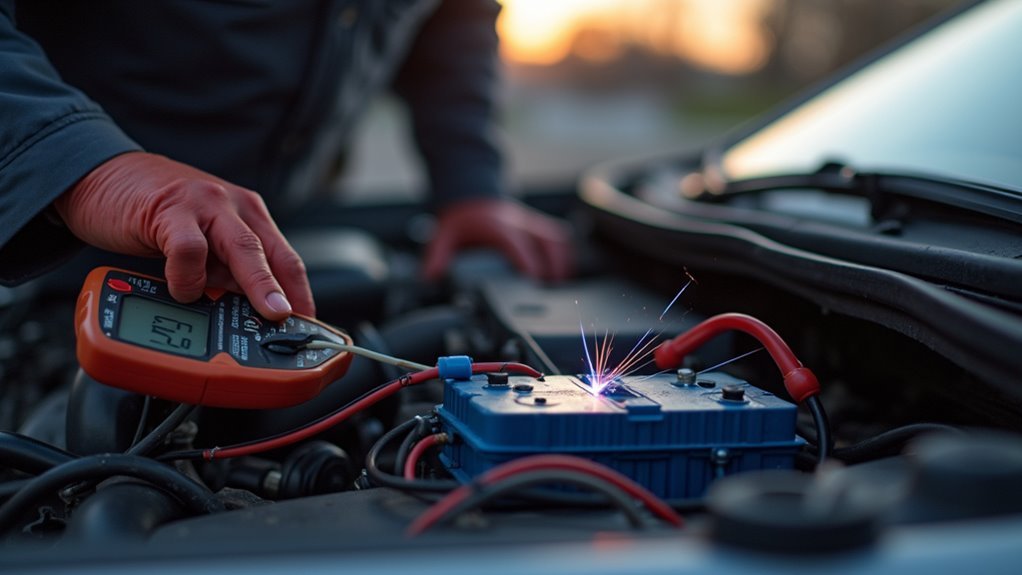
You can start with parasitic checking by shutting everything off, locking the doors, and waiting for modules to sleep. Then use a meter or a clamp tool to check the draw.
Assuming it’s above the normal range, pull one fuse at a time and watch for the drop. That tells you which circuit is guilty.
You can also try a battery disconnect overnight to see whether the battery stays strong.
Inspect lights, relays, and add-ons next, because one stuck switch can hide in plain sight.
As you work through it calmly, you’re not guessing, you’re narrowing the group of suspects together.
Frequently Asked Questions
Can Weather Cause a Car Battery to Drain Overnight?
Yes, cold weather can drain your battery overnight, and thermal cycling can expose weakness just at the moment you need reliability. If you are a careful driver, you’ll notice starts get harder quickly.
Do Short Trips Make Battery Drain Worse?
Yes, short trips can make battery drain worse because you are not giving it enough time to recharge. Frequent restarts use extra power, so you can end up with a weaker battery and more trouble starting.
Can a Dirty Battery Case Cause a Drain?
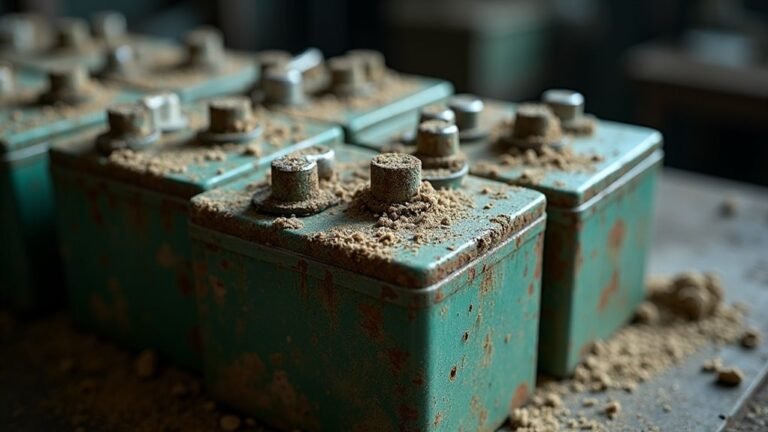
Yes, a dirty battery case can quietly nibble away at power, especially with moisture or acid residue. You should check for corroded terminals and compromised seals, since they can create a sneaky drain and leave you stranded.
Will a Bad Alternator Diode Drain the Battery While Parked?
Yes, a bad alternator diode can drain your battery while parked. You will get a parasitic draw that keeps pulling power after shutdown, so your battery could be weak or dead come morning.
Is Trickle Charging Helpful for Long-Term Storage?
Yes, trickle charging helps your battery stay happy during long term storage. You’ll reduce strain, protect battery chemistry, and keep your vehicle ready to roll. Follow a maintenance schedule, and you’ll feel like you’ve got backup.