Book Appointment Now

Why Batteries Expand and Swell
Batteries swell because internal chemical reactions produce gas that has nowhere to escape in a sealed cell. Heat, overcharging, physical damage, and aging accelerate those reactions and increase gas production. Pressure from trapped gas deforms the battery casing, creating visible bulges. A small bulge can signal internal failure and raises the risk of leakage, reduced performance, or rupture. Addressing a swollen battery promptly protects devices and safety.
What Makes Batteries Swell?
Whenever a battery swells, it’s usually because gas has built up inside a sealed case, not because the solid parts have simply grown larger. You can consider it as the cell getting crowded from the inside.
Chemical changes, aging, heat, overcharging, and physical damage can all start that buildup. As soon as the electrolyte and nearby parts disintegrate, they create pressure that the case can’t hide for long.
In the event you notice puffing, you’re seeing a sign that the battery’s balance has changed. Even small issues, like poor manufacturing tolerances or weak packaging materials, can make that balance less stable.
How Gas Buildup Makes Batteries Puff Up
Inside a sealed battery, chemical reactions can decompose the electrolyte and create gas that has nowhere safe to go.
As that gas builds up, internal pressure rises and the casing or pouch starts to puff up.
Whenever you notice swelling, treat it as a clear safety signal that the battery’s internal chemistry has gone awry.
Gas Formation Inside Cells
As soon as a battery starts to swell, the real problem is gas building up where it has no easy way out. Inside the cell, gas chemistry starts once electrolyte and nearby parts react under stress, heat, or age.
You can imagine it like a crowded room with the doors shut. Tiny amounts of oxygen, carbon monoxide, and carbon dioxide keep forming, and the pressure climbs. Good vent design can help release some gas, but sealed cells often trap too much.
That trapped gas pushes on the pouch or case, so you see puffing. Upon noticing it, your battery has already been changing inside for a while, and it deserves careful handling, not blame.
Pressure From Electrolyte Breakdown
At the point electrolyte breakdown starts, the battery doesn’t just age quietly, it begins to make gas that has nowhere safe to go.
You can visualize the electrolyte molecules splitting along unstable molecular pathways, then releasing electrolyte gases like carbon dioxide and carbon monoxide.
Because the cell is sealed, those gases collect inside and push outward on the pouch or casing. As pressure rises, you sense the battery puff up from the inside, not because the solid parts grew, but because trapped gas filled the space.
Heat, overcharge, and wear can speed this process, so the breakdown keeps feeding itself. Whenever you handle a swollen cell, you’re observing chemistry that has lost balance, and your battery is telling you its internal pressure is climbing fast.
Swelling As Safety Signal
Most of the time, a swollen battery is trying to warn you before things get worse. Whenever gas builds up inside, the case or pouch puffs out, and that visible change tells you the cell is under stress. You should treat it as a safety signal, not a cosmetic flaw. Through prompt detection, you can step in before heat, leaks, or failure spread.
That’s why you shouldn’t keep using or charging it. Instead, you should follow regulatory standards for handling, storage, and disposal, since they help protect you and everyone nearby. In the event you notice bulging, warmth, or a strange smell, trust your instincts. You’re not overreacting, and you’re not alone. Batteries act up for a reason, and this one deserves attention straight away.
How Heat Swells Batteries
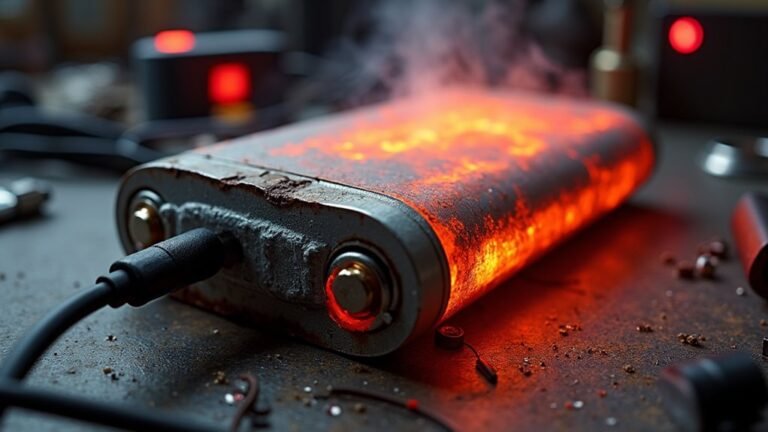
Heat often starts the problem quietly. Whenever your battery gets hot, the chemistry speeds up and makes extra gas inside the sealed cell. That trapped gas raises pressure, so the case can puff or the pouch can rise. During thermal cycling, repeated hot and cool swings strain the parts, and casing deformation can follow. You might notice warmth after charging, in a car, or near sunlight.
| Heat source | What it does | What you might see |
|---|---|---|
| Sunlight | Warms the shell | Soft bulge |
| Heavy use | Pushes reactions faster | Hissing? no, just heat |
| Poor airflow | Holds heat in | Steady swelling |
If you spot swelling, you’re not alone. Move the battery away from heat, and treat it as worn out, not stubborn.
How Overcharging Causes Battery Swelling
Upon a battery gets overcharged, the voltage climbs too high, and that extra push starts stressing the chemistry inside the cell. Your battery’s charging circuitry should stop power before it crosses safe voltage thresholds, but in cases where it doesn’t, the cell keeps taking in energy it can’t handle.
Then side reactions speed up, the electrolyte starts breaking down, and gas forms inside the sealed case. As pressure rises, the battery swells and could feel warm or look puffed up.
Should you notice this, you’re not alone, and it’s not just a small flaw. Overcharging usually means the battery management system, charger, or both missed the mark.
How Age and Wear Lead to Swelling
As a battery gets older, its inside parts start to wear down, and that slow damage makes swelling more likely. You might notice capacity fade initially, then the cell works harder to hold power.
As stress builds, tiny chemical reactions keep making gas, and the sealed case has less room to cope. That’s where lifecycle diagnostics help you catch trouble sooner. They show whenever aging moves past normal wear and into internal failure.
In case you’ve ever felt frustrated by a battery that can’t keep up, you’re not alone. Age, heat, and repeated use can weaken the separator, dry out the electrolyte, and raise pressure inside the cell. Over time, the pack could puff up because the gas can’t escape safely.
Which Batteries Swell Most?
You’ll usually see swelling most often in lithium-ion battery cells because they’re sealed and more likely to trap gas whenever something goes wrong.
Sealed lead-acid batteries can also bulge when charging issues or internal faults build up pressure inside the case.
Lithium-Ion Battery Cells
- You might notice a soft pouch or a raised phone back.
- Heat can speed reactions and push cells toward thermal runaway.
- Manufacturing variability can leave one cell weaker than the next.
- Overcharge, damage, and age can all increase gas pressure.
Sealed Lead-Acid Batteries
While sealed lead-acid batteries can also swell, they usually do it for a different reason than phone batteries do.
You’ll often see this in valve regulated storage units whenever charging goes wrong or heat builds up. In a lead acid battery, extra voltage can break water in the electrolyte into gas, and pressure rises inside the case. Should the vents can’t release it fast enough, the shell bulges.
You might also notice swelling after age, overcharge, or a weak charger keeps pushing too hard.
Warning Signs of a Swollen Battery
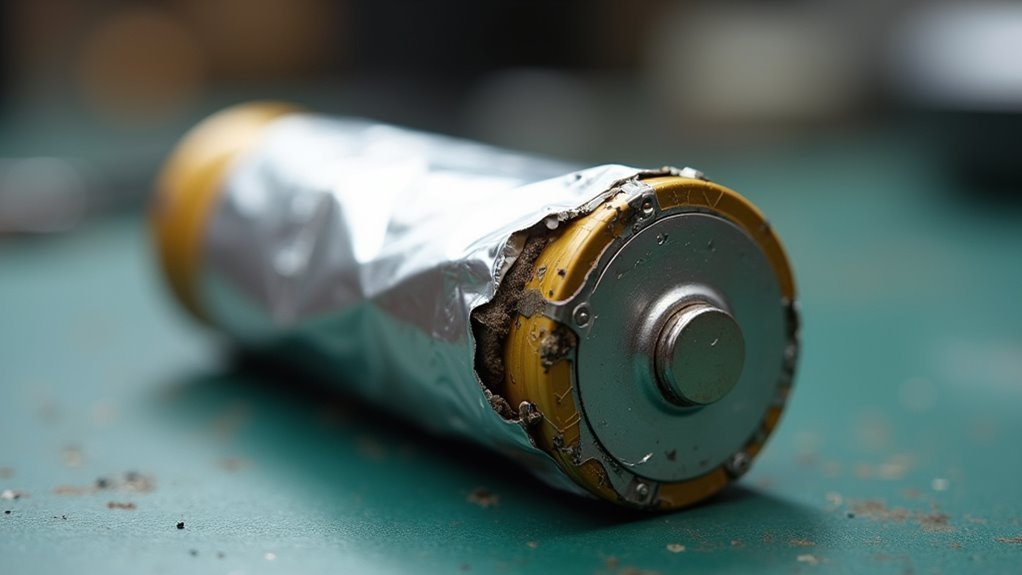
A swollen battery usually gives you clues before it becomes a serious problem, and those clues are worth noticing beforehand. You may spot a soft bulge, a lifted screen, or a case that no longer sits flat in your hand. When that happens, trust your eyes and your instincts.
- The battery feels warm during simple use.
- The device looks puffed at the edges.
- Buttons, panels, or covers stop lining up.
- Charging takes longer or smells unusual.
These signs often point to gas buildup from internal breakdown, not just a worn shell. Should you catch them early, you protect your group of friends, your gear, and your peace of mind. Quick checks can also help with warranty claims, before thermal runaway enters the photograph.
Risks of Using a Swollen Battery
Using a swollen battery can put you and your device at serious risk, because the bulge is usually a sign that gas is building up inside a damaged cell. You could face leaks, sudden heat, or even fire, and the device might fail without warning. That’s why you shouldn’t keep using it, even though it still powers on. In case the battery came from a product you share with family, work, or a team, the risk can affect everyone’s safety and trust.
| Risk | What you might see | Why it matters |
|---|---|---|
| Heat | Warm case | Damage grows |
| Pressure | Bulging shell | Parts strain |
| Leak | Odd smell | Chemicals escape |
| Failure | Random shutdowns | Data loss |
| Trouble | legal liability, warranty disputes | Costs rise |
You deserve safer gear, so stop using it and handle it carefully.
Can a Swollen Battery Be Fixed?
Not really, because swelling usually means the battery has already suffered internal damage, and that damage can’t be undone. You can’t squeeze the gas back in or rebuild a safe cell at home. Should you be curious whether it’s worth trying, consider it this way: the battery is already telling you it’s done.
- You could see a puffed case or lifted screen.
- The device could feel warmer than usual.
- A warranty claim could help when the battery is covered.
- If not, compare the replacement cost with the device’s age.
How To Handle a Swollen Battery
Should you spot a swollen battery, the safest move is to stop using it right away and handle it with care, because that puffiness means gas has built up inside and the cell could already be failing. Keep it away from heat, sun, and metal objects, and don’t press, bend, or puncture it.
Place it in protective storage, such as a fire-resistant container or a nonflammable area with space around it. Then contact local recycling or hazardous waste services for safe disposal.
Were the battery inside a device, power it down and unplug it before you move it. Wear gloves were you have them, and wash your hands after touching the area. You’re not overreacting; you’re protecting yourself and everyone nearby.
When To Replace a Swollen Battery
Usually, you should replace a swollen battery as soon as you notice it, even though it still seems to work, because the swelling means the cell has already failed inside. That’s the safest replacement timing, and it helps keep you in step with others who care about your gear and your safety.
In case you’re checking options, look for signs that the pack feels firm, warm, or misshapen. Then act fast:
- Stop using it right away.
- Save the receipt for warranty claims.
- Match the replacement to your device.
- Ask a trusted shop in case you’re unsure.
You don’t need to wait for worse damage. A swollen battery isn’t a small flaw; it’s a clear warning that the cell can’t stay reliable.
How To Prevent Battery Swelling
From the start, the best way to prevent battery swelling is to treat your battery like a piece of sensitive equipment, not a tough little brick that can take anything you throw at it.
You can help by keeping charge in the middle range, since constant full charge or empty drains stress the cell.
Then use proper storage in a cool, dry place, and skip hot cars, sunny windows, and damp rooms.
Good ambient control matters too, because heat speeds gas buildup inside the battery.
Also, choose the right charger, since cheap ones can push unsafe voltage.
Finally, handle your devices gently. Drops, bends, and crushes can start concealed damage.
With a little care, you’re not just protecting a battery, you’re looking out for your gear and your own peace of mind.
Phone and Laptop Battery Swelling
Even though you treat your battery with care, swelling can still show up in the device you use every day. You might notice case deformation, a lifted screen, or a trackpad that feels stiff.
That can feel unsettling, but you’re not alone, and you’re not imagining it. Inside the cell, gas builds up after electrolyte breakdown, and the pressure pushes the shell outward.
- Your phone might rock on a table.
- Your laptop might stop closing flush.
- Heat can rise during charging.
- The battery could be in thermal runaway risk territory.
Car and E-Bike Battery Swelling
Car batteries and e-bike batteries can puff up too, and it can catch you off guard fast. You may notice a round case, a hot pack, or a charger that seems off. That swelling usually means gas has built up inside from broken-down chemicals, not just wear.
In a car, weak charging parts or too much voltage can push the battery past its limit. On an e-bike, heat, overcharging, or a cheap replacement pack can do the same.
You should treat bulging as a warning, not a quirk. Follow battery etiquette: stop using it, keep it away from flammables, and seek help from a pro who knows regulatory standards. Should you ride or drive with care, you help protect yourself and everyone nearby.
Frequently Asked Questions
Why Do Lithium-Ion Batteries Generate Gas Internally?
You see gas because electrolyte decomposition and SEI formation reactions degrade cell materials inside your battery, especially under heat, overcharge, or aging. Those side reactions release oxygen and carbon dioxide, building pressure and causing swelling.
Can Manufacturing Defects Cause Batteries to Swell?
Yes, manufacturing defects can cause batteries to swell. If you get poor welding or contaminated electrolyte, internal reactions can make gas build up, and your battery might puff, fail prematurely, or become unsafe.
Does Deep Discharge Increase Battery Swelling Risk?
Yes. Deep discharge can increase swelling risk. You’ve probably seen a phone limp after repeated empty runs; like a tired runner, it builds capacity fade and then stresses chemistry, making gas buildup and bulging more likely.
Why Do Pouch Batteries Show Swelling More Visibly?
Pouch batteries show swelling more visibly because the flexible pouch casing allows gas buildup to expand the case, causing visible bulging. You notice the bulge sooner, so you get clearer warning signs.
Which Gases Are Released During Battery Outgassing?
You’ll see outgassing release carbon monoxide, carbon dioxide, oxygen and sometimes hydrogen fluoride. You can consider it as your battery’s warning sign: trapped gases build up, pressure rises and the cell starts to swell.