Book Appointment Now

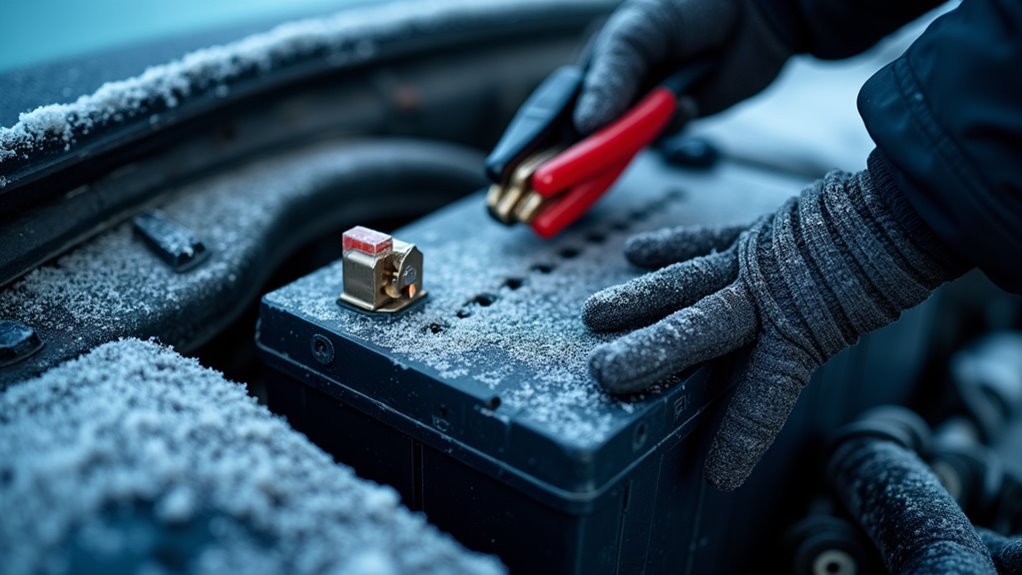
What Is Cold Cranking Amps and Why It Matters
Cold cranking amps (CCA) measure how much current a battery can supply for 30 seconds at 0°F while still starting the engine. Higher CCA means better cold-weather starting performance. Low temperatures reduce battery chemical activity and demand more power from the starter. Choosing a battery with the right CCA helps prevent slow cranks and starter strain. Compare CCA ratings to vehicle requirements and typical winter conditions to pick the best fit.
What Is CCA on a Battery?
Cold weather can turn a simple key turn into a stressful moment, and that’s where CCA comes in. CCA means Cold Cranking Amps, and it tells you how well your battery can start an engine during the air feels harsh.
You can regard it as a cold-start score shaped through battery chemistry. The rating shows how many amps your battery can give for 30 seconds at 0°F while staying above 7.2 volts.
That matters because you want a battery that fits your car, your climate, and your peace of mind. So, check the label, match your vehicle’s needs, and use simple maintenance tips to keep connections clean and charging strong.
Why CCA Matters in Winter
Once winter hits, your battery has to work much harder just to turn the engine over.
Cold temperatures cut its power, so a strong CCA rating can make the difference between a smooth start and a frustrating no-start morning.
That’s why you want enough winter starting power to handle the extra load without making your battery struggle.
Winter Starting Power
Often, winter turns a simple engine start into a tougher job, and that’s exactly where CCA matters most. You need enough winter starting power to spin the engine fast, even whenever the morning air feels sharp.
Higher CCA gives you that extra burst, so you’re not left waiting while everyone else is already moving. Whenever temperatures drop, engine warming helps, but your battery still needs strong cold-start strength to do its part.
That’s why battery insulation can help, too, because it supports steadier performance in harsh weather. Provided you choose a battery with the right CCA, you give yourself a better chance of a smooth start and a calmer commute. You’re not just buying numbers. You’re buying confidence.
Cold Weather Battery Load
A strong battery can still feel the winter strain, and that’s why CCA matters so much once the temperature drops. In your vehicle, cold thickens oil, slows chemical flow, and raises the battery load right whenever you need a quick burst. That’s where CCA shows whether you’ve got enough reserve to start with confidence.
| Winter factor | Effect on battery | What you need |
|---|---|---|
| Cold oil | Harder cranking | Higher CCA |
| Frozen parts | More drag | Better thermal management |
| Weak charge | Lower voltage | Battery insulation help |
Whenever you choose a battery with enough CCA, you’re not just buying power. You’re joining the drivers who know winter starts can still feel calm. Keep your battery insulated, support thermal management, and give yourself a better shot on frosty mornings.
How CCA Helps a Car Start
As you turn the key, your battery has to send a quick burst of power to the starter motor. In cold weather, your engine needs even more energy to crank because the oil gets thicker and moving parts feel stiffer. That’s where CCA helps, since a higher rating gives your car a better shot at starting without a struggle.
Battery Power at Startup
At startup, your battery has one big job: give the engine a strong burst of power so it can turn over fast enough to catch and run.
In that battery startup moment, CCA shows how much peak output you can count on right away. You don’t need slow, steady power here. You need a sharp push that helps the starter spin the engine with confidence.
Whenever your battery has enough CCA, you feel less worry and more trust each time you turn the key. That matters because a strong start helps you get moving with your crew, your plans, and your day.
Cold Weather Engine Demand
Cold weather makes that quick burst of power work a lot harder, so your battery has to do more than just wake up the engine.
You feel the difference because ice crankstrain effects can slow the initial turn, and viscosity startup resistance can thicken the oil around moving parts.
That means your battery must push harder, faster, and with more confidence. CCA tells you whether it can deliver that cold burst whenever the morning bites back.
Whenever the rating is right, you join the drivers who don’t have to guess at every frosty start. You get steadier starts, less strain, and a better shot at moving on with your day.
In winter, that extra margin can make you feel prepared, not stuck.
Starter Motor Energy Needs
Your starter motor asks for a hard, quick burst of power, and CCA shows whether the battery can answer that call.
Whenever you turn the key, the starter pulls strong starter power to spin the engine fast enough for ignition. That job creates a big torque demand, especially whenever oil is thick and metal parts are cold.
In that moment, your battery must deliver high current right away, not slowly. CCA tells you how well it can do that in freezing weather.
Should the rating be too low, the starter might groan, the engine could linger, and you might feel stuck outside with a quiet dashboard.
With enough CCA, you give your car the kick it needs, and you join the drive with confidence, not worry.
CCA vs. Reserve Capacity
While CCA tells you how well a battery can crank an engine in the cold, Reserve Capacity shows how long it can keep things running whenever the engine is off. You need both, because one helps you start, and the other helps you stay powered when life gets messy.
CCA comes from cold ambient testing, so it reflects battery chemistry under hard winter stress. Reserve Capacity matters whenever your lights, radio, or hazards keep drawing power.
- CCA = quick start power
- Reserve Capacity = steady backup time
- Together = fewer surprises for you
At the point you shop, look for both numbers. Provided you belong on the road in any season, these ratings help you choose a battery that fits your day and keeps you moving.
How to Read a Battery CCA Label
You can find the CCA rating right on the battery label, usually near the model number or size code. Then, look for the small symbols and abbreviations around it, because they can tell you whether the number refers to cold cranking amps or a related rating.
Once you know what the label says, you can compare that number with your vehicle’s required amps and pick a battery that won’t leave you stuck on a cold morning.
Locate CCA Rating
To find the CCA rating, start checking the battery label or sticker, since that’s where the number usually hides in plain sight. With the right battery placement, you won’t have to guess. Provided the label visibility is poor, move closer and look at the top, side, or front edge.
- Scan for a number with CCA beside it, like 550 CCA.
- In case the battery sits deep in the tray, use a flashlight and tilt your view.
- Compare the printed rating with your vehicle’s needs, so you feel confident before a cold start.
You’re not alone assuming the label looks crowded. Battery makers pack a lot onto one surface, but the CCA line usually stands out once you know where to look. That small number helps you match your battery to winter mornings and stay ready whenever your engine needs a strong initial turn.
Decode Label Symbols
Battery labels can look confusing at initially, but the symbols usually tell a clear story once you know what they mean. You’ll often spot bold CCA numbers, then small label icons that show cold-start strength, reserve details, or battery type.
Should you see battery pictograms like a snowflake, engine, or thermometer, take them as quick clues about starting power in chilly weather. Next, check the letters and arrows near the rating, because they often point you to the exact CCA line instead of a similar spec.
You don’t need to guess here. Just match the symbol, read the number, and trust the layout. Once you learn the pattern, you’ll move through battery labels with more confidence and less stress.
Compare Required Amps
Once you know how to spot the CCA line on a label, the next step is making sure it actually fits your engine’s needs. You’re not just buying a number; you’re matching starter current to the load your engine puts on the battery. Check your owner’s manual beforehand, then compare that value with the label. Should your engine have more engine resistance in cold weather, like thick oil or a bigger block, you’ll require more CCA.
- Small gas cars often do well with 350 to 600 CCA.
- Bigger trucks and diesels could call for 700 CCA or more.
- Give yourself a little extra margin so winter starts feel easy, not stressful.
That way, you remain in the club of drivers who turn the key and go with confidence.
What CCA Rating Your Vehicle Needs
Figuring out the right CCA rating for your vehicle doesn’t have to feel like guesswork, and it starts with your engine size, your climate, and how hard your car has to work in the morning.
You can use engine displacement as a simple guide, then check the maker’s label for the exact need. For many gas engines, about 1 CCA per cubic inch works well. Diesel engines usually ask for more.
Then consider seasonal tuning, because your battery choice should fit the months during which you require the strongest start. If you live where mornings remain mild, a moderate rating could be enough. In the event winter hits hard, choose extra CCA so you and your ride stay ready together.
How Cold Weather Reduces CCA
Cold weather takes a real bite out of a battery’s power, and that drop can make a normal start feel stubborn and slow.
You feel it because the battery’s chemistry moves less freely as temperatures fall. The electrolyte thickens, so molecular viscosity rises and the ions can’t travel as quickly.
Then electrolyte contraction cuts the active area inside the battery, which lowers the burst of current you can get.
- Your battery works harder just to wake up.
- Your engine asks for more power in the cold.
- You get less cranking strength at the worst moment.
That’s why winter can shrink CCA even though your battery looks fine.
Whenever you drive with other winter commuters, you’re all in the same cold-start struggle, and that shared pressure makes each morning feel a little tougher.
Signs Your Battery Lacks Enough CCA
Often, the initial clues show up before the engine even turns over, and they can feel frustratingly small at outset. You might hear slow cranking, where the starter drags longer than it should, even after a full charge.
Then you could notice intermittent starting, with your car firing up one day and struggling the next. That pattern can make you second-guess yourself, but it usually points to weak cranking power.
You might also see dim dash lights, a single click, or repeated failed starts. Should the engine feel stubborn on chilly mornings and your battery is older, pay attention. These signs often mean your battery can’t deliver enough burst power for reliable starts, so you’re not imagining it, and you’re not alone.
Choosing the Right CCA for Your Climate
Whenever you choose a battery for your climate, start alongside matching the CCA to the coldest mornings you expect to face. In case you live where frost hangs around, you need a climate adapted CCA that gives your engine a confident initial turn. For warmer places, you can often choose a lower number, but regional selection still matters because local winters can surprise you.
- Envision your garage on a 10-degree morning.
- Envision a pickup parked outside after a windy night.
- Envision your battery helping you join the road without stress.
You belong to the drivers who plan ahead, and that’s smart. Check your owner’s manual, then compare it with the battery label. In case your area gets sharp cold snaps, choose a bit more CCA so you’re ready whenever the air bites.
Common CCA Mistakes to Avoid
A smart battery choice can still go sideways should you miss a few common CCA mistakes, so let’s look at the traps that catch plenty of drivers. You can skip headaches by watching these issues:
| Mistake | Why it hurts |
|---|---|
| Guessing CCA | Your engine might crank too slowly. |
| Ignoring climate | Cold mornings demand more reserve. |
| Forgetting battery maintenance | Dirt and weak connections sap power. |
| Missing warranty pitfalls | The wrong battery can void coverage. |
| Trusting only price | Cheap doesn’t always mean reliable. |
Whenever you keep your vehicle needs in mind, you join the crowd that starts with confidence. Also, check labels with care, because one small mismatch can leave you stranded whenever winter hits. A little attention today helps you protect your battery, your plans, and your peace of mind.
How to Compare CCA Ratings When Buying
To size up CCA ratings without getting tangled in numbers, start with your vehicle’s real needs and then compare batteries that meet or beat that mark. You belong with drivers who check the label, not just the price tag, because the right match keeps mornings calmer.
- Look at your owner’s manual for the minimum CCA.
- Compare batteries with the same size, type, and terminal layout.
- Weigh battery comparisons alongside warranty considerations.
Next, consider your climate. Should winters bite hard, give yourself extra CCA so the engine gets a stronger start. Then read the fine print. A higher rating helps, but a weak warranty can leave you stuck later. As you compare options this way, you choose with confidence and feel ready for the road.
Frequently Asked Questions
How Is CCA Tested in Laboratory Conditions?
You evaluate CCA by thermally conditioning a fully charged battery at 0°F then running a standardized measurement: it must deliver rated current for 30 seconds while staying above 7.2 volts.
Does a Higher CCA Always Mean a Better Battery?
Not always. You’ll want a higher CCA only if your climate and engine require it. Battery tradeoffs matter because higher ratings can cost more and may have different dimensions, so choose the battery that matches your vehicle and your confidence.
Can a Battery With Low CCA Still Work in Warm Weather?
Yes, you can use a low CCA battery in warm weather; your compact sedan could start fine on summer mornings. You will still face reduced performance under load and a shorter lifespan if it is undersized.
What’s the Difference Between CCA and CA Ratings?
CCA tests your battery at 0°F while CA tests it at 32°F so CCA is lower. Both ratings change with battery chemistry and terminal corrosion and choosing the right rating helps you stay on the road.
Do Diesel Engines Need Different CCA Requirements Than Gas Engines?
Yes, you will usually need more CCA for diesel starting than for gas engines because diesels compress harder and often run thicker oil. For marine applications, you should match your battery to the engine maker’s recommendation.