Book Appointment Now

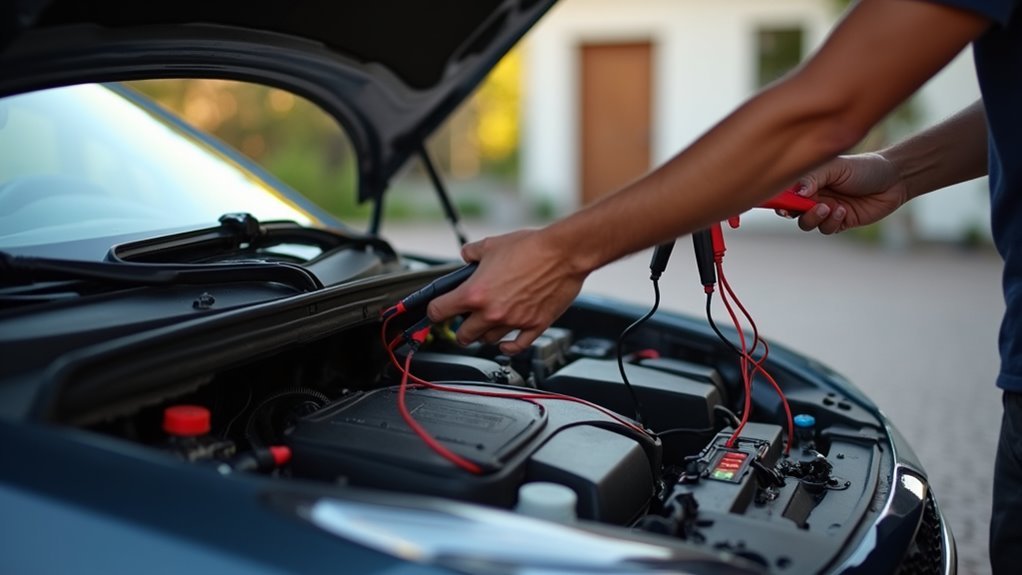
How to Test a Car Battery at Home
A weak car battery can stop the day before it starts, but testing one at home is simple and quick. Start with basic safety: wear gloves and eye protection and work in a ventilated area. Check the battery’s age, case for cracks or leaks, and cable and terminal condition before using a multimeter. Read resting voltage and conduct a starter/crank test to see real-world performance. Slow cranking, dim lights, or low resting voltage point to a battery that needs charging, further inspection, or replacement.
What You Need to Test a Car Battery
Before you assess your car battery, gather the right tools so the job feels simple, not stressful. You’ll need safety gloves, a digital multimeter, and a voltage chart you can trust.
The gloves help you feel secure while you work, and the meter shows the battery’s real condition. Set the multimeter to DC volts, usually the 20V range, so it matches a 12V battery.
Then make sure the car is off and the terminals are clean and dry. In case you see corrosion, wipe it away initially so your reading stays accurate.
Keep the voltage chart nearby, because it helps you compare numbers fast and avoid guesswork. With these basics ready, you can examine with confidence and feel like you belong in the garage.
Check Your Car Battery’s Age
Checking your car battery’s age can save you a lot of second-guessing, because a battery that looks fine could still be near the end of its life. Find the manufacture date on the case or label, then compare it with your service records in case you keep them. Most batteries last about three to five years, but storage conditions and climate effects can shorten that time. Hot weather wears batteries down faster, while long periods of sitting can drain them too. Should yours be already a few years old, you’ll want to pay closer attention during evaluation. That way, you’re not guessing alone, and you can spot a battery that’s old enough to fail soon, even before it leaves you stuck at the worst moment.
Inspect the Battery for Damage
Now that you know your battery isn’t too old, take a close look at it for any signs of physical trouble. You’re looking for cracks, leaks, bulges, and heavy corrosion around the terminals.
A swollen case can mean the battery has overheated or failed inside, so don’t ignore it. Also check for wet spots, stains, or a sharp chemical smell, since those can point to internal leakage.
Make sure the top stays clean and dry, because dirt can hide damage and make the battery harder to trust. Should you spot loose cables, damaged posts, or a misshapen shell, treat the battery with care and keep your hands clear.
These clues help you and everyone working with the car stay safe while you decide what to do next.
Test a Car Battery With a Multimeter
A multimeter gives you a clear, quick look at your battery’s health, and it can spare you a lot of guesswork. Set it to DC volts, then choose the 20V range. Turn the ignition off, so your reading stays steady.
Next, focus on probe placement: red on the positive terminal, black on the negative terminal. Should the battery posts look dirty, wipe them initially so the meter can make a clean connection.
You’re doing a simple battery healthscan, and that’s enough to tell you whether the battery is holding charge well. Keep the probes still, read the screen, and observe the number. In case the reading seems off, check your contact again before you worry. That little reset can save you stress and keep you in the know.
What Battery Voltage Tells You
Your battery’s voltage tells a simple story, and that story can save you from a lot of roadside stress.
Whenever you check it, you’re seeing the battery’s state of charge, so a higher reading usually means more usable power.
Around 12.6 to 12.8 volts often means you’re in good shape, while lower numbers show the charge is fading.
Should the reading stays low after charging, internal resistance could be climbing, which can limit how well the battery holds power.
That’s why voltage matters even before any bigger evaluation. It helps you spot a battery that’s still part of the team, or one that’s quietly asking for help.
In your driveway, that quick number gives you a clear, honest initial clue.
Test the Battery While Starting the Car
Once you start the car, the battery has to prove itself under pressure. Stay in the driver’s seat and listen as the engine turns over. A healthy battery keeps the cranking steady, while a weak one might slow down, click, or stall before the engine fires. That quick drop tells you a lot about starter diagnostics, because it shows how well the battery supports the starter motor. It also reveals ignition interaction, since the battery must feed power at the exact moment the system requests it.
Should the crank sound sluggish, your battery could be tired even even if it seemed fine before. Keep the trial brief, and pay attention to any changes in speed or sound. This simple check helps you feel confident about what your car is telling you.
Use the Headlight Test for Quick Clues
Provided the engine crank still feels off, you can get another quick clue through watching the headlights. Turn them on before you start the car, then ask a friend to watch from outside assuming you can.
Should you see clear headlight dimming when the key turns, your battery might be struggling to deliver power. Bright, steady lights usually point to a healthier charge.
For a simple bulb comparison, look at both lamps together, since one weak bulb can fool your eyes. This quick diagnostic won’t replace a meter, but it can help you spot trouble fast.
It also matters for night visibility, because weak lights can make driving feel unsafe and stressful. Should the lights fade hard, keep checking with care, and trust your instincts.
How to Tell Battery Trouble From Alternator Trouble
Should your car struggles to start, you can look for clues that point to a weak battery or a failing alternator.
A bad battery often shows low voltage, slow cranking, or dim lights right away, while alternator trouble usually shows up after the engine runs and the battery can’t stay charged.
Through watching whenever the problem happens, you can narrow down which part needs attention.
Battery Trouble Signs
Battery trouble can feel a lot like a bad day for your whole car, but the signs usually point somewhere specific. In case your engine clicks, cranks slowly, or needs a jump after sitting overnight, your battery might be sending an early warning.
Watch for dim headlights, a weak dome light, or a battery that keeps losing charge even after you drive. Corrosion on the terminals can also make you assume the battery failed when a loose cable is the real issue.
In the event the battery checks low after charging, or in the event it drops again fast, suspect age or a parasitic draw. That means something in the car is draining power while you’re parked.
At the time these clues show up together, you’re not alone, and you can narrow the problem with confidence.
Alternator Trouble Signs
A weak battery can make you suppose the whole charging system is falling apart, and that’s where the alternator comes into the image.
You’ll often see dashboard warnings, dim lights, or a battery that dies again soon after a jump. Should the engine starts, then stalls, or the radio and blower fade while you drive, suspect charging trouble, not just battery trouble.
A good battery can still fail provided the alternator never tops it off. Check the belt, too, because a loose or squealing belt can cut charging power.
For quick alternator diagnostics, measure voltage with the engine running. You should usually see about 13.8 to 14.7 volts. Provided the reading stays low, or jumps around, get the charging system examined through a pro.
Check the Battery Cables and Terminals
Before you trust a battery reading, check the cables and terminals for green or white corrosion, because that buildup can block power and make a good battery look weak.
Then snug the terminal connections so they don’t wiggle, since loose clamps can cause hard starts and odd exam results.
In case the contacts look dirty, clean them initially so your meter gets a solid connection and your trial gives you the real story.
Inspect Cable Corrosion
Take a close look at the battery cables and terminals, because even a strong battery can act weak as corrosion gets in the way. You’re not just checking battery aesthetics; you’re helping the whole system feel solid and welcome again.
Look for green, white, or crusty buildup, and follow the cable routing to spot concealed damage near bends and clamps.
- Wipe away loose dirt so you can see the metal clearly.
- Check for flaky buildup around both terminals.
- Notice cracked insulation or swollen cable ends.
- Smell for acid-like odor, which can signal trouble.
If you see corrosion, clean it before any voltage examination so your meter gets a fair reading. A clean connection helps you trust what you find and keeps the next step simple.
Tighten Terminal Connections
Now snug down the battery terminals so the cables can do their job without any wiggle.
You want each clamp seated firmly on the post, because a loose connection can act like a tired battery and leave you stranded at the worst time.
Use the correct battery torque so you tighten enough without cracking the hardware.
Then give the cable ends a gentle tug; they shouldn’t move.
Suppose your battery uses hold-down brackets, check those too, since a steady battery stays happier under vibration.
Afterward, add a thin terminal dielectric layer to help protect the connection from road moisture and everyday wear.
Once everything feels solid, you can move on with confidence, appreciating your evaluations start from a better place and your car’s electrical crew is ready to work.
Clean Battery Contacts
A clean connection can make a stubborn battery feel a lot less mysterious, so start checking the battery cables and terminals for any grime, crust, or loose buildup. You’re not alone when you spot battery whitening; that white powder often blocks power and makes checking feel confusing.
To begin, match the terminal polarity before you touch anything, then loosen the clamps and lift them off carefully.
- Brush away dry corrosion with a terminal brush.
- Wipe the posts with a damp cloth and dry them.
- Inspect the cable ends for rust, cracks, or frayed wire.
- Reattach each clamp tightly so it won’t wobble.
Once the contacts look clean, your meter can read the battery more honestly, and you can trust the next step with a lot more confidence.
Spot a Weak Battery in Cold Weather
Cold weather often exposes a weak battery fast, because low temperatures slow the chemical reaction inside it and make it harder for the car to start. Whenever you turn the key, listen for slow cranking, clicks, or a pause before the engine catches.
Should the lights dim hard, your battery might be struggling under the chill. This matters even more after winter storage, whenever a battery can lose charge while sitting.
To check it, use your multimeter, set it to DC volts, and read the battery before starting. A healthy battery usually stays near 12.6 volts, even on cold mornings.
Should the number drops low or the startup feels sluggish, you’ve likely found a weak battery before it leaves you stuck.
When to Recharge or Replace a Car Battery
Sometimes the best battery fix is simple: charge it, then evaluate it again. In case your reading sits below 12.2 volts, give the battery a full recharge and verify it after it rests. Once it climbs back near 12.6 volts, you can keep driving with confidence. But in the event it still drops low, struggles during cranking, or can’t hold power under load, replacement makes more sense. That’s at which point you protect yourself from surprise breakdowns and save time.
- Charge initially when the battery is just weak.
- Replace it at the point voltage stays below 12.0 volts.
- Use warranty claims in the event the battery is still covered.
- Choose battery recycling whenever you install a new one.
You’re not alone in this choice. A clear reading helps you act calmly and keep your car ready.
Avoid Common Car Battery Testing Mistakes
You can get a good battery reading only provided you stay safe and set up the trial the right way. Should you skip steps like turning the ignition off or cleaning corroded terminals, you could get a false result and waste time.
And should you misread voltage, you may suppose a healthy battery is bad, or miss the real problem altogether.
Skipping Safety Steps
Before you touch a battery, take a moment to slow down and cover the basics, because skipping safety steps can turn a simple trial into a messy mistake. You’re part of a crew that looks out for each other, so wear safety glasses and avoid loose clothing prior to starting. Then follow these quick habits:
- Keep your hands dry and clear of metal tools.
- Turn the ignition off and remove keys initially.
- Work in a clean, open spot with good light.
- Stand steady and keep your face back from the battery.
These small moves help you stay calm and in control while you evaluate. They also lower the chance of sparks, slips, or surprise contact. Whenever you build safe habits to begin with, the rest of the job feels easier and less stressful.
Misreading Voltage Results
A battery reading can look simple at initially, but the number on your multimeter can fool you in case you read it the wrong way. You could see 12.4 volts and feel unsure, yet that can still mean a usable battery.
To start, check that the ignition is off, then look at ambient temperature, because cold weather can lower the number a bit. Next, watch for reading errors from loose probes, dirty terminals, or a meter left on AC volts.
When you examine while the engine runs, expect a higher charge voltage. During cranking, the battery should stay near 9.6 volts or above.
Frequently Asked Questions
How Often Should I Test My Car Battery at Home?
You should examine your car battery monthly and do seasonal testing before winter or summer. That keeps you confident, catches weakening prematurely, and helps you avoid surprise breakdowns whenever you need your car most.
Can a Car Battery Test Good and Still Be Bad?
Yes, your battery can test good and still be bad. For example, it might show 12.6 volts yet fail under cranking because of surface sulfation or an unseen parasitic drain, leaving you stranded anyway.
Should I Disconnect the Battery Before Testing It?
No, you usually do not disconnect the battery before checking it. You can check it in place, but use protective gloves and avoid metal tools so you keep your hands safe and stay connected to the process.
Does Battery Testing Work on Hybrid or Electric Vehicles?
Yes, but you will need hybrid diagnostics and high voltage safety precautions. You can examine the 12 volt auxiliary battery normally, yet the main traction battery needs specialized tools, training, and a trusted pro beside you.
What Safety Gear Should I Use When Testing a Car Battery?
You should wear protective gloves and safety goggles to shield your hands and eyes from acid splashes, sparks, and corrosion. Keep metal jewelry off, work in a well ventilated space, and you will stay safer.