Book Appointment Now

How Fast Charging Affects Phone Batteries
Fast charging speeds refill phone batteries far faster than standard chargers. That extra power increases battery temperature and accelerates chemical wear over many charge cycles. Modern phones use thermal limits, charge-rate tapering, and battery management to reduce stress. Manufacturer guidelines and quality chargers help limit long-term capacity loss. The practical concern is balancing convenience against gradual battery aging and using charging habits that prolong usable lifespan.
Does Fast Charging Damage Batteries?
Not really, at least not in the way many people worry about. You can use fast charging without feeling like you’re ruining your phone. Modern batteries and charging systems work together, so your device usually limits power on its own. That means wireless concerns about damage are often bigger than the real risk.
What matters more is heat and charging etiquette. In case you charge with a quality cable, a trusted charger, and a phone built for it, you’re in good shape. You might see a little extra wear over time, but it’s usually small. So, whenever you need a quick surge, you can plug in, relax, and stay part of the crowd without stressing over every charge.
What Fast Charging Does Inside the Battery
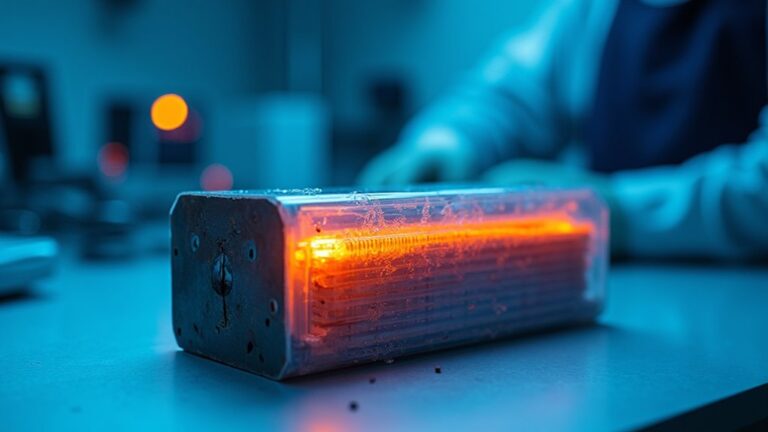
When you fast charge your phone, electricity moves into the battery more quickly, and that can make the cells warm up.
That extra heat adds chemical stress while lithium ions rush between the electrodes, which is why the battery works harder in those moments.
Even so, your phone’s battery system helps keep that process in check, so the real goal is to manage heat, not fear fast charging itself.
Heat And Chemical Stress
Even though fast charging can sound harsh, most of the extra stress it creates comes from heat, not from the speed itself.
Whenever you plug in, your phone works harder, and that warmth can build thermal gradients across the battery. Those uneven spots can lead to electrode distortion, which adds tiny bits of wear over time.
You don’t need to panic, though. Modern phones watch the temperature and dial back power whenever things get too warm.
Still, in case your phone sits under a pillow, in a hot car, or in a thick case, the battery can stay stressed longer than it should. That’s why cool charging matters. It helps your battery age more gently, and it keeps your phone feeling like part of your everyday crew.
Lithium Ion Movement
Inside the battery, fast charging pushes lithium ions to move faster between the positive and negative sides, and that quick motion is what helps your phone fill up so fast.
You’re not forcing them in like a crowd at a packed concert. Instead, the ions travel through the electrolyte, then slip into the electrodes through ion diffusion and electrode intercalation.
Because this happens more quickly, the battery can accept energy in less time. Still, your phone’s battery system stays in charge and sets limits so the movement doesn’t get wild.
That’s why a good charger and a supported phone can work together safely. So whenever you plug in, you’re really helping the ions move with purpose, not pushing them past what they can handle.
Why Heat Matters More Than Speed
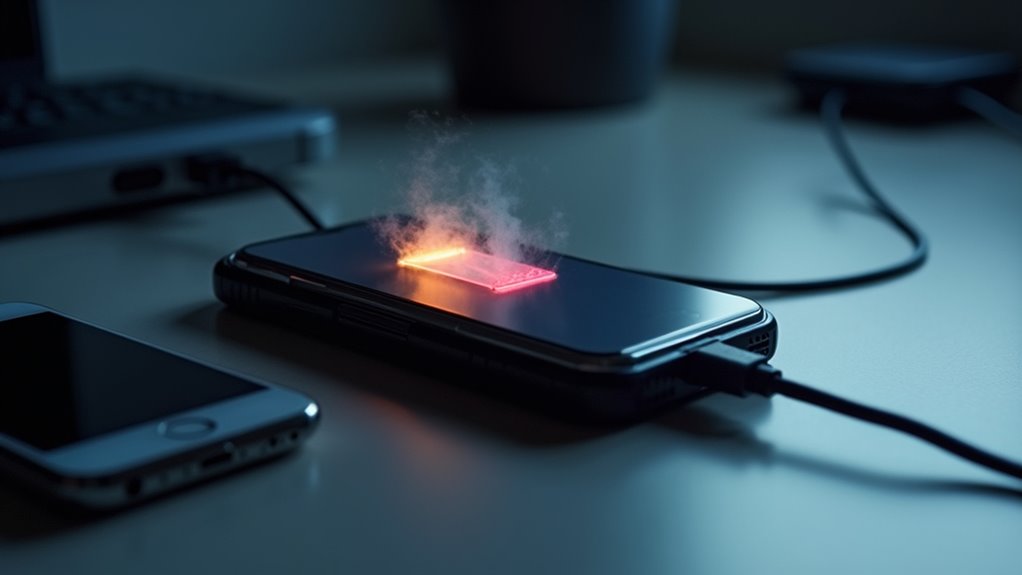
Fast charging can warm your phone up, and that heat is what puts real stress on the battery.
You don’t need to fear speed beside itself, because the extra heat is the part that slowly wears battery life down.
Heat Slows Battery Life
Heat is the real reason battery life slips, and that matters more than charging speed alone. You can charge fast and still protect your phone provided ambient cooling helps it stay comfortable.
Whenever your device feels warm, its battery ages faster, and thermal throttling might step in to calm the system. That means the phone limits power to protect itself, which can make charging feel slower anyway.
You’re not alone in wanting speed and long life, so focus on keeping the phone cool during each session. Use a case that breathes, avoid soft bedding, and let the phone rest once it gets hot. Small moves like these keep your battery steadier, reduce stress, and help your phone stay ready for the next busy day.
Speed Raises Temperature
At the moment your phone pulls power quickly, it usually gives off more warmth, and that extra warmth is why speed matters less than people assume.
You can regard fast charging as a hurry-up meal for your battery: the energy lands fast, so heat builds faster too. That heat can trigger thermal throttling, which slows charging to protect the phone.
Whenever your room feels cool, ambient cooling helps your device shed that warmth more easily.
But provided you charge on a bed, in a hot car, or under a case that traps heat, the battery stays warmer longer. That’s the part that wears cells down.
How Fast Charging Affects Battery Health
Even though the term can sound a little scary, fast charging usually has only a small effect on battery health in modern phones. Your battery firmware and smart charger talk to each other, so power stays within safe limits. That’s why user perceptions often overstate the risk.
| Factor | Effect |
|---|---|
| Fast charging | Usually minimal wear |
| Heat and cheap cables | Bigger battery stress |
When you use a quality charger, your phone stays in control, and the battery only feels extra strain during long hot sessions. In real-world trials, fast and slow charging often end up close. So, you can join the crowd that charges fast without panic. For most of us, convenience wins, and the battery still gets years of solid service.
When Fast Charging Slows Down
Fast charging is usually safe, but there are times during which it slows down on purpose, and that’s a good thing. You might notice a charging taper after your phone reaches about 80%. At that point, the charger and battery do a quiet power negotiation, and your phone asks for less energy. This helps control heat and protects the cells, so you’re not getting shortchanged.
- Your phone stays cooler
- Your battery feels less stressed
- You avoid that worried, “Is this normal?” feeling
- You still get home faster than with old charging
Best Charging Habits for Longer Battery Life
Protecting your phone battery starts with a few steady habits, and the positive part is that you don’t have to baby it every minute.
You can charge whenever it fits your day, but aim for best timing through plugging in before the battery gets too low and stopping before it stays at 100% for hours.
Small charging rituals help too. Keep your phone cool, use a trusted charger and cable, and avoid leaving it in a hot car or under a pillow.
Provided you often top up in short bursts, that’s okay. In fact, those quick breaks can feel easy to keep up, and they suit real life.
Over time, these simple choices reduce stress on the battery and help you stay part of the crowd that gets good, lasting performance.
Fast Charging Myths to Ignore
Although fast charging gets blamed a lot, most of the scary stuff you hear is just not true. You’re not ruining your phone every time you plug in, and that should ease a lot of battery myths. Modern phones manage power on their own, so they don’t just gulp electricity blindly. Wireless myths can spread too, but charging style alone doesn’t spell disaster.
- You can breathe easier whenever your phone warms a little.
- You don’t need to fear every quick top-up.
- You belong with people who use smart tech without guilt.
- You can ignore doom-talk that makes normal charging feel risky.
What matters more is heat, cheap accessories, and old assumptions. So should friends warn you that fast charging is always harmful, you can smile, stay calm, and trust the facts.
How to Charge Your Phone Smartly
Now that you know fast charging isn’t the battery villain people make it out to be, the smarter question is how to charge in a way that keeps your phone happy for the long run.
You can follow simple battery etiquette by unplugging once you hit around 80%, then letting your phone rest instead of sitting at 100% all night. Should you charge overnight, use overnight optimization features, since they slow the last stretch and cut heat.
Keep your phone cool through removing thick cases while charging and avoiding sunny spots. Also, choose a certified charger and cable, because good gear protects both you and your battery.
Whenever possible, top up in short bursts between 30% and 80%. That routine feels easy, fits busy days, and helps you stay in the same smart-phone crowd.
Frequently Asked Questions
Can Fast Charging Reduce Battery Life on Older Phones?
Yes, on older phones, fast charging can shorten battery life a bit. You will feel less alone choosing slower charging sometimes, because battery aging and voltage stress can be tougher on weaker hardware, though it is not disastrous.
Does Using a Cheap Charger Worsen Fast-Charging Safety?
Yes, cheap chargers can worsen fast charging safety, especially with counterfeit adapters and cable degradation. You’ll risk extra heat, unstable power, and quicker wear, so stick with certified gear that keeps your phone protected and your routine worry free.
Is It Bad to Fast Charge Overnight?
Not really — you can fast charge overnight without much worry. Your phone manages power, and overnight safety is generally fine. For better battery longevity, keep it cool, avoid cheap chargers, and don’t leave it scorching hot.
How Does Fast Charging Affect Charging Time at Different Battery Levels?
You’ll see the biggest surge at low levels: an initial surge fills your battery fast, then a tapering curve slows charging as it nears full. So you’ll save the most time from empty to about 50%.
Do Wireless Chargers Heat Batteries More Than Wired Fast Charging?
Usually, yes. Wireless chargers heat your battery more than wired fast charging because of wireless heating and induction losses. Still, you are not stuck with it: a good charger, a cooler room, and proper alignment keep things safe.