Book Appointment Now

How Cold Weather Affects Car Battery Performance
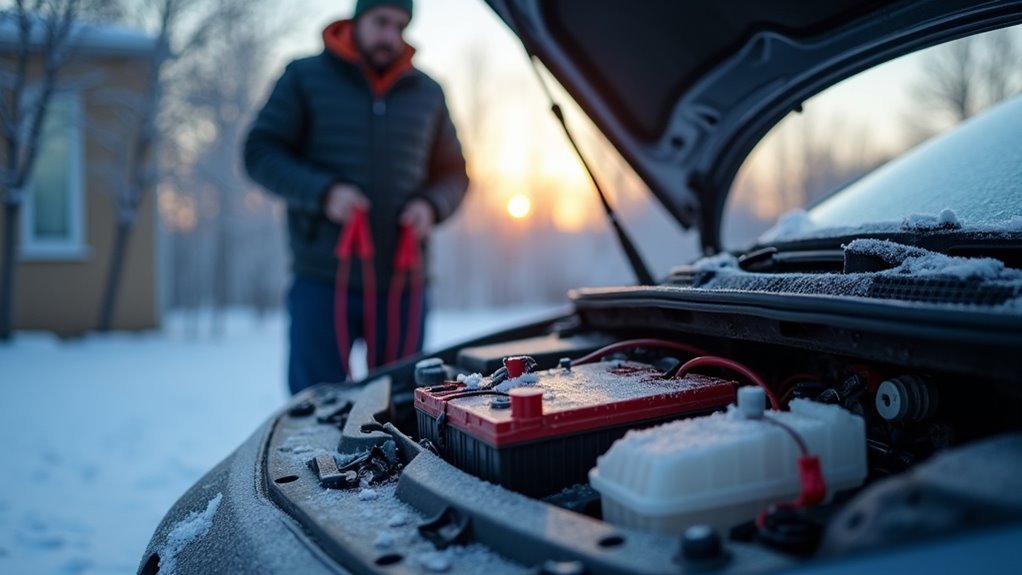
Cold weather reduces a car battery’s chemical reactions, cutting its available power. Lower temperatures increase internal resistance, so cranking the engine takes more effort. Thickened oil and cabin heaters add load, and short trips prevent a full recharge. Dim headlights or slow cranking signal reduced battery performance in winter. A weak or old battery will struggle most and benefits from testing and timely replacement.
How Cold Weather Weakens Car Batteries
As the temperature drops, your car battery has a harder time doing its job. Cold slows the electrochemical kinetics inside the battery, so it makes less power. At the same time, internal resistance rises, and that cuts the current you need for a strong start.
You may notice slower cranking on a chilly morning, even though the battery seemed fine yesterday. That can feel frustrating, but you’re not the only one. Many drivers face the same surprise once winter shows up.
A battery can keep lights on and still struggle with the starter because cold reduces its usable output. Provided the charge is already low, the weakness shows up even faster, and a small problem can become a no-start in a single frosty morning.
Why Cars Need More Power in Winter
In winter, your engine works harder because cold oil gets thick and parts don’t move as easily.
At the same time, you’re asking your battery to send more power to the starter motor, lights, and other systems.
That extra demand can make a weak battery struggle fast on a cold morning.
Higher Engine Resistance
Whenever the temperature drops, your engine doesn’t just “feel” cold, it fights back a little. You notice it most whenever thicker oil and increased viscosity make every moving part drag harder against the next.
That extra friction means your starter must push with more force before the engine turns over. So even assuming your battery is healthy, it has to work harder to get the same result.
In winter, you’re not imagining that slow crank. Cold metal contracts, oil clings more tightly, and the engine resists motion until it warms up. Because of that, your battery faces a tougher job right from the initial turn of the key.
Whenever you understand this, you can feel less frustrated and more prepared on those rough mornings.
Increased Electrical Demand
That extra strain on the engine is only half the story, because winter also asks your battery to do more jobs at once. You need power for cabin comfort, bright lights, and the blower, and each one adds accessory drain. As you turn the key, the battery must still give strong cranking power while also feeding cold-weather gear.
- Heated seats warm you fast.
- Defrosters clear glass and save time.
- Fans and wipers run longer.
- Lights stay on earlier and later.
- Short trips leave less time to recharge.
Signs Your Car Battery Is Struggling
As your battery starts to struggle, you’ll often notice the engine crank slowly before it finally starts.
You might also see your headlights dim at idle, especially whenever the heater, defroster, or radio is on.
These signs can feel small initially, but they usually indicate your battery is losing strength in the cold.
Slow Engine Cranking
- The engine could sound sluggish.
- Starting takes longer than usual.
- You could hear a weak whir.
- The delay can grow on colder mornings.
- A jump start might seem tempting, but checking helps.
If you notice this pattern, treat it like a neighborly warning.
You’re not alone, and a weak battery isn’t a personal failure.
It just needs attention before a no-start morning leaves you stuck.
Dim Headlights At Idle
Should your dash lights also seem softer, or you observe interior dimming when the fan or radio runs, your battery could be losing the support you need. In winter, the engine and accessories ask for more power, but the battery gives less. So, your lights can flicker or fade because the system can’t keep up.
Whenever that happens, you’re not imagining it. Your car is telling you it needs attention, and you deserve a ride that feels steady.
How to Test a Car Battery in Cold Weather
In the cold, your car battery can act tired even although it was fine yesterday, so a quick check can save you from a stubborn no-start morning. Start with a multimeter and examine the open-circuit voltage after the car rests. Then move to voltage load checking, because a battery can look strong yet sag under demand. If possible, compare the reading with its thermal state of charge, since a cold battery might show less usable power.
- Inspect for corrosion initially.
- Read voltage at rest.
- Crank the engine briefly.
- Watch for sharp voltage drops.
- Verify again in colder weather.
When you see weak numbers, you’re not alone; winter exposes concealed wear, and catching it promptly helps your whole ride stay ready.
How to Care for Your Battery This Winter
You’ve checked the battery, and now it’s time to help it through the rough months ahead. Keep it fully charged, because a strong charge fights freezing and helps you start on those bitter mornings.
Park in a garage or sheltered spot when you can, since less cold means less strain. Should your car sit for more than 48 hours, use a battery maintainer so charge doesn’t slip away.
Clean the terminals and use terminal protection to slow corrosion, which can steal power where it’s needed most. Also, watch your driving habits. Longer trips help recharge better than quick runs.
And should you store a spare, treat battery storage with care: keep it cool, dry, and charged so it stays ready for the road.
When to Replace a Weak Car Battery
A weak battery doesn’t always quit all at once, but it does send warning signs before it leaves you stranded. In case you notice slow cranking, dim lights, or repeated jump starts, your replacement timing is probably close. Cold weather only makes those clues louder, so trust what your car is telling you.
- Check it before the next cold snap
- Check warranty coverage before you buy
- Replace it provided it’s over 3 to 5 years old
- Swap it out after a failed load assessment
- Don’t wait for one more no-start
You belong on the side of drivers who stay ahead of trouble. Should the battery keep acting tired, replacing it saves stress, time, and a chilly roadside wait. A fresh battery gives you steadier starts and a little more peace each morning.
How to Prep Your Battery for Freezing Weather
Once freezing weather rolls in, your battery needs a little extra care before the initial cold start. Check the charge, clean the posts, and tighten the clamps so power moves freely. Then add battery insulation if your area gets bitterly cold. That extra wrap helps your battery stay warmer overnight, so it can wake up ready.
| Step | Why it helps | What you do |
|---|---|---|
| Examine | Finds weak cells | Use a shop test |
| Clean | Cuts corrosion loss | Brush terminals gently |
| Protect | Blocks moisture | Add terminal protection |
| Insulate | Holds heat | Fit a battery blanket |
| Recharge | Restores reserve | Drive long enough |
Should your car sit for days, use a maintainer. You’ll give your battery the best shot at a smooth start, and that’s a winter win for the whole crew.
Frequently Asked Questions
Can Cold Weather Permanently Damage a New Battery?
Usually no. Cold weather will not permanently damage your new battery unless it is already weak, poorly charged, or has manufacturing defects. Consider warranty claims as your safety net; check your coverage before winter strikes.
Does Using Remote Start Drain the Battery in Winter?
Yes, remote start can drain your battery in winter, especially if you use it often. Your convenience features, keyless entry, and security implications matter too, since short runs and cold temperatures can leave you with less charge.
How Much Does Battery Age Affect Cold-Weather Performance?
Older batteries suffer more in cold weather. Battery degradation and capacity loss leave you with less reserve, slower starts, and a higher no start risk. You will notice it most on freezing mornings, as strength and confidence drop.
Can a Battery Freeze if the Car Is Parked Outside Overnight?
Yes, it can happen. If your battery is low on charge it might freeze outside overnight; electrolyte expansion and battery crystallization can crack it. Keep your battery fully charged and you will protect your vehicle and those around you.
Will a Jump Start Harm the Battery in Freezing Temperatures?
No, a jump start usually will not harm your battery in freezing temperatures provided you follow safe procedures. You should also get an alternator check afterward so you know the battery is recharging properly and you are not stranded.