Book Appointment Now

What Is Reserve Capacity in a Battery
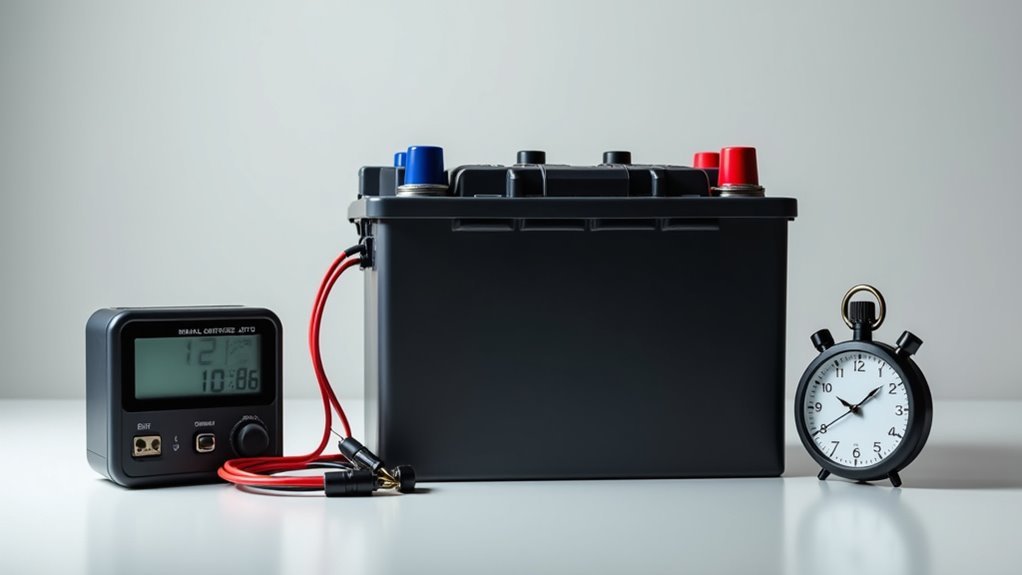
Reserve capacity is the number of minutes a fully charged battery can supply a steady 25-amp load before its voltage falls to 10.5 volts. It shows how long backup power lasts during an outage or when charging stops. This rating gives a practical measure of endurance rather than just amp-hour numbers. Comparing reserve capacity helps spot weak batteries and choose the right replacement. Knowing this spec reduces the risk of unexpected power loss.
What Is Battery Reserve Capacity?
Battery reserve capacity tells you how long a fully charged battery can keep doing its job before the voltage gets too low. You can view it as the battery’s staying power while life keeps asking for more.
Should you be checking battery longevity, RC helps you see how long power can last under a steady load. That matters whenever your car, boat, or RV needs support and you don’t want a surprise silence.
During load appraisal, reserve capacity shows whether the battery can keep going after the easy moments are gone. So, once you compare batteries, you’re not just choosing start-up strength. You’re choosing endurance, comfort, and a little peace of mind, too. That’s the part that helps you feel ready, not stranded, whenever the lights stay on longer.
How Battery Reserve Capacity Is Measured
Under the hood, reserve capacity gets measured with a steady trial that tells you how long a fully charged battery can keep up.
You start with a fully charged battery at 80°F, then follow the standard procedure: apply a 25-amp load and watch the clock.
During the trial, the battery keeps working until its voltage cutoff reaches 10.5 volts, or 1.75 volts per cell.
That moment ends the run and sets the reserve minutes.
Should your battery lasts 150 minutes, it met the trial for 150 minutes under those exact conditions.
This simple method gives you a clear, fair way to compare batteries, so you can feel confident whenever you’re choosing one that matches your needs and keeps your system steady whenever power gets tight.
Reserve Capacity vs. Amp-Hours
Although reserve capacity and amp-hours both describe battery size, they don’t mean the same thing, and that difference can save you a lot of guesswork. RC tells you how long you can run a set load, while amp-hours tell you how much charge you can store. Here’s a quick capacity comparison:
| Rating | What it shows |
|---|---|
| Reserve capacity | Minutes of runtime |
| Amp-hours | Total charge |
For discharge equivalence, RC stays tied to a 25-amp trial, so you can compare batteries according to time under the same strain. Amp-hours could look larger, but they don’t always match real-world runtime in the same way. Whenever you read both numbers together, you get a clearer fit for your needs, and that can make you feel more confident about the battery you choose.
Why Reserve Capacity Matters
When you check reserve capacity, you get a clearer image of how dependable your battery really is during a power loss. It gives you an extra power buffer, so your vehicle can keep running key systems a little longer in case the alternator quits or loads stay on.
That peace of mind matters because a strong starting battery still can’t help you much should it run out too fast.
Vehicle Reliability Impact
Even though your car starts fine today, reserve capacity can still make the difference between a calm drive and a dead battery surprise later. Whenever you’re stuck in traffic with headlights, wipers, and cabin fans running, that extra runtime helps you stay with the flow. It also steadies power sequencing, so your radio, sensors, and dash don’t hiccup whenever voltage dips.
That matters because unexpected failures don’t always look dramatic at initially. Sometimes you just get slow cranks, dim lights, or a warning light that leaves you guessing. With better reserve capacity, you give yourself more breathing room and more confidence. You’re not just buying minutes. You’re buying trust in your ride, especially whenever life gets busy and you need your car to keep showing up for you.
Extra Power Buffer
A higher reserve capacity gives you a real power buffer, and that buffer can feel like a safety net on a long, stressful day.
You’re not just buying time; you’re buying breathing room whenever your battery faces a peak discharge.
That extra margin helps you keep lights on, radios steady, and the engine system calm.
- It gives you a safety margin whenever demand jumps.
- It helps your battery ride through short outages.
- It supports your gear whenever the alternator slips.
- It keeps you from feeling stranded whenever power drops.
What Reduces Battery Reserve Capacity?
Reserve capacity drops for a few common reasons, and most of them are easier to understand than they seem. You might see it fall whenever internal sulfation builds up inside the battery, because crystals block the plates and limit usable power. Heat can speed that damage, while long storage without a full charge makes it worse.
Next, electrolyte stratification can leave the acid uneven, so part of the battery works harder than the rest. Age also matters, since wear slowly weakens the plates and shortens runtime. Should you often run heavy accessories or let the battery stay partly discharged, you’ll feel the drop sooner. A weak charging system can add stress too.
Whenever you care for the battery ahead of time, you help your group keep that extra backup ready.
How to Interpret Reserve Capacity Ratings
Once you look at a battery’s reserve capacity rating, you’re really seeing how long it can keep your system alive before the voltage gets too low. You can trust it best when you use interpretation standards, because they keep the number fair and simple. A rating of 150 means the battery ran 25 amps for 150 minutes in trial conditions. That’s the kind of plain signal you can use with confidence.
- Higher RC means longer runtime.
- Lower RC means less backup time.
- Compare batteries with practical examples, like 150 versus 200 minutes.
- Pick the one that fits your needs and helps you feel prepared.
Reserve Capacity in Car Batteries
Being aware your car battery’s reserve capacity can take some stress out of driving, because it tells you how long the battery can keep things running in case the alternator quits or the charging system slips. You’ll feel more prepared whenever you know this number, since it helps you judge real backup time, not just cold starting strength or peak power.
| RC minutes | What it means |
|---|---|
| 90 | Basic backup for lighter use |
| 150 | Solid support for most cars |
| 180+ | Stronger help for loaded electrical systems |
Whenever you compare batteries, look for higher reserve minutes provided you use lights, audio, or other accessories often. That way, your ride stays dependable, and you won’t feel left out whenever the road gets a little demanding.
Reserve Capacity in RVs and Boats
Once you move from cars to RVs and boats, reserve capacity starts to matter even more because these systems often run lights, pumps, radios, and fridges for long stretches. You want a battery that keeps your trip calm, not one that makes you guess. In marine electrics and RV setups, reserve minutes tell you how long you can keep essentials on prior to voltage drops.
- Check the reserve rating before you buy.
- Match it to your real daily loads.
- Plan for shore power, but don’t depend on it.
- Choose extra reserve whenever you like longer dockside stays.
That way, you and your crew can enjoy the route, the cabin, and the water with fewer power worries.
How Temperature Affects Reserve Capacity
Cold weather can make reserve capacity feel smaller, even while the battery is fully charged, because chemical activity slows down as the temperature drops.
You’ll notice this temperature dependence most whenever your lights, fans, or other loads stay on longer than expected. The battery still works, but it can’t move energy as quickly, so runtime shrinks.
In warmer weather, the same battery usually gives you more minutes before voltage falls.
Cold degradation can also add stress over time, especially provided the battery keeps facing harsh winters. That doesn’t mean your battery has failed; it means the cold is changing how it performs.
How to Improve Battery Reserve Capacity
You can improve battery reserve capacity by keeping up with regular charging habits, since a fully charged battery holds power longer under load.
You can also cut extra electrical draw, which helps the battery stretch its runtime whenever you need it most.
And whenever you keep the battery healthy with clean terminals and basic care, you give it a better chance to deliver steady reserve minutes.
Regular Charging Habits
- Keep a steady charging frequency so the battery doesn’t sit low for long.
- Use a charger that finishes with a gentle voltage taper, not a hard stop.
- After short drives, give it enough time to recover fully.
- Check charge levels before long breaks, so you’re not left guessing.
These simple moves help you build trust in your battery. You’re not just charging it, you’re helping it hold reserve capacity and stay dependable whenever you need every minute.
Reduce Electrical Load
One of the fastest ways to stretch your battery’s reserve capacity is to ask less of it in the initial place. You can do that by turning off lights, unplugging chargers, and delaying power-hungry extras when you don’t need them. This kind of load shedding gives your battery room to breathe, so it can support the essentials longer.
Think of your day like energy budgeting. Should you spend power on only what matters most, you protect the reserve you could need later. In a car, that could mean limiting cabin fans or entertainment gear while parked. In a camper or boat, it could mean running fewer devices at once. Small choices add up fast, and they help your group keep more shared power for the moments that really count.
Maintain Battery Health
Keeping your battery healthy goes a long way toward protecting reserve capacity, even though you’ve already trimmed the load.
You’re not alone here; a few steady habits can help your battery stay ready as life gets busy.
- Keep terminals clean so power moves without extra drag.
- Check battery hydration in flooded batteries, and top off with distilled water whenever needed.
- Watch thermal management, because heat speeds wear and cold cuts usable output.
- Charge fully and often, since partial charging slowly weakens reserve minutes.
If you drive short trips, give the battery a longer charge now and then.
Also, look for signs like slow starts or dim lights.
Once you catch small issues early, you help the whole system feel more dependable, and that matters to every driver who counts on a smooth start.
Signs Your Battery Reserve Capacity Is Dropping
You’ll usually notice reserve capacity dropping before your battery quits completely, and that initial warning can save you a lot of stress. You could see dimming headlights at idle, slow accessories like windows or seats, and a radio that fades sooner than usual.
These small changes often show up whenever your battery can’t hold power as long as it used to. You may also notice the engine cranking fine one day, then feeling weak after short trips or whenever you use several features at once.
Should you belong to a busy driving routine, trust those clues. They’re your battery’s quiet way of asking for help, and catching them early keeps you from getting stranded at the worst moment.
Choosing the Right Backup Battery
As you pick a backup battery, start with the size of the load you need to keep running, because that tells you how much reserve capacity to look for.
Next match the battery’s runtime to your backup needs, so you’re not left guessing once the power cuts out.
A little planning here can save you a lot of stress later, and your battery won’t have to work overtime like it missed its coffee.
Battery Sizing Basics
Picking the right backup battery starts with one simple question: how long do you need it to keep your devices running should the main power cuts out? That answer guides your battery selection, because a bigger reserve capacity usually gives you more calm when the lights go off.
To size it well, look at these basics:
- Check the load you’ll support.
- Match reserve minutes to that load.
- Make sure thermal management keeps the battery cool.
- Compare batteries with the same evaluation standard.
Then you can choose with confidence, not guesswork. A battery that fits your space, power draw, and comfort level helps you feel prepared, not stressed. Whenever you know the numbers, you join the people who keep essentials steady without overbuying or underpowering their setup.
Backup Runtime Needs
To choose the right backup battery, start with the real question behind the purchase: how long do you need your power to last before things get uncomfortable or unsafe? For smart runtime estimation, match reserve minutes to your load and your outage planning. That way, you’re not guessing whenever the lights blink out.
| Need | RC Hint | Feel |
|---|---|---|
| Router | 90+ | Connected |
| Lights | 120+ | Calm |
| Fridge | 150+ | Secure |
| Medical gear | 180+ | Protected |
Once you read battery labels, you’re joining a group that plans ahead instead of hoping for luck. Suppose you require only a short bridge, a lower RC can work. But in the event your home has more devices, choose higher reserve capacity so you’ve got breathing room whenever the power cuts.
Tips for Longer Battery Life
A little care goes a long way whenever you want your battery to last longer, and the best habits are usually simple ones you can keep up without stress.
Once you build battery longevity, you also protect reserve capacity, so your gear stays ready whenever you need it most.
- Follow charging etiquette: unplug after a full charge and avoid constant overcharging.
- Keep terminals clean and tight so power flows smoothly.
- Use storage practices that fit your season, and store it cool, dry, and partly charged.
- Practice sulfation prevention by recharging before it sits empty for too long.
You’re not babying the battery; you’re helping it stay in the same dependable crew as the rest of your setup.
A steady routine lowers strain, and that keeps your battery stronger for longer.
Frequently Asked Questions
Can Reserve Capacity Predict How Long Electronics Run After Alternator Failure?
Yes, reserve capacity can estimate how long your electronics run after alternator failure. RC 150 means about 150 minutes at 25 amps. You’ll get better appliance load prediction, though real world loads and temperature can change runtime.
Does a Higher Reserve Capacity Mean Better Battery Starting Performance?
No, you shouldn’t expect a higher reserve capacity to mean better starting performance. It mainly supports battery longevity and runtime, while cold cranking power and charge acceptance determine how confidently you’ll start your vehicle.
Why Is Reserve Capacity Tested at 25 Amps and 10.5 Volts?
You evaluate it at 25 amps and 10.5 volts because that setup mimics real strain, balancing workload and cutoff. Unlike harsh cranking, this standard lets you compare batteries fairly, despite temperature effects and lifecycle testing.
How Does Reserve Capacity Differ From Cold Cranking Amps?
Reserve capacity tells you how long your battery can run a load, so it reflects battery longevity. Cold cranking amps show how well you start an engine in cold, thermal sensitivity conditions.
What Reserve Capacity Is Best for Marine or RV Use?
For marine or RV use, choose a battery with 180 minutes or more of reserve capacity, especially a deep cycle battery for long cruise power. Consider it your trusty shipmate whenever outlets vanish, mate.