Book Appointment Now

Signs of a Bad Car Battery You Should Never Ignore
A failing car battery often shows clear warning signs long before a complete breakdown. Slow engine cranking, dim headlights, and rapid clicking during start attempts signal reduced battery capacity. Swollen, corroded, or leaking battery cases indicate internal damage and require immediate attention. Increased problems on cold mornings point to a weakened battery struggling with lower temperatures. Knowing these signs helps prevent unexpected roadside failures and costly tow bills.
Signs of a Bad Car Battery
Should your car have been acting stubborn lately, a weak battery could be the reason. You might notice slow starts, a click when you turn the key, dim headlights, or dashboard lights that look tired.
After sitting overnight, your car could need extra coaxing, and that can leave you feeling stuck and annoyed. Should your windows move slowly or the radio acts strange, your battery might be sending a clear message.
Check the battery case for swelling, cracks, or blue-green corrosion on the terminals. A bad smell near the battery also needs attention.
Because these signs can overlap with charging trouble, simple checking helps you know what’s really going on. With preventive maintenance and safe battery recycling, you can protect your ride and stay ready for the road.
Slow Engine Starts and Hard Cranking
Usually, a weak battery shows up initially as slow engine starts and hard cranking, and that can be a frustrating way to begin your day. You turn the key, and the engine coughs, drags, or gives you that tired rurr, rurr, rurr sound. If this occurs, you’re not alone, and it doesn’t mean you failed your car.
- The starter turns slowly.
- The engine needs extra seconds.
- You hear clicking before it fires.
- Hard starts happen more after sitting.
- Repeated cranks can add starter wear and stress ignition contacts.
Dim Headlights and Weak Interior Lights
If your headlights look dim at idle, your battery could be struggling to keep up with the electrical load.
You might also notice weak cabin lights that glow lower than usual, especially while the engine isn’t running fast.
During startup, the lights can flicker or drop for a moment, which often points to low battery power.
Dimming At Idle
- Watch for lights that dip as the engine idles.
- Notice whether brightness changes with the fan or radio on.
- Check for slow starts after short trips.
- Keep an eye on the battery warning light.
- Have the charging system evaluated soon.
You’re not alone in this. Many drivers miss the initial signs, but you can catch them fast and keep your car feeling reliable.
Weak Cabin Lights
As soon as your cabin lights start looking weak, it often means the same problem is showing up in your headlights too. You could notice the glow fade when you open the door, or the dash could look softer than usual. That weak light usually points to low battery voltage, so your car’s electrical system can’t feed every bulb with enough power.
Should you’ve added LED upgrades, you’d spot the change even faster because they should look crisp, not tired. Ambient dimming can also make the issue seem normal at the outset, but a healthy system still keeps the cabin bright and steady. Whenever both interior and exterior lights feel dull, your battery could be asking for help, and you’re not alone in missing that initial small clue.
Flicker During Start
Often, the initial thing you’ll notice is a quick flicker as you turn the key, and that tiny flash can feel a little unsettling. Whenever you see this starter flicker, your battery might be dropping voltage faster than it should. Your headlights can dim, and your cabin lights could look tired right before the engine catches. That shaky moment often means the ignition relay and starter are asking for more power than the battery can give.
- Headlights fade at startup
- Interior lights blink or soften
- The engine cranks slowly
- Dash lights dip for a second
- The car might need a jump
If this keeps happening, you’re not alone. Many drivers see it initially, then notice harder starts later. A weak battery can make your whole ride feel unreliable, so pay attention sooner.
Battery Warning Light Signs
The battery warning light is one of those dashboard signals you should never brush off, because it usually means your car is having trouble with the battery or the charging system. When you see it, pay attention to other dashboard icons too, since they can point you toward the same issue.
Your car might still start, but the problem can grow fast. A dim glow, a steady light, or a light that comes on and off all deserve a quick check.
Look for charging diagnostics at a shop, because a weak battery and a failing alternator can feel the same at the outset. Should you catch it sooner, you save yourself stress, surprise stalls, and that awkward moment when your car decides to quit at the worst time.
Radio, Power Window, and Accessory Problems
Should that battery warning light has you worried, take a quick look at your radio, power windows, and other accessories too, because they often tell the same story in a more everyday way.
Once your battery gets weak, you might notice infotainment glitches, then see the screen freeze, the sound cut out, or the clock blink back to zero.
- Your radio might restart on its own.
- Power windows can move slowly.
- Seat controls might feel lazy.
- Lights might flicker at idle.
- Accessory resets might happen after every start.
These issues can feel annoying, but they’re useful clues.
They often show that your car isn’t getting steady power, so you’re not just being picky.
You’re catching a real problem ahead of time, right as your ride starts acting out.
Corrosion, Swelling, and Leaks
Corrosion can look small at initially, but it can cause big trouble fast. When you see terminal corrosion, clean it soon, because buildup can block the connection you need for a reliable start.
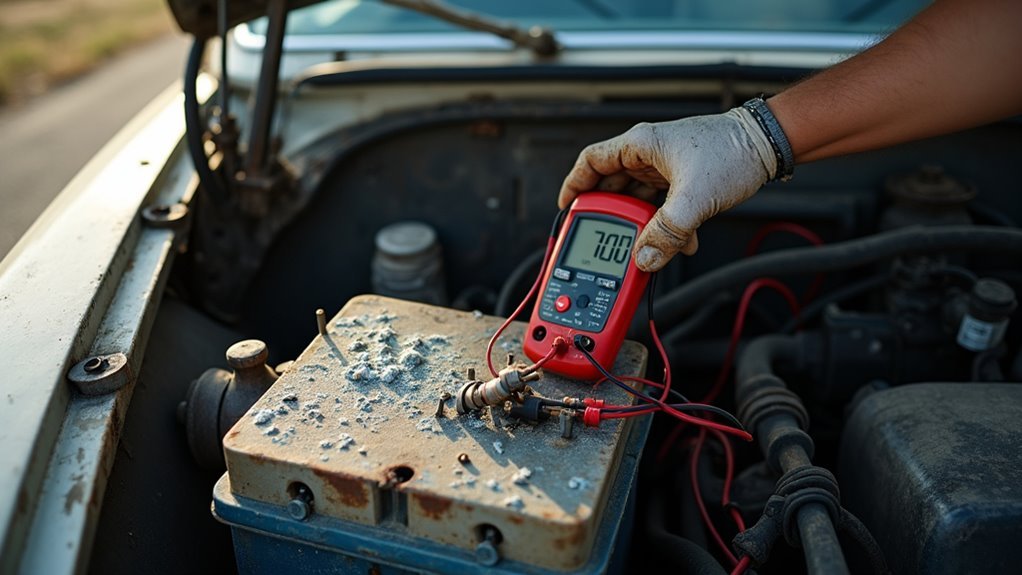
You might notice blue-green crust, white powder, or a fuzzy ring around the posts. Also, check the battery case for case deformation, since swelling means the battery’s inner parts are under stress.
Should the case looks bulged or cracked, don’t ignore it. A leaking battery can leave wet spots or a sharp sulfur smell, and that’s your cue to stay cautious.
These signs often show up together, so you’re not overreacting by paying attention. You deserve a car that starts with you, not one that makes you guess.
Why Car Batteries Die Faster in Cold Weather
Cold weather can cause a weak battery show its age fast, and that’s why a car that seemed fine yesterday could struggle after a chilly night outside.
Whenever the temperature drops, electrolyte viscosity rises, so the battery moves power more slowly.
At the same time, thermal contraction can tighten internal parts and cut performance.
You might notice weak cold cranking, which makes starting feel harder than it should.
That’s why winter can leave you feeling stuck, even provided you did everything right.
- Thickened fluid slows chemical action
- Cold cranking gets weaker
- Thermal contraction reduces output
- Battery insulation helps trap warmth
- Short trips never let it recover
You’re not alone provided this happens.
Many drivers face it, and a little care can help your car stay ready.
How to Test a Bad Car Battery at Home
Grab a simple set of tools, and you can check a battery at home without guessing or stressing. Use a multimeter technique initially. With the car off, a healthy battery should read about 12.6 volts. Then start the engine and watch for about 14 volts, which shows the charging system is helping. | Examine | What You Do | What It Means |
| — | — | — |
|---|---|---|
| Voltage | Read battery terminals | 12.4 volts or less could be weak |
| Load | Turn on headlights | Big dimming can signal trouble |
| Start | Listen while cranking | Slow cranks can point to low power |
Next, attempt load testing by switching on lights, fan, and radio. Should voltage drop hard, your battery’s struggling. You’re not alone here, and a quick check can save you from surprise no-start moments.
When to Replace the Battery
You should replace your battery while warning signs keep coming back, like slow cranking, dim lights, or frequent jump-starts.
Should your battery be old enough to be past its usual service life, it’s smart to plan ahead before it leaves you stuck.
And provided checking shows weak voltage or repeated no-starts, don’t wait for one more bad morning to make the call.
Warning Signs
Often, your car battery gives clear warning signs before it quits, and it’s worth paying attention promptly. You don’t have to guess; your car usually tells you when something’s off. Watch for these clues before you get stranded:
- Slow engine crank or repeated no-starts
- Clicking sound when you turn the key
- Dim headlights or weak dash lights
- A battery warning light on the dash
- Swollen case, leaks, or heavy terminal corrosion
If your windows crawl, the radio glitches, or you notice an odd smell, your battery might be losing strength from age, an electrical draw, or poor battery maintenance. That’s your cue to check it soon. Whenever these signs stack up, you’re not alone, and a quick inspection can help you stay confident on the road.
Battery Age Limits
Because battery problems often build up slowly, age matters almost as much as the warning signs themselves. You should watch the calendar as closely as you watch your dashboard.
Most car batteries last about three to five years, and heat, short trips, and heavy accessory use can shorten that span. In case yours is near that range, check it before it leaves you stranded with the rest of the car family.
Compare the date code with your owner’s manual, and look at warranty coverage so you know what help you still have.
Whenever the battery gets older, stay alert for weaker starts and dimmer lights. Should replacement be due, ask about recycling options, since old batteries need safe handling and smart disposal.
Replacement Timing
Once the warning signs start to stack up, it’s smart to replace the battery before it quits at the worst possible time.
In case you notice slow cranking, dim lights, or repeated jump-starts, don’t keep hoping for a miracle. You’re not being dramatic; you’re being prepared.
- Replace it after frequent no-starts.
- Swap it in the event battery warning lights stay on.
- Act fast with swelling, leaks, or corrosion.
- Change it before cold snaps or seasonal storage.
- Add battery maintenance checks to your routine.
That timing helps you stay ready, not stranded. Should your battery be older and checking weak, schedule a replacement soon.
You’ll protect your ride, your time, and your peace of mind, and you’ll keep your car feeling like part of the crew.
Frequently Asked Questions
Can a Bad Battery Damage My Alternator?
Yes, it can. A weak battery forces your alternator to work harder, which causes alternator strain and charging inefficiency. If you keep driving like that, you will shorten the life of both parts and risk getting stranded.
How Long Should a Car Battery Normally Last?
You’ll usually get three to five years from your car battery, though battery lifespan varies wildly. Check warranty coverage, climate, and driving habits. If yours dies prematurely, you’re definitely not alone.
Is It Safe to Jump-Start a Swollen Battery?
No, you should not jump start a swollen battery; doing so could cause leaks, heat, or even rupture. Avoid contact, move away, and have a professional replace it so you and your vehicle remain safe.
What Smells Mean a Battery Is Leaking?
You’ll notice a rotten egg or sulfuric odor, sometimes with an acidic fume, whenever your battery is leaking. If you smell that near the battery, stop driving and get it checked immediately.
Can Short Trips Shorten Battery Life?
Yes, short trips can shorten your battery life because you do not give it enough time to recharge after cold starts and parasitic drain. You will feel less stranded if you drive longer and regularly.