
Book Appointment Now

6 Best Resmed Battery Options for 2026
Yes — here are six FAA‑friendly ResMed battery options that keep AirSense and AirCurve machines running for travel, backup, or multi‑night use. Choices include TalentCell’s 24V PB240B1, ResMed DC barrel cables, a PD USB‑C 20V converter, a BP100 X2 dual 100Wh set, the Pilot Flex 98Wh pack, and the EASYLONGER ES270 99.9Wh bank. Each option balances voltage, current, pass‑through charging, and airline power limits.
Read on for runtimes, connector tips, and real‑world specs to pick the right pack for your setup.
| Talentcell 24V Li-ion Battery Pack PB240B1 |
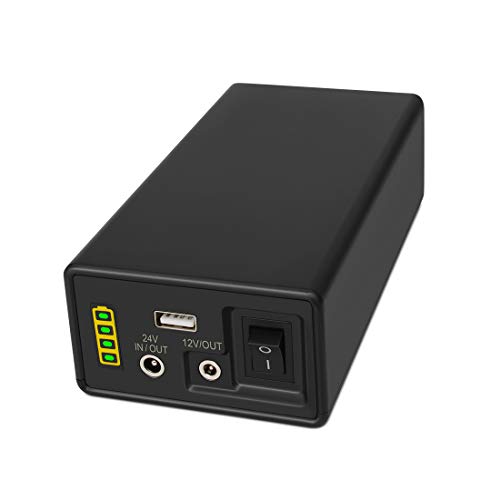
| High-Capacity Power | Capacity / Energy: 156 Wh (42,980 mAh at 3.63 V cells) | Output Voltage Support: 24V, 12V, 5V USB | CPAP / ResMed Compatibility: Compatible with various 24V devices; can power ResMed models that accept 24V with proper cable | VIEW LATEST PRICE | Read Our Analysis |
| DC Power Cable for ResMed AirSense/AirCurve 10 |
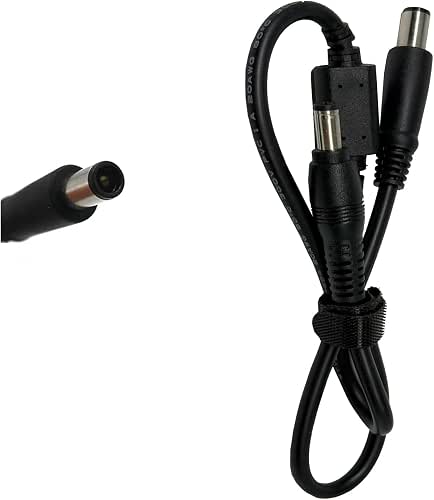
| Essential Accessory | Capacity / Energy: (Cable only) N/A — relies on external 24V source | Output Voltage Support: 24V DC cable (for devices needing 24V) | CPAP / ResMed Compatibility: Specifically for ResMed AirSense/AirCurve 10 (S10) 24V input | VIEW LATEST PRICE | Read Our Analysis |
| PD USB-C 20V Charger Cable for ResMed CPAP |

| USB-C PD Adapter | Capacity / Energy: (Cable only) N/A — PD converter, no internal battery | Output Voltage Support: Converts USB‑C PD (20V) to 24V DC output | CPAP / ResMed Compatibility: Specifically for ResMed AirSense 11 / AirMini (PD‑to‑24V for ResMed) | VIEW LATEST PRICE | Read Our Analysis |
| BP100 X2 High-Capacity Batteries for ResMed AirSense 11 |

| Extended Runtime Pro | Capacity / Energy: 100 Wh per battery (two included = 200 Wh total) | Output Voltage Support: Supports 15–24V DC (including 24V) | CPAP / ResMed Compatibility: Specifically compatible with ResMed AirSense 11 | VIEW LATEST PRICE | Read Our Analysis |
| Pilot Flex 98Wh CPAP Backup Battery (12V/24V) |
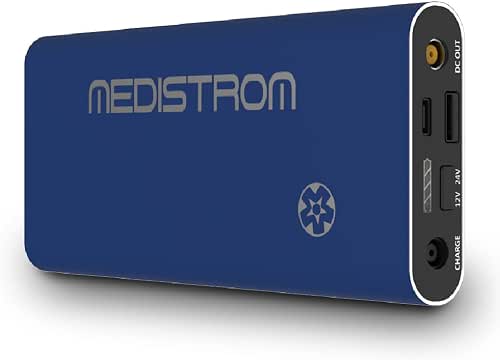
| Travel-Friendly Power | Capacity / Energy: 98 Wh | Output Voltage Support: Dual 12V / 24V outputs | CPAP / ResMed Compatibility: Includes cables for AirSense 11 and AirMini (direct) | VIEW LATEST PRICE | Read Our Analysis |
| EASYLONGER ES270 99.9Wh CPAP Battery Power Bank |

| Feature-Rich Backup | Capacity / Energy: 99.9 Wh | Output Voltage Support: Provides CPAP voltages via included CPAP cables (supports devices including 24V) | CPAP / ResMed Compatibility: Lists compatibility including AirMini, AirSense 11, AirSense 10, AirCurve models, DreamStation, etc. | VIEW LATEST PRICE | Read Our Analysis |
More Details on Our Top Picks
Talentcell 24V Li-ion Battery Pack PB240B1
In case you need a high-capacity, multi-voltage portable pack that can run devices from CPAP accessories to cameras, the Talentcell PB240B1 is a strong choice — it delivers 42,980 mAh (156 Wh) with 24V, 12V, and 5V outputs so you can power a range of gear without juggling adapters. You get DC5521 24V (29.4–21V, 5A), DC4017 12V (2.5A), and 5V USB (2.4A). Charge with the included 29.4V/0.95A charger after switching the pack ON. Verify device voltage, use correct cables (some adapters sold separately), and contact seller for charger issues.
- Capacity / Energy:156 Wh (42,980 mAh at 3.63 V cells)
- Output Voltage Support:24V, 12V, 5V USB
- CPAP / ResMed Compatibility:Compatible with various 24V devices; can power ResMed models that accept 24V with proper cable
- Portability / Travel Friendly:Portable battery pack with built‑in outputs; travel use implied
- USB Power / USB Port:5V USB output (2.4A)
- Includes Cables / Accessories:Includes 29.4V/0.95A charger and cable; outputs use DC5521/DC4017 connectors (additional cables sold separately)
- Additional Feature:Multiple DC outputs
- Additional Feature:Included 29.4V charger
- Additional Feature:Power switch spark warning
DC Power Cable for ResMed AirSense/AirCurve 10
Provided you need a simple, travel-ready way to run your ResMed AirSense or AirCurve 10 from a battery or power station, this DC power cable is a smart choice because it converts external 24V DC sources to the exact input your device requires. You’ll get a 1-meter, lightweight cable with a 5.5×2.1 mm barrel connector (product name could indicate a 2.5 mm option) specifically for AirSense 10, S10, and AirCurve 10 CPAPs. It links batteries, power stations, or power banks to your machine for reliable bedside or travel use, offering convenient reach and easy replacement without bulky adapters.
- Capacity / Energy:(Cable only) N/A — relies on external 24V source
- Output Voltage Support:24V DC cable (for devices needing 24V)
- CPAP / ResMed Compatibility:Specifically for ResMed AirSense/AirCurve 10 (S10) 24V input
- Portability / Travel Friendly:1 m lightweight travel cable (designed for portable setups)
- USB Power / USB Port:No USB port (cable only)
- Includes Cables / Accessories:Includes 1 m DC cable (5.5×2.1 mm barrel)
- Additional Feature:5.5×2.1 mm barrel
- Additional Feature:1 m travel length
- Additional Feature:Lightweight portable cable
PD USB-C 20V Charger Cable for ResMed CPAP
Choose this PD USB-C 20V charger cable provided that you want to run your ResMed AirSense 11 or AirMini from modern USB-C PD power sources or 24V CPAP batteries—it’s a compact converter that translates 20V PD input into the 24V output those machines require. You’ll connect a 20V/3.25A (60W) USB-C PD source and the cable provides 24V at device-appropriate currents: 0.833A for AirMini and up to 2.71A for AirSense 11. It’s compatible with many Anker, Jackery, and BLUETTI models but excludes specific Anker units (including some 746 variants). Part refs include 65W 39205 E1399 and ResMed 390010.
- Capacity / Energy:(Cable only) N/A — PD converter, no internal battery
- Output Voltage Support:Converts USB‑C PD (20V) to 24V DC output
- CPAP / ResMed Compatibility:Specifically for ResMed AirSense 11 / AirMini (PD‑to‑24V for ResMed)
- Portability / Travel Friendly:Small PD USB‑C cable to enable USB‑C power bank use (portable)
- USB Power / USB Port:No battery USB port (cable only), relies on USB‑C PD source
- Includes Cables / Accessories:PD USB‑C to 24V converter cable (no battery) — cable product
- Additional Feature:USB-C PD compatible
- Additional Feature:Converts 20V→24V
- Additional Feature:Lists compatible powerbanks
BP100 X2 High-Capacity Batteries for ResMed AirSense 11
Should you need reliable overnight power for a ResMed AirSense 11, the BP100 X2 bundle gives you two high-capacity 100 Wh batteries (200 Wh total) that you can use singly or together to extend run-time and power small USB devices. Each compact 180 x 110 x 22.5 mm battery weighs 621 g and includes a ResMed DC cable, Y25 split cable, and AC charger. They support DC outputs from 15V–24V, a 5V USB port, and can be used while charging. Run-time varies—roughly 3–18 hours (1–3 nights reported)—depending on pressure, humidifier use, and environment. Each unit lists 96 Wh for FAA carry-on compliance.
- Capacity / Energy:100 Wh per battery (two included = 200 Wh total)
- Output Voltage Support:Supports 15–24V DC (including 24V)
- CPAP / ResMed Compatibility:Specifically compatible with ResMed AirSense 11
- Portability / Travel Friendly:Compact battery (180×110×22.5 mm), designed for travel; usable in flight (carry‑on)
- USB Power / USB Port:5V USB port included
- Includes Cables / Accessories:Includes one special ResMed DC cable, one Y25 split cable, one AC charger
- Additional Feature:Dual-battery pairing
- Additional Feature:Usable while charging
- Additional Feature:FAA-friendly 96Wh unit
Pilot Flex 98Wh CPAP Backup Battery (12V/24V)
Provided that you need a lightweight, airline-friendly backup that runs both 12V and 24V CPAPs, the Pilot Flex 98Wh is built for travelers and off-grid sleepers who want reliable, long-lasting power without extra adapters. You’ll get a compact 1.2 lb aluminum pack (17 in³) using LG industrial cells, FAA-compliant 98Wh capacity, and 2–3 hour recharge. It includes two DC cables that directly fit AirSense 11 and AirMini; other machine cables are sold separately. Expect up to 16 hours runtime depending on pressure and model, and you can link multiple units to extend therapy time.
- Capacity / Energy:98 Wh
- Output Voltage Support:Dual 12V / 24V outputs
- CPAP / ResMed Compatibility:Includes cables for AirSense 11 and AirMini (direct)
- Portability / Travel Friendly:Compact, 1.2 lb, FAA‑compliant under 100Wh — travel/carry‑on friendly
- USB Power / USB Port:Not explicitly listed as having USB port (focus on DC outputs)
- Includes Cables / Accessories:Includes 2 DC output cables for AirSense 11 and AirMini (additional cables sold separately)
- Additional Feature:Dual direct CPAP cables
- Additional Feature:Aluminum rugged case
- Additional Feature:Rapid 2–3 hr recharge
EASYLONGER ES270 99.9Wh CPAP Battery Power Bank
Should you need a compact, airline-approved CPAP backup that’ll keep a low-power ResMed or travel PAP running through a power outage, the EASYLONGER ES270 delivers up to 8 hours of runtime with humidification and heated tubing off. You’ll get 99.9Wh capacity in a 5.1×2.9×1.9-inch pack that’s TSA/FAA friendly. It includes four CPAP charging cables (separate cable could be required for some devices), PD 100W USB-C fast charge, wireless phone pad, 65W adapter, and USB-C cable. Advanced BMS protects cells from faults. It supports pass-through power, suits low-power ResMed models, and is FSA/HSA eligible.
- Capacity / Energy:99.9 Wh
- Output Voltage Support:Provides CPAP voltages via included CPAP cables (supports devices including 24V)
- CPAP / ResMed Compatibility:Lists compatibility including AirMini, AirSense 11, AirSense 10, AirCurve models, DreamStation, etc.
- Portability / Travel Friendly:Airline‑approved 99.9Wh; compact for travel
- USB Power / USB Port:PD USB‑C port and wireless charging pad (USB‑C PD 100W and wireless)
- Includes Cables / Accessories:Includes 4 CPAP charging cables, 65W USB‑C adapter, USB‑C to C cable, user guide
- Additional Feature:100W PD fast-charge
- Additional Feature:Built-in wireless pad
- Additional Feature:Multiple CPAP cables included
Factors to Consider When Choosing Resmed Battery
Upon choosing a ResMed battery, you’ll want to check capacity in watt-hours and whether the output voltage matches your device. Consider how long the battery will actually run under your typical CPAP load as well as the unit’s size and weight for travel. Also make sure the charging options fit your routine, like AC, car, or solar input.
Battery Capacity (Wh)
Longevity matters: battery capacity in watt-hours (Wh) directly sets how long a ResMed CPAP will run. You should calculate required Wh by multiplying your CPAP’s average power draw (watts) by hours of use, then add a 20–30% safety margin. Should you use humidification, heated tubing, or higher pressure settings, expect markedly higher power draw and plan accordingly. Also factor conversion losses when the battery feeds converters or USB-C—assume 10–20% less usable Wh than the rated capacity. For travel, keep in mind airline limits often cap lithium batteries under 100 Wh per carry-on; decide whether one large pack or several compliant packs better suits your trip. Use these figures to pick a battery that reliably meets your nightly needs.
Output Voltage Compatibility
Because your ResMed needs a specific input to run reliably, confirm the battery’s DC output matches the device’s required voltage (for example, don’t try to power a 24V unit from a 12V pack). You should also verify the battery provides a stable, regulated voltage rather than an unregulated nominal value that can drop under load. Check the battery’s maximum current rating at the required voltage so it meets or exceeds your CPAP’s power draw to avoid voltage sag or shutdown. Should your machine accept multiple voltages, use a battery with selectable outputs or the correct adapter cable that preserves the intended voltage. For USB-C PD solutions, confirm the PD profile and the converter’s rated 24V output current for safe compatibility.
Runtime Under Load
As you plan for off‑grid or travel use, estimate runtime through dividing the battery’s watt‑hours through your ResMed’s average wattage and then cut that number through 10–20% to account for converter losses, BMS reserve, and real‑world inefficiencies. Use Wh ÷ W for a baseline (a 100 Wh battery at 20 W ≈ 5 hours) but base calculations on worst‑case or measured draw since higher pressure and leak compensation raise consumption. Include all accessories: humidifiers, heated tubing, and heated masks can add tens of watts and substantially reduce runtime versus pressure‑only use. Also factor in environment and battery age—cold temperatures and aging cells lower usable capacity. Plan conservatively and test actual run times before relying on a battery for travel or emergency use.
Portability And Size
When you’re choosing a ResMed battery for travel or daily portability, focus on physical size, weight, and how it fits your CPAP case and bedside setup. Pick a battery whose dimensions and mass match your bag and how you move—bulkier packs are harder to pack and lift. Favor FAA-compliant capacities (under 100 Wh) when you fly, so you avoid airline restrictions. Check form factor and connector placement to prevent cable strain and make bedside placement simple. Balance capacity versus portability by choosing the smallest, lightest unit that still delivers the runtime you need based on your device’s power draw. Finally, verify whether the battery supports pass-through power so you won’t need extra chargers during use.
Charging Options Available
Now that you’ve weighed size and portability, look at how you’ll recharge the pack—charging options determine how quickly and reliably your ResMed battery gets back to full and what power sources you can use on the road. Confirm the battery supports your CPAP’s DC voltage (commonly 12V or 24V) and can deliver enough current for continuous operation. Check for USB‑C Power Delivery or dedicated DC outputs and the PD wattage provided you plan to use PD chargers. Verify input specs and the included charger rating so you know recharge time and whether pass‑through charging works. Prefer packs with built‑in charging controllers and BMS protection for consistent charge cycles. Finally, choose batteries that accept multiple charge sources—AC, USB‑C PD, and DC—for travel flexibility.
Safety And Certifications
Because a ResMed battery will sit next to a medical device and travel with you, prioritize safety features and certifications that reduce fire, electrical, and transport risks. You should pick batteries with a built-in BMS offering overcharge, overdischarge, overcurrent, short-circuit, and thermal protection to prevent fires or device damage. Check for UL, CE, RoHS, and UN38.3 markings to confirm independent testing and air-transport compliance. Verify clear labeling of nominal voltage, watt‑hours, and cell chemistry so responders and airlines can identify hazards. Make sure capacity falls within airline limits (typically under 100 Wh per cell) and review carrier rules before flying. Follow manufacturer instructions on charging, storage temperatures, and recommended state-of-charge for safe long-term use.
Device Connector Compatibility
At the moment of choosing a ResMed battery, make certain the connector and output specifications exactly match your CPAP so you don’t risk a poor fit, voltage mismatch, or overheating; confirm the barrel size, required DC voltage, and the machine’s maximum current draw, and prefer batteries that include CPAP-specific cables or secure, keyed adapters rather than generic USB or flimsy leads. You should verify the CPAP’s DC barrel size (commonly 5.5×2.1 mm or 5.5×2.5 mm) and use a cable that fits precisely. Confirm the battery delivers the exact DC voltage (or supplies a compatible converter). Check the CPAP’s maximum amperage and make certain cables and connectors are rated to handle it without voltage drop or overheating. In case using USB-C PD/converters, verify negotiated PD profile and wattage match your device.
