
Book Appointment Now

8 Best Battery Trickle Chargers for 2026
Should you want a dependable way to keep vehicle batteries healthy in 2026, you’ll want a trickle charger that matches your gear and habits. I’ll walk you through compact solar options, smart maintainers with desulfation and temp compensation, faster reconditioners, and even portable jump‑starter hybrids so you can pick the right fit for cars, bikes, and seasonal storage — starting with the best lightweight solar pick.
POWOXI 7.5W 12V Solar Battery Trickle Charger
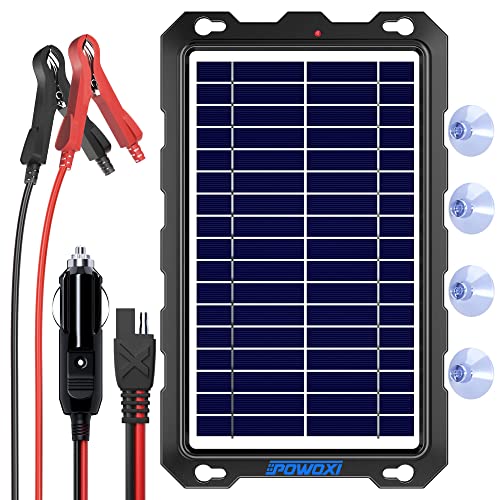
Should you keep vehicles or equipment with 12V batteries idle for long stretches, this POWOXI 7.5W solar trickle charger is a strong pick because it delivers steady, maintenance-free charging with built-in protection against overcharge and reverse discharge. I like its compact 14.76 x 1.89 x 9.06-inch panel and 2.16-pound weight for easy placement on cars, boats, ATVs, or tractors. The 7.5W panel uses silicon cells at about 25–30% efficiency and an upgraded intelligent controller with LED status lights. It’s waterproof, tempered glass with ABS+PC frame, includes clips or a cigarette-plug hookup, and comes with 12-month support.
Best For: Vehicle and equipment owners who need a lightweight, maintenance-free 12V trickle charger to keep cars, boats, ATVs, RVs, or tractors topped up during long storage periods.
Pros:
- Compact, portable design (14.76 x 1.89 x 9.06 in, 2.16 lb) with cigarette-plug or alligator-clip options for easy installation.
- Built-in intelligent controller with LED status lights and protections against overcharge, overvoltage, short circuit, and reverse discharge.
- Durable, weather-resistant construction: tempered low-iron glass and ABS+PC frame requiring minimal maintenance.
Cons:
- Low power output (7.5W) means slow charging—may struggle to maintain batteries under heavy parasitic draw or in low-sun conditions.
- Conversion efficiency of 25–30% is modest compared with higher-end panels, limiting energy harvested.
- Not a full charging solution for deeply discharged batteries; primarily for trickle/maintenance charging.
Battery Tender Junior 12V 800mA Charger/Maintainer
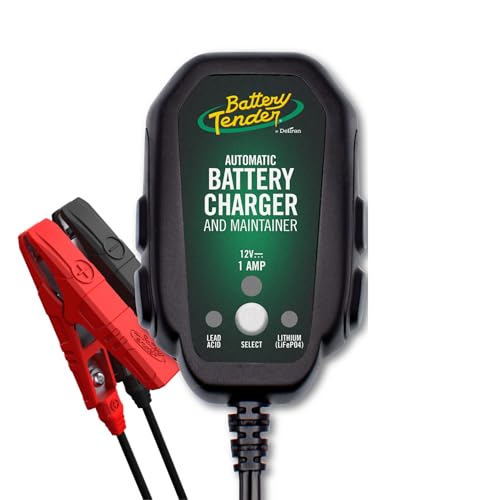
I recommend the Battery Tender Junior 12V 800mA whenever you want a compact, user-friendly charger that’s built for powersports owners—motorcycle, ATV, UTV, PWC, or scooter riders—who need reliable maintenance without babysitting the battery. I like its 12V, 800mA output: strong enough for maintenance yet gentle for small batteries. It supports AGM, flooded, gel and LiFePO4 with a push-button mode selection. An ISM microcontroller manages charging stages, and safety features include spark-proof connection, reverse-polarity detection, and lock-in before power delivery. It’s lightweight, ETL/FCC certified, low-maintenance, and backed by a five-year warranty.
Best For: Powersports owners (motorcycle, ATV, UTV, PWC, scooter) who need a compact, easy-to-use 12V maintainer for small batteries including AGM, flooded, gel, and LiFePO4.
Pros:
- Compact, lightweight design with 12V/800mA output ideal for maintaining small batteries without overcharging.
- Selectable lead-acid or LiFePO4 modes and ISM microcontroller for smart, multi-stage charging.
- Strong safety features (spark-proof connection, reverse-polarity detection, locked-in connection) and ETL/FCC certifications plus a 5-year warranty.
Cons:
- 800mA charge rate can be slow for larger batteries or for rapid charging needs.
- No wireless app/monitoring — limited to on-unit indicators and manual mode selection.
- Not suitable for non-supported battery chemistries beyond the listed AGM, flooded, gel, and LiFePO4 types.
LOKITHOR JC400 9-in-1 Portable Car Jump Starter
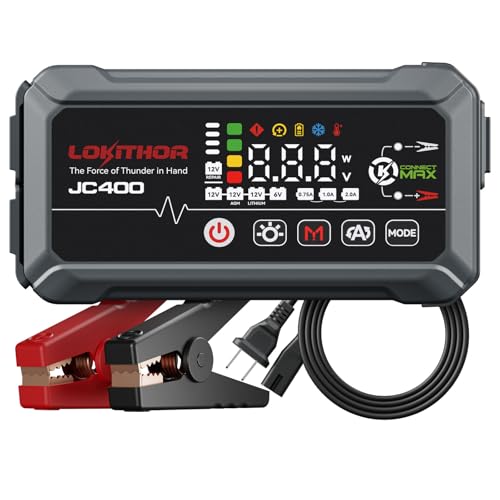
Should you’re after a rugged, all-in-one solution for keeping vehicles and batteries ready, the LOKITHOR JC400 9-in-1 is ideal for DIYers and roadside-prepared drivers who want jump-starting, maintenance charging, and battery rejuvenation in one portable pack. I like its 2500A peak jump capability and TURBO start for 12V engines up to 8.5L gas/6.5L diesel, plus FORCE CHARGING down to 1V. The 7-stage charger, trickle/float maintainer, and desulfator prolong battery life. CONNECTMAX and smart clips add strong safety protections. It doubles as an 80C power bank with USB-A/C, a 300-lumen LED, clear display, and solid durability.
Best For: DIYers and roadside-prepared drivers who want a rugged, all-in-one jump starter and battery maintenance solution for cars, trucks, motorcycles, and boats.
Pros:
- 2500A peak with BOOST/TURBO start and FORCE CHARGING (down to 1V) lets you start large 12V engines and revive deeply discharged batteries.
- 7-stage charger, trickle/float maintainer, and desulfator extend battery life and support long-term storage maintenance.
- CONNECTMAX plus smart clips and multiple safety protections reduce poor connections and provide comprehensive circuit and thermal protection.
Cons:
- At full feature set (jumping, charging, desulfation, power bank) the unit may be heavier and bulkier than simple jump packs for occasional users.
- Some users may find the 4.15-inch display and multiple modes require time to learn compared with one-button starters.
- While USB-A/C ports are handy, power bank capacity and output specifics may not match dedicated high-capacity power banks for extended device charging.
Battery Tender Plus 12V 1.25A Battery Charger & Maintainer

Should you want a reliable, low-maintenance way to keep a 12V vehicle battery healthy, I recommend the Battery Tender Plus 12V 1.25A — it uses adaptive smart charging and a 4-step program to maintain automotive, motorcycle, ATV, and lawn mower batteries without overcharging. I like that it’s smarter than a basic trickle charger: it adapts to battery needs to extend life, resumes full output should voltage drop, and shows status with a two-color LED. It includes fused ring terminals, alligator clips, and a quick-disconnect cable. Backed with a 10-year warranty and lifetime support, it’s a solid choice.
Best For: anyone who wants a foolproof, low-maintenance charger/maintainer for 12V automotive, motorcycle, ATV, or lawn mower batteries.
Pros:
- Adaptive smart 4-step charging extends battery life and prevents overcharging.
- Automatically resumes full output if battery voltage drops; convenient quick-disconnect and included cable accessories.
- Clear two-color LED status indicator plus 10-year warranty and lifetime support.
Cons:
- 1.25A output may charge large automotive batteries slowly compared with higher-amp chargers.
- Not suitable for 24V systems or non-12V battery types.
- Lacks some advanced diagnostics/features found on higher-end battery analyzers.
CRAFTSMAN 12A Battery Charger, Maintainer & Tester
--
Should you’re after a single, no-fuss unit that charges, maintains, tests and even reconditions batteries, this CRAFTSMAN 12A charger is a solid pick for DIYers and small‑fleet owners. I like that it combines charging, maintaining, testing and desulfation in one box, with a built-in tester for quick health checks. It delivers 12A (12V), plus 3A for 12V maintenance and 2A for 6V, and offers smart trickle charging to avoid overcharge. It supports standard, AGM, LiFePO4 and deep-cycle batteries for motorcycles, cars, trucks and marine use, includes a 6‑ft cord, booster cables and reverse‑polarity protection.
Best For: DIYers and small‑fleet owners who want an all‑in‑one, easy‑to‑use charger that charges, maintains, tests and reconditions 6V/12V batteries including AGM and LiFePO4.
Pros:
- 4‑in‑1 functionality: charges, maintains, tests and reconditions (desulfation) in one unit.
- Multiple charge rates (12A, 3A for 12V, 2A for 6V) plus smart trickle to prevent overcharging.
- Supports wide range of battery types (standard, AGM, LiFePO4, deep‑cycle) and includes booster cables and 6‑ft power cord.
Cons:
- Requires AC mains connection — not suitable for on‑board or purely portable use without power.
- May be overkill for users who only need occasional simple charging (size/feature set).
- No mention of advanced vehicle integration features (e.g., jump start function) or mobile app connectivity.
NEXPEAK 10A Smart 12V/24V Automatic Battery Charger
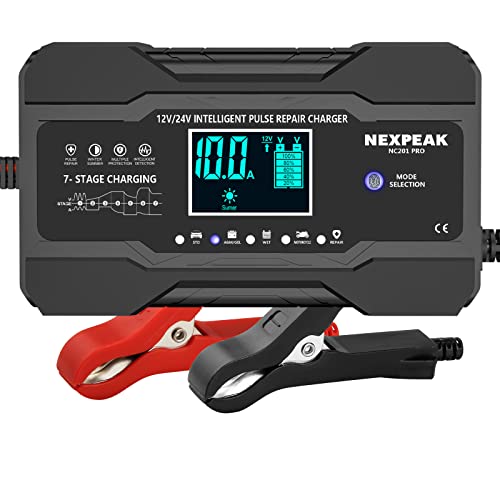
Should you keep multiple vehicles, ride a motorcycle, or store boats and lawn gear seasonally, I’d recommend the NEXPEAK 10A Smart charger because it automatically switches between 12V/10A and 24V/5A modes and includes a MOTORCYCLE trickle setting for long-term maintenance. I like its 7-stage smart charging for AGM, GEL, SLA and flooded batteries and the pulse repair to reduce sulfation. The LCD shows volts, amps, temperature and charge percent while eight safety protections guard against reverse polarity, overcurrent and overheating. It won’t revive batteries below 0.3V or charge lithium cells, and has a two-year replacement policy.
Best For: Owners of multiple vehicles, motorcycles, boats, or seasonal equipment who need an automatic, versatile 12V/24V charger with long-term maintenance and battery-repair features.
Pros:
- 7-stage smart charging with MOTORCYCLE trickle mode supports AGM, GEL, SLA and flooded batteries and safely maintains batteries long-term.
- Pulse repair function helps reduce sulfation and extend battery life and starting performance.
- Large LCD shows volts/amps/temperature/charge percent and includes eight safety protections (reverse polarity, overcurrent, temp compensation, etc.).
Cons:
- Cannot revive or fully charge batteries with voltage below 0.3V.
- Not compatible with lithium batteries.
- 10A (12V) / 5A (24V) speeds may be slower than high-output professional chargers for very large batteries requiring rapid recharge.
NOCO Genius2 2A 6V/12V Smart Battery Charger
--
Should you want a compact, smart maintainer that safely tops off 6V or 12V batteries and even revives sulfated lead‑acid packs, the NOCO Genius2 is a great choice because it combines a 2A automatic charge with desulfation and temperature‑compensated charging. I use it for cars, motorcycles, boats, and lawn equipment; it handles flooded, Gel, AGM, deep‑cycle, marine, and lithium batteries. It offers Manual Force Mode to start charging from 0 V, automatic maintenance with 24‑hour reconditioning, and overcharge protection. It’s energy‑efficient, replaces basic trickle chargers, and fits neatly in tight storage spaces.
Best For: Compact vehicle and equipment owners who need a versatile 6V/12V smart maintainer that safely tops off and can revive sulfated lead‑acid batteries (cars, motorcycles, boats, RVs, lawn equipment, and deep‑cycle applications).
Pros:
- 2A smart charging with desulfation and temperature‑compensated charging for safer, more efficient maintenance.
- Supports 6V and 12V lead‑acid and lithium‑ion batteries and includes Manual Force Mode to start from 0 V.
- Fully automatic maintenance with 24‑hour reconditioning and overcharge protection in a compact design.
Cons:
- 2A output may be slow for large-capacity batteries or fast charging needs.
- Manual Force Mode can bypass safety sensing—requires caution and some user knowledge.
- Limited to 6V/12V systems, so not suitable for higher-voltage battery banks.
NOCO GENIUS1 1A 6V/12V Smart Battery Charger

Should you want a compact, smart maintainer for everything from a motorcycle to an RV battery, I recommend the NOCO GENIUS1. I like its 1A output and dual 6V/12V support—35% smaller than the G750 yet supplying over 35% more power. It handles lead-acid (AGM, Gel, SLA, VRLA) and LiFePO4, plus flooded, deep-cycle, marine, and powersport batteries. It’s a charger, maintainer, trickle charger and desulfator, charging from 1V and using Force Mode to revive 0V cells. Thermal sensing prevents over/undercharging, continuous monitoring allows indefinite hookup, and it ships with clamps, eyelets, a 110-inch cable and a 3-year warranty.
Best For: compact power users who need a versatile 1A smart maintainer for motorcycles, lawn equipment, cars, and even RV or marine batteries that supports 6V/12V and multiple chemistries.
Pros:
- Small and portable (35% smaller than prior G750) while delivering over 35% more power, making it easy to store and use across vehicles.
- Multi-function: charger, maintainer, trickle charger and desulfator with Force Mode and precision pulse charging to restore sulfated batteries and charge from as low as 1V.
- Smart safety features: thermal sensing for temperature compensation, continuous monitoring for indefinite connection, and overcharge protection.
Cons:
- 1A output is best for small to medium batteries and slow charging—may be too slow for large starter batteries or rapid charging needs.
- Limited to 6V/12V systems only, so not suitable for higher-voltage battery banks without additional equipment.
- Relies on included 110-inch cable and clamps/eyelets; fixed plug design may limit installation flexibility in some setups.
Factors to Consider When Choosing Battery Trickle Chargers
Upon selecting a trickle charger, you’ll want to check that it’s compatible with your battery chemistry and delivers the right charging current for your battery size. Look for smart charging features, safety protections like reverse-polarity and overheat prevention, and maintenance modes that include desulfation. These factors help guarantee safe, effective long-term charging and battery health.
Battery Chemistry Compatibility
Because different battery chemistries need distinct voltage limits and charge profiles, you should always match your trickle charger to the battery type—flooded lead‑acid, AGM, gel, or LiFePO4—since wrong settings can shorten life or create safety risks. Check the charger explicitly supports your chemistry because charging voltages, stages, and float setpoints differ. Use LiFePO4‑specific modes or chargers with proper voltage limits and charge termination to avoid overcharge; LiFePO4 often needs single‑stage or CC/CV profiles unlike lead‑acid. For gel and AGM, pick chargers with dedicated gel/AGM settings—high bulk/absorption voltages or desulfation pulses can damage them. Prefer smart chargers with selectable modes or automatic detection to adjust algorithms and float voltage. Never use an unrated charger; compatibility prevents reduced capacity, faster degradation, and safety issues.
Charging Current Output
Pick a charger with an output current that fits your battery and how you use it: small bikes and mowers usually need 0.5–2 A maintainers, while cars and larger batteries benefit from 2–10 A for faster recovery. Match output to battery amp-hour capacity; for long-term float keep current low (typically <1 A for small batteries, or about 1–3% of Ah for larger banks) to avoid overcharging and gassing. Higher currents cut charge time but raise heat and risk in case the charger lacks proper multi-stage control, so reserve several-amp charging for compatible batteries. Verify the charger can reduce current automatically after bulk charging (float/trickle mode). Also check the minimum detection threshold—some units won’t revive deeply discharged batteries.
Smart Charging Features
Matching the right output current is only part of the story; the charger’s control logic and protection features determine how safely and effectively it treats your battery over time. Look for multi-stage or adaptive algorithms (3–7 stages) that move from bulk to absorption, then float/trickle/maintenance to avoid overcharge and extend life. Confirm temperature compensation or a thermal sensor so the charger adjusts voltage for ambient conditions, preventing undercharge in cold or overcharge in heat. Make certain desulfation or pulse-repair modes are available to reverse sulfation in lead-acid batteries. Prefer units with selectable chemistry or automatic detection for flooded, AGM, gel, and LiFePO4 to apply proper profiles. Also choose chargers offering reverse-polarity, spark-proof, overcurrent protection, and blocking diodes.
Safety And Protection
Whenever you’re keeping a battery on a trickle charger long-term, safety features matter as much as charging profiles: reliable overcharge/float control, reverse-polarity and spark-proof protection, and overcurrent/short-circuit limits stop damage and hazards before they start. You should pick chargers that switch to automatic float or maintenance mode to halt or reduce current at full voltage, preventing gassing and plate damage. Verify reverse-polarity and spark-proof clamps to avoid arcs should clamps be swapped. Match overcurrent/short-circuit protection to battery size—maintainers under about 2A for continuous connection, higher-amp units with limiters for faster charging. Prefer temperature compensation or thermal cutoffs to adjust charge in extreme conditions. Confirm blocking diodes or smart microcontroller safeguards to prevent backflow and manage multi-stage charging safely.
Maintenance And Desulfation
Maintaining a battery long-term means choosing a charger that combines smart float control with temperature-aware monitoring and, where suitable, desulfation routines. You’ll want an automatic float/maintenance mode that supplies a low regulated current (typically under 2A for 12V) to hold charge without overcharging. Prefer chargers that monitor voltage and temperature and switch to float or pulse-desulfation cycles to avoid thermal stress in hot or cold conditions. Use desulfation/pulse-recovery only for lead-acid batteries; these routines apply high-voltage or pulsed currents to break up lead-sulfate crystals, but results vary and can take hours to days. Make certain the unit has reverse-polarity, short-circuit, and overcharge protections, and check battery voltage/state-of-charge beforehand since many chargers won’t revive deeply discharged cells.
Portability And Installation
After you’ve picked a charger with the right maintenance and desulfation features, consider how and where you’ll actually use it. Check size and weight—compact, lightweight units (often under a few pounds and glovebox-friendly) are easiest to carry for seasonal or roadside needs. Verify connection options: cigarette-lighter plugs, alligator clips, and ring terminals let you install without tools or hardwire when required. Should you mount the charger outdoors or on a vehicle, choose IP-rated or weather-resistant housings and sealed/tempered casings to resist moisture, dust, and impact. Look for quick-disconnect lead assemblies or built-in quick-release cables for fast removal and safe reattachment. Finally, evaluate mounting options and cable length—pre-drilled brackets, adhesive mounts, and several-foot cables simplify semi-permanent installation.
Warranty And Support
Because a charger’s technical specs only tell part of the story, check warranty and support next so you’re not left stranded provided something goes wrong. Look for longer warranties—multi‑year coverage often signals manufacturer confidence and lowers long‑term costs. Confirm what’s covered: parts, labor, replacements, and whether consumables or user damage are excluded. Check support channels and hours—phone, email, or live chat guarantee faster troubleshooting whenever charging problems crop up. Verify service logistics: will you need to return the unit, is on‑site repair offered, or does the company provide advanced replacement to minimize downtime? Finally, review registration, maintenance, and usage requirements to keep the warranty valid, such as timely registration or using approved accessories.
